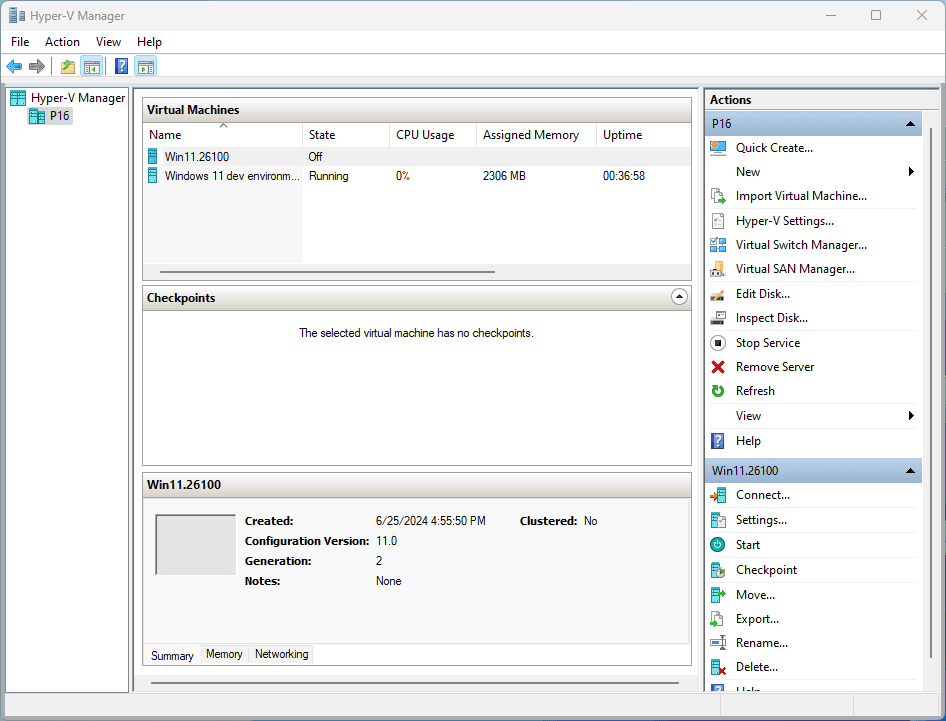
Claude Desktop on Windows spawns a 1.8 GB Hyper-V VM on every launch, even for chat-only use. A GitHub bug report reveals 2,689 stale session files trigger the infrastructure.
Key facts
- 1.8 GB VM per launch on Windows
- 11% of 16 GB RAM consumed
- 2,689 stale session files found
- Errors since February 19, 2026
- Only VirtualMachinePlatform enabled
A GitHub issue filed on February 26, 2026, documents that Anthropic's Claude Desktop app for Windows launches a Hyper-V virtual machine consuming approximately 1.8 GB of RAM every time it starts — even when the user only needs chat functionality. On a 16 GB laptop, this represents over 11% of total memory consumed by infrastructure that isn't being used.
The bug report, which has garnered 329 points and 232 comments on Hacker News, details that the app triggers the Hyper-V Host Compute Service (vmcompute) via an RPC interface event on every launch. This spawns a vmwp.exe process hosting a full virtual machine, appearing as "Vmmem" in Task Manager at approximately 1,796–1,846 MB. The Hyper-V Compute Admin event log shows repeated errors: "The specified property query is invalid: The virtual machine or container JSON document is invalid. (0xC037010D, 'Invalid JSON document '$'')." These errors have been occurring since at least February 19, 2026, triggered on every boot and app launch.
Root Cause: Stale Session Files
Through extensive PowerShell diagnostics, the reporter confirmed that WSL, Hyper-V management tools, Docker, and Windows Sandbox are all disabled. The only enabled virtualization feature is VirtualMachinePlatform. The investigation found 2,689 stale session files in %APPDATA%\Claude\local-agent-m, likely created by prior use of Cowork or agent mode. These files trigger the VM spawn on every launch, even when the user has no intention of using agentic features.
The vmcompute service is set to Manual start but is triggered at boot by an RPC interface event (GUID: bc90d167-9470-4139-a9ba-be0bbbf5b74d). The parent process is services.exe (PID 1400), confirming it's a service trigger, not a user-initiated launch.
Broader Implications
This bug reflects a deeper pattern of rushed engineering at Anthropic as it scales. The Hacker News thread includes a pointed comment: "I just found a really pointed example of Anthropics lack of craft / rush to build. If you open Claude on Windows, and click Dispatch (under cowork) to start that up, it will tell you that you need permissions windows doesn't have. When you click the buttons for those permissions, it has broken links to macOS system preferences." This comes as Anthropic reportedly considers an IPO as early as late 2026, and the company is projected to surpass OpenAI in ARR by mid-2026. The VM bloat is a concrete example of the infrastructure debt that can accumulate when product velocity outpaces engineering discipline.
Workaround
Users on the thread report that deleting the stale session files in %APPDATA%\Claude\local-agent-m resolves the issue temporarily, but the files are recreated on agent mode use. A permanent fix would require Anthropic to either clean up session files on exit or defer VM creation until agent mode is actually requested.
What to watch
Watch for Anthropic to release a patch in the next 2-3 sprint cycles. If the issue persists into Q3 2026, it could signal deeper infrastructure debt ahead of a potential IPO. Also track whether the stale session file count grows beyond 2,689 as more users adopt agent mode.

Source: github.com
[Updated 11 Jun via fortune_tech]
Separately, Anthropic faced backlash this week over a policy in Claude Fable 5's 319-page system card that silently limited responses for AI development work. After researchers accused the company of 'secret sabotage,' Anthropic apologized and announced changes to make such safeguards visible [per Fortune]. Flagged requests will now visibly fall back to Opus 4.8, and API refusals will include a reason. 'We made the wrong tradeoff,' Anthropic said in a statement to WIRED.