Anthropic just shipped a major update to Claude Mobile that fundamentally changes how AI agents interact with tools. It's not another plugin system—it's live, interactive instances of Figma, Canva, Slack, and Amplitude rendered directly inside the chat interface. This shift from "plugins that retrieve" to "embedded tools that operate" has immediate implications for how you should think about Claude Code's evolution.
What Changed: From Fetching to Operating
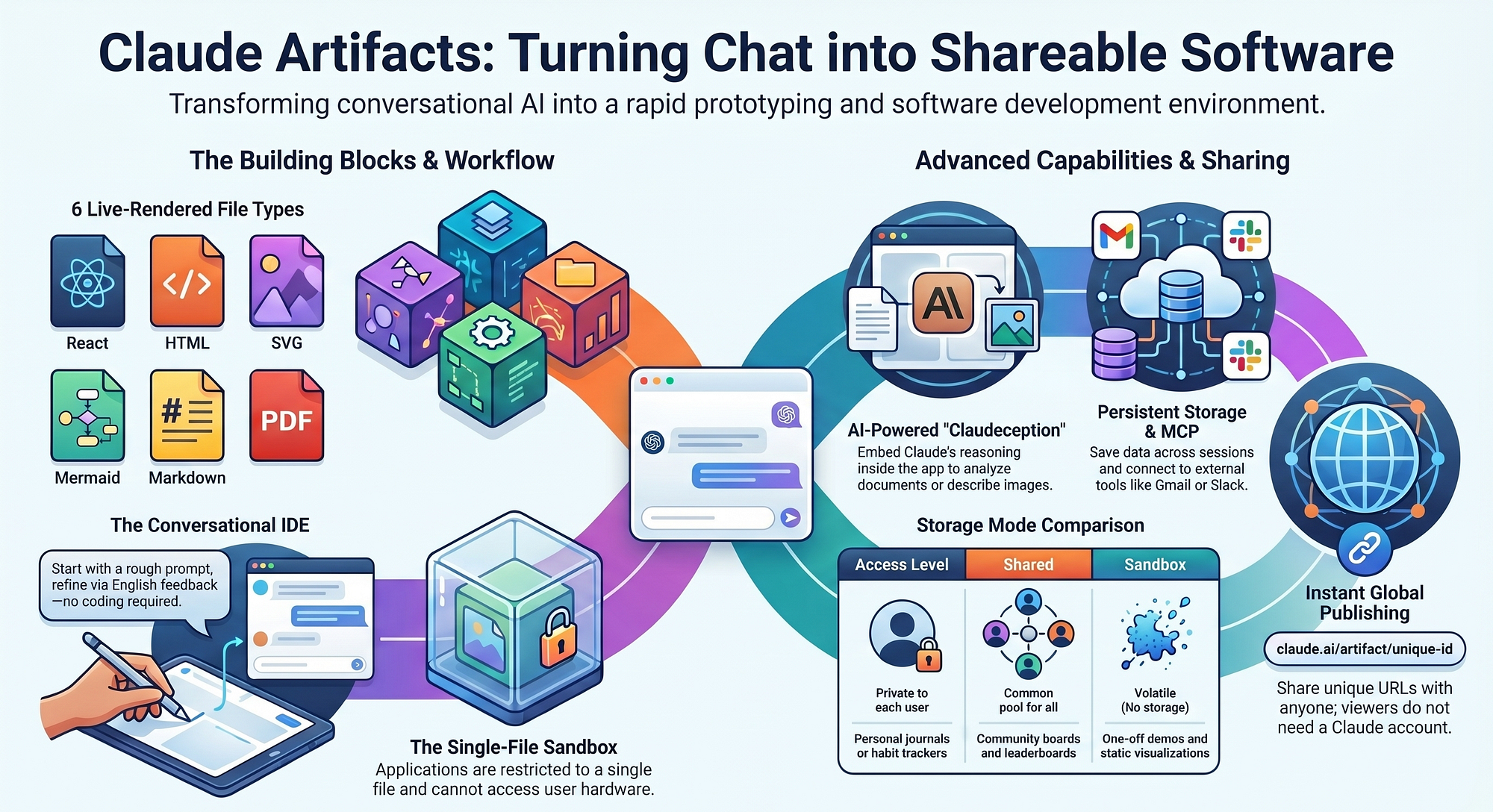
The Claude Mobile update introduces embedded tools that function as interactive workspaces. When you ask Claude to update a Figma component, it doesn't fetch a screenshot—it opens a live Figma canvas where you can edit directly, with changes syncing back to the source file. The same applies to Canva presentations, Slack conversations, and Amplitude dashboards.
The technical foundation is Model Context Protocol (MCP), which Anthropic launched in January 2026 to standardize how Claude communicates with third-party software. This follows Anthropic's March 2026 expansion of Claude Code's Auto Mode preview and the architecture shift to MCP-based tool connections we covered in our March 30 analysis.
What This Means for Claude Code Users
This isn't just a mobile feature—it's a directional signal for Claude Code's development. The MCP infrastructure that powers these embedded tools is the same protocol Claude Code uses to connect to your development environment, as noted in 32 prior articles about their technical relationship.
Right now, Claude Code excels at file operations, terminal commands, and code generation. The embedded tools approach suggests future Claude Code updates could include:
- Live database consoles where Claude doesn't just write SQL but renders an interactive query interface
- Direct API testing environments where Claude can execute and debug requests without context switching
- Visual deployment dashboards where you can approve and monitor deployments from within Claude Code
The Context Graph Advantage
The most powerful aspect of embedded tools is what Anthropic calls "context graphs." When Claude knows your Figma file in the context of the Slack thread discussing it, the Asana ticket tracking it, and the Amplitude data justifying it, each integration makes every other integration more valuable.
For developers using Claude Code, this means future integrations could connect your:
- GitHub PRs with the Jira tickets that prompted them
- Database schemas with the API documentation explaining them
- Error logs with the deployment history causing them
Try This MCP Mindset Now
While Claude Code doesn't yet have Figma-style embedded tools, you can adopt the embedded mindset today:
Configure MCP servers for active operation, not just data retrieval. Instead of using a database MCP server just to fetch schema, configure it to execute safe queries directly.
Structure your CLAUDE.md to assume Claude will operate tools, not just read them. Include permissions and operation patterns:
## Tool Operation Patterns
- For database changes: Use the PostgreSQL MCP server with read/write access to staging
- For API testing: Use the HTTP client MCP to execute and validate endpoints
- For deployment: Use the Kubernetes MCP to check status and roll back if needed
- Test the "single surface" workflow by keeping Claude Code as your primary interface for as many development tasks as possible, noting where context switches still force you out.
What to Watch For
Two signals will indicate this embedded approach is coming to Claude Code:
Team-level MCP configurations - If Anthropic introduces shared MCP setups that let entire engineering teams standardize how Claude Code interacts with their development stack, they're moving beyond individual productivity to team workflow automation.
Claude-native features from development tools - If GitHub, Vercel, or Datadog start shipping features that assume Claude Code is always present in the workflow, the embedded tool paradigm will have reached the developer ecosystem.
gentic.news Analysis
This mobile update aligns with three major trends in our coverage of Anthropic's development tools. First, it continues the MCP expansion we've tracked since January, where Anthropic is building a standardized protocol layer for AI-tool communication—the same infrastructure that powers Claude Code's connections to GitHub and development environments.
Second, it reflects Anthropic's competitive positioning against OpenAI and Google in the AI agents space. With AI agents crossing a critical reliability threshold in December 2026 and industry leaders predicting 2026 as a breakthrough year, Anthropic is differentiating through deep workflow integration rather than just model capabilities.
Third, this follows Anthropic's enterprise trust strategy. The launch partners—Figma, Canva, Slack, Asana, Box, Amplitude—are all enterprise tools that handle sensitive data. Anthropic's constitutional AI positioning, which we've covered in 393 prior articles, is enabling deeper integrations than competitors might achieve.
For Claude Code users, the takeaway is clear: start thinking about your development tools not as separate applications but as potential rendering layers within Claude Code. The future isn't agents that fetch information from your tools—it's agents that become the primary interface to operate them.