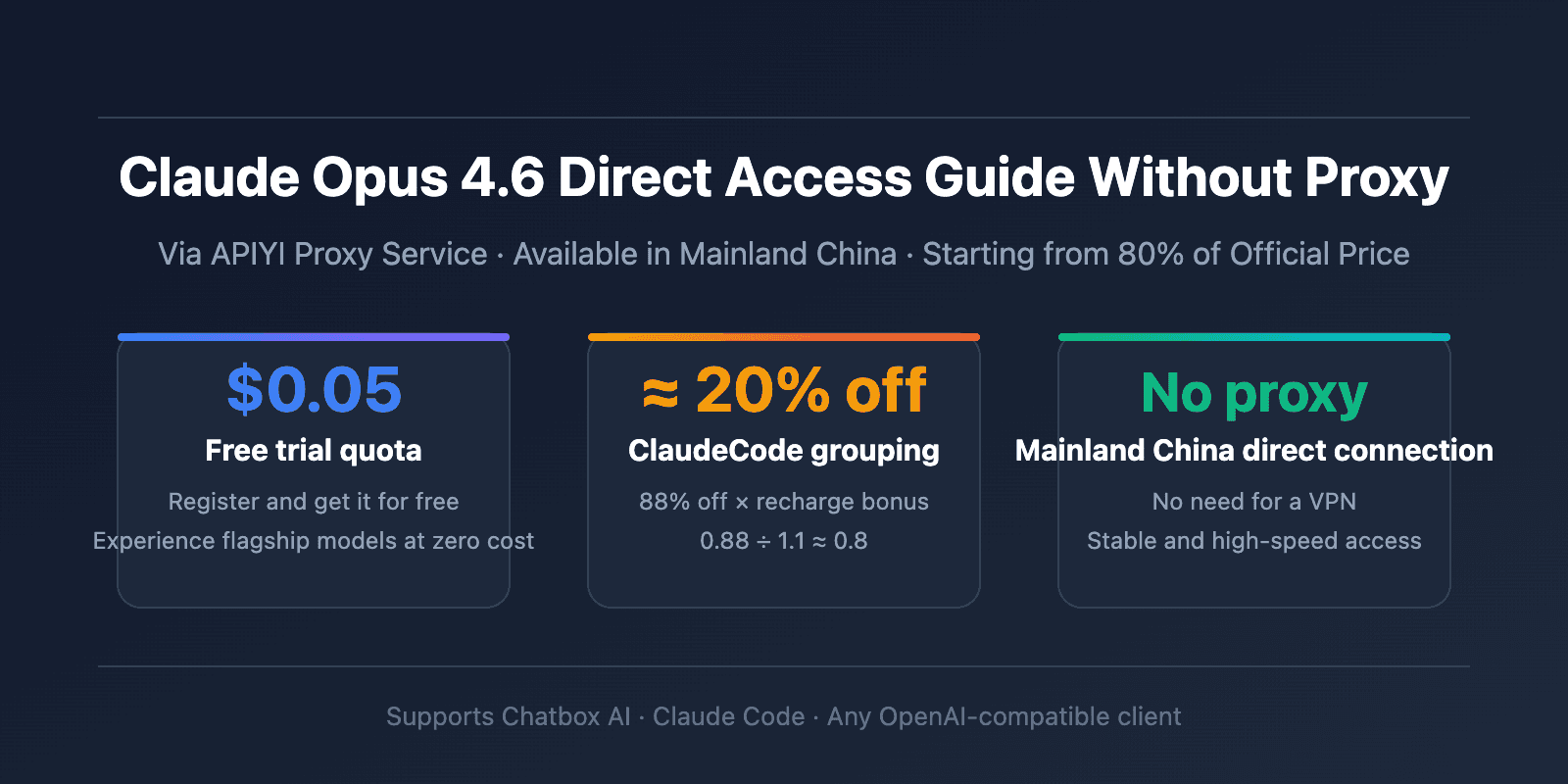
A developer on X (formerly Twitter) has highlighted what they describe as a "crazy deal" for unlimited access to Anthropic's Claude Opus 4.6 model without usage limits. The post from @hasantoxr points to a third-party service offering a flat-rate subscription that bypasses the token-based pricing and rate limits of Anthropic's official API.
What the Deal Offers
The core offering appears to be a subscription service providing unlimited queries to the Claude Opus 4.6 model through a third-party interface. This contrasts sharply with Anthropic's official pricing structure, where Claude Opus costs $15 per million input tokens and $75 per million output tokens, with additional rate limits that can throttle heavy usage.
For developers and companies running high-volume applications, such unlimited access could represent substantial cost savings. A single complex coding session or document analysis can easily consume hundreds of thousands of tokens, making official API costs prohibitive for some use cases.
Technical and Business Implications
Third-party providers typically operate by purchasing bulk API credits from Anthropic and reselling access through their own infrastructure, often with added features like web interfaces, team management tools, or integration with other models. The "unlimited" model suggests either a very aggressive pricing strategy or a different technical implementation that may involve caching, optimization, or hybrid approaches.
This development follows a pattern in the AI infrastructure market where third-party services emerge to address pain points in official offerings. Similar services have appeared for OpenAI's models, offering features like pay-as-you-go billing, higher rate limits, or simplified interfaces.
Potential Risks and Considerations
Developers considering such services should evaluate several factors:
- Reliability and uptime: Third-party services may not offer the same SLA guarantees as Anthropic's official API
- Data privacy and security: Understanding where and how prompts and responses are processed is crucial for sensitive applications
- Model version consistency: Ensuring access to the latest model versions and updates
- Long-term viability: The sustainability of "unlimited" pricing models remains uncertain
The Competitive Landscape
The AI model access market has become increasingly layered, with:
Official API (Anthropic) Token-based pricing, rate limits Direct from creator, latest versions, enterprise support Cloud Platforms (AWS Bedrock) Integrated access, enterprise billing AWS integration, compliance certifications Third-Party Resellers Bundled access, alternative pricing Often cheaper for high volume, additional featuresgentic.news Analysis
This development highlights the growing secondary market for AI model access, reminiscent of similar ecosystems that emerged around OpenAI's GPT models. The pattern is clear: whenever a major AI company establishes usage-based pricing with rate limits, entrepreneurial developers create services to arbitrage or optimize access.
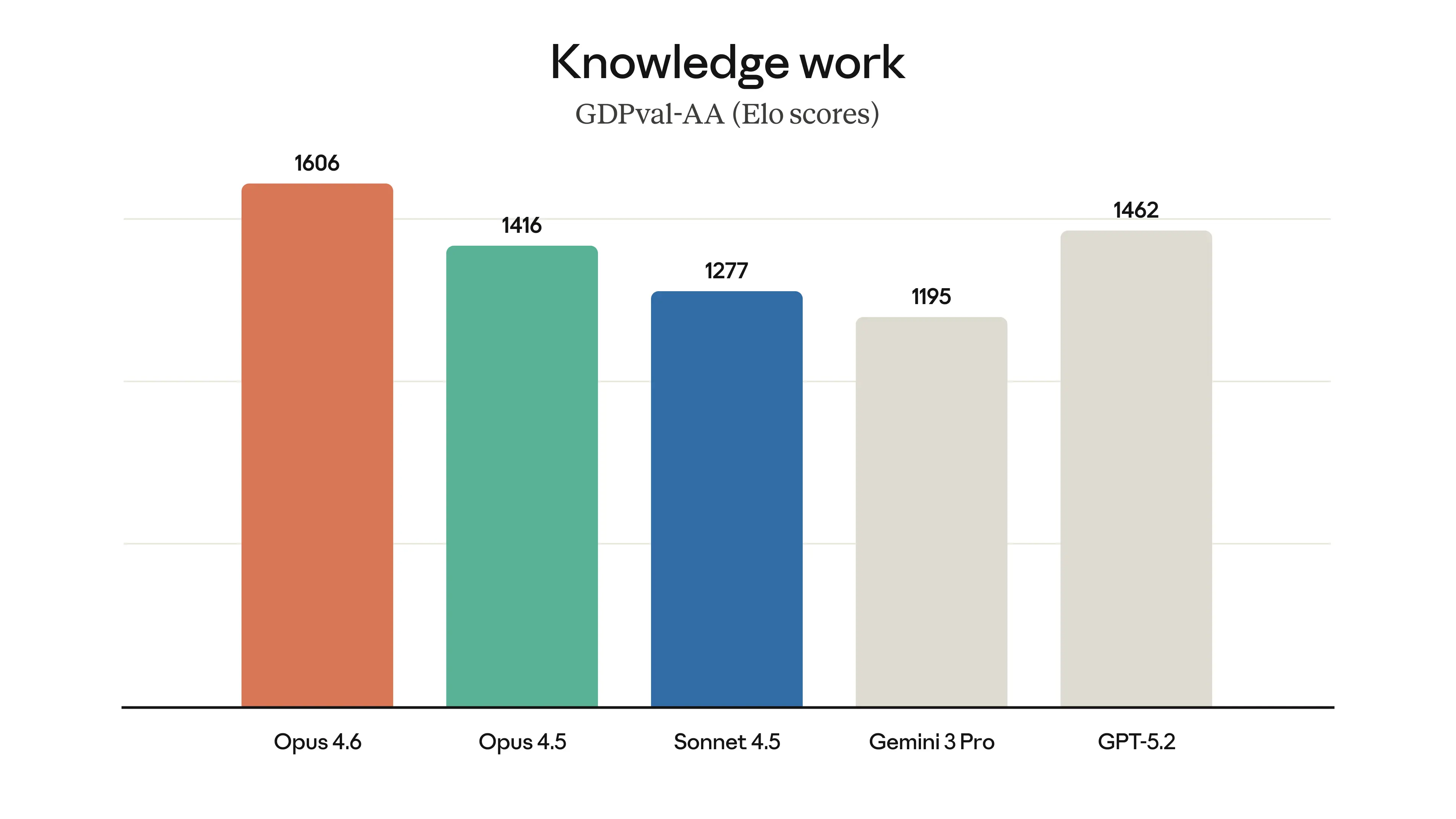
What makes this particular case noteworthy is the timing. Claude Opus 4.6 represents Anthropic's most capable model to date, with particularly strong performance on coding and reasoning tasks. High demand from developers for unlimited access suggests that Opus 4.6 is seeing significant adoption in applications where token costs would otherwise be prohibitive.
This also puts pressure on Anthropic's pricing strategy. The company has historically positioned itself as premium but accessible, with Claude 3.5 Sonnet offering a more cost-effective option for many use cases. If third-party providers can sustainably offer unlimited Opus 4.6 access at competitive prices, it may force Anthropic to reconsider its tiered pricing approach or introduce new enterprise packages.
From a technical perspective, the viability of "unlimited" models depends on usage patterns. Most users don't actually need truly unlimited access—they need predictable costs and removal of artificial constraints. This deal likely appeals to developers building applications with sporadic but intensive usage patterns that would trigger high costs or rate limits under the official pricing model.
Frequently Asked Questions
Is this unlimited Claude Opus 4.6 deal legitimate?
While the X post references such a deal, developers should exercise caution and thoroughly vet any third-party service before committing. Check for user reviews, transparency about infrastructure, and clear terms of service regarding uptime and data handling.
How can third-party providers offer unlimited access when Anthropic charges per token?
Third-party providers typically purchase API credits in bulk at discounted rates, implement usage optimization techniques (like caching common responses), and rely on the fact that most users won't actually consume "unlimited" resources. Their business model depends on averaging out high and low usage across their customer base.
What are the risks of using third-party AI model access services?
Key risks include potential service discontinuation, data privacy concerns (your prompts may be processed through additional systems), delayed access to model updates, and possible violation of Anthropic's terms of service if the reseller isn't properly authorized.
How does this compare to similar services for OpenAI's models?
The pattern is nearly identical. When GPT-4 launched with usage limits and high costs, numerous third-party services emerged offering alternative access models. The most successful ones typically added value through better interfaces, team features, or integration with multiple AI models rather than competing solely on price.
Should I use this instead of Anthropic's official API?
For prototyping, personal projects, or applications where cost predictability is more important than maximum reliability, third-party services can make sense. For production applications requiring enterprise support, compliance certifications, or guaranteed uptime, Anthropic's official API or AWS Bedrock integration remains the safer choice.