Venture capitalist and former PayPal executive David Sacks has framed Google's battle for consumer AI supremacy in stark, existential terms. In a discussion highlighted by AI commentator Rohan Pandey, Sacks argued that the convergence of traditional search and AI chat represents a fundamental threat to Google's core business, forcing the company to "fight hard." His analysis points to a specific strategic advantage for Google: the ability to deploy what he terms a "full OpenClaw" AI agent, pre-authorized with user trust due to its deep integration with Gmail, Google Docs, and Google Calendar.
The Existential Threat: The Merging of Search and AI Chat
Sacks's core thesis is that the classic ten-blue-links search interface and the conversational output of modern large language models (LLMs) are rapidly converging into a single user experience. For Google, a company built on and sustained by search advertising, this shift is not merely competitive—it is "existential." If answers are generated conversationally within an AI interface, the traditional search engine results page (SERP), and the ad inventory it contains, could be circumvented or radically transformed.
This perspective aligns with observable industry moves. Google has aggressively integrated its Gemini AI model into its search product (Search Generative Experience), while competitors like Microsoft (with Copilot) and Perplexity AI have built entire products around answering queries directly without a list of links. Sacks's commentary underscores the high-stakes nature of Google's recent AI launches and its perceived need to match or exceed the capabilities of OpenAI's ChatGPT.
Google's Strategic Moat: The "OpenClaw" Agent with Built-In Trust
The most technically salient point in Sacks's analysis is his concept of "OpenClaw." This appears to be a portmanteau referencing "OpenAI" and "Claw," suggesting an AI agent with deep, pervasive access—a claw into the user's digital life. Sacks argues that Google is uniquely positioned to deploy this because it already holds that access.
Unlike a standalone AI chatbot that requires explicit user permission to read emails or edit documents, a Google AI agent operating within the Gmail or Docs environment starts with a foundational level of trust and integration. The user is already logged in; the OAuth scopes are already granted. This allows the agent to act with context:
- In Gmail: It could draft responses, summarize threads, or extract action items based on the full history of a user's inbox.
- In Google Docs: It could edit, rewrite, or research based on the document's content.
- In Google Calendar: It could schedule meetings, resolve conflicts, and prepare agendas by understanding the user's commitments.
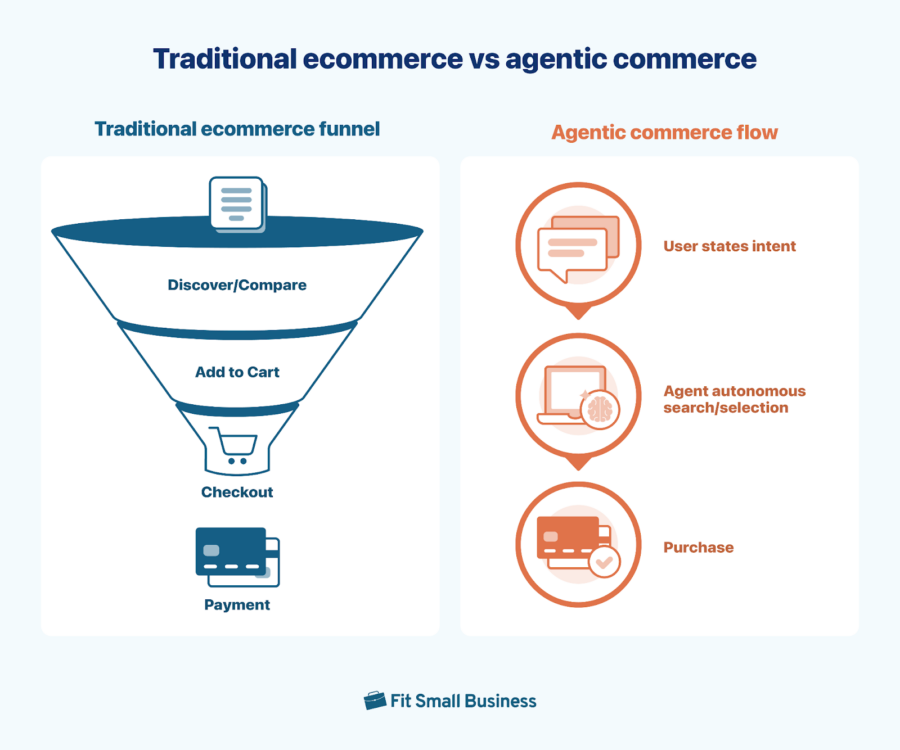
This integrated agent paradigm moves beyond a chat interface into an actionable, context-aware assistant. The barrier to entry for a competitor like OpenAI to achieve this level of deep, trusted system integration is significantly higher, constituting a major moat for Google.
The Competitive Landscape and Implementation Challenge
Sacks's "OpenClaw" concept directly names the competitive dynamic. OpenAI's strength lies in its frontier model capabilities (like GPT-4o) and its first-mover advantage in consumer chat. However, to build a truly pervasive agent, it must integrate across a user's fragmented digital stack—email, cloud storage, calendar—often requiring explicit user setup and facing platform restrictions.
Google's challenge is the inverse. It has the integration but has been perceived as playing catch-up in raw LLM capability and consumer AI mindshare. Its strategy, therefore, must leverage its integration advantage to create a more useful and sticky product than a standalone chat interface can offer. Projects like Google's "Gemini Nano" on-device model and the expansion of "Help me write" features across Workspace are early steps in this "OpenClaw" direction.
The key technical and product challenge for Google will be executing this vision without triggering massive user privacy concerns. Even with "built-in trust," the leap from an AI that helps compose an email to one that autonomously acts on your inbox is substantial and will require impeccable control, transparency, and user consent mechanisms.
gentic.news Analysis
David Sacks's commentary cuts to the heart of the strategic battle defining the current AI era. His "existential" framing is not hyperbole when examining Google's financials: in Q4 2025, Google Search & other advertising revenue was over $100 billion annually. Any disruption to that traffic is an existential threat. This aligns with our previous analysis in "Google I/O 2025: Gemini Live, Astra, and the All-In Bet on AI Agents," where we noted Google's entire keynote was a pivot from models to agents, explicitly targeting actionable assistance over mere chat.
The "OpenClaw" concept perfectly describes the strategic logic behind Google's integration frenzy. It connects directly to the entity relationship between Google and its Workspace suite (Gmail, Docs, Calendar), which our knowledge graph shows as a core enterprise and consumer asset with over 3 billion users. This is the installed base Sacks references. Furthermore, this move is a direct competitive response to OpenAI's partnerships with Microsoft (integrating Copilot into Office 365) and its own efforts to expand ChatGPT into a platform with memory and actions.
Historically, Google has struggled to launch successful social or messaging products (Google+, Allo). However, its strength has always been in utility-driven products that integrate into daily workflow—precisely the category an AI agent inhabits. Sacks is highlighting that Google is now fighting on its home turf: utility through deep software integration. The trend of increased agent-related activity (📈) at Google, from Code Assist to Gemini in Workspace, confirms this is the central organizing principle of its AI strategy in 2026. The race is no longer just about whose model has the best benchmark score, but whose agent can most effectively and trustworthily act in the user's world.
Frequently Asked Questions
What does "OpenClaw" mean?
"OpenClaw" is a term used by investor David Sacks, seemingly blending "OpenAI" and "Claw." It describes a deeply integrated, pervasive AI agent that has pre-authorized access to a user's digital tools and data—like email, documents, and calendar—enabling it to act with context and autonomy. Sacks argues Google can deploy this because users already trust it with their Gmail, Docs, and Calendar data.
Why is AI an existential threat to Google?
Google's primary business is search advertising, which relies on users querying a search engine and clicking on links and ads. As AI chat interfaces merge with search, they can provide direct answers without displaying a traditional search results page. This could bypass or radically alter Google's main revenue stream, threatening the company's core economic model.
What is Google's main advantage in the AI agent race according to this analysis?
Google's main advantage is its massive, trusted installed base across key productivity applications like Gmail, Google Docs, and Google Calendar. An AI agent built into these environments starts with "built-in trust" and deep system access, allowing it to understand context and take action more seamlessly than a standalone chatbot that requires new permissions and integrations.
How does this compare to Microsoft's Copilot strategy?
The strategies are parallel but stem from different strengths. Microsoft's Copilot leverages its deep integration with the Windows OS and the Microsoft 365 suite (Word, Excel, Outlook, Teams). Google's potential "OpenClaw" agent leverages its integration with its consumer and Workspace cloud apps. Both are attempting to use existing enterprise and consumer software dominance as a moat to win the AI agent war, competing against pure-play AI companies like OpenAI.