The Innovation — What the Source Reports
Deloitte has released a report titled "The future of commerce: Agentic shopping in Asia Pacific." While the full report content is not accessible from the provided source link (which redirects to a Google language selection page), the title and attribution are clear. The concept of "Agentic Shopping" represents a significant evolution in retail technology, moving beyond today's chatbots and recommendation algorithms.
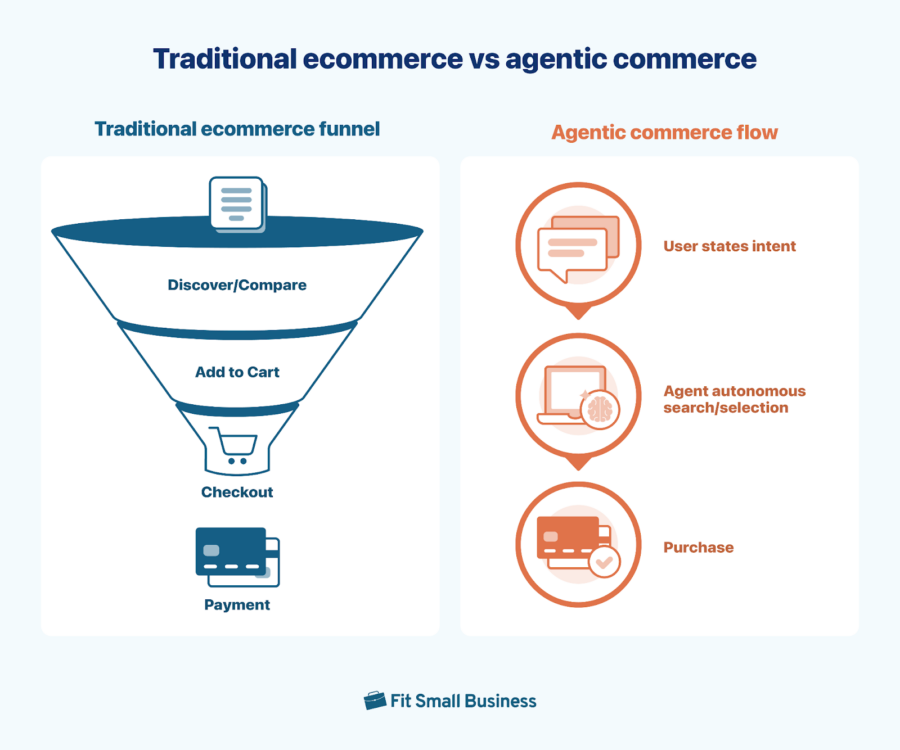
In this context, an "agentic" system implies an AI-powered assistant with a degree of autonomy and goal-directed behavior. Unlike a simple conversational interface that responds to queries, an agentic shopping assistant would proactively understand a user's needs, preferences, and constraints, then take actions to fulfill them—such as researching products across multiple retailers, comparing prices, tracking inventory, managing subscriptions, and even executing purchases within predefined parameters.
Asia Pacific is highlighted as the focal region, which aligns with its status as a leading adopter of mobile commerce, super-apps, and digital payment systems. The region's consumers are often more willing to delegate tasks to technology, making it a fertile ground for testing autonomous commerce agents.
Why This Matters for Retail & Luxury
For luxury and retail executives, the Deloitte report is a strategic signal. It validates that a major global consultancy sees autonomous AI shopping agents not as science fiction, but as the next commercial frontier, particularly in a critical growth market.
Concrete implications include:
- Shift in Customer Touchpoints: The primary interface with a brand could shift from a branded app or website to a third-party AI agent acting on the customer's behalf. This necessitates a strategy for "being discovered" by agents—through optimized product data, APIs, and direct partnerships with agent platforms.
- Hyper-Personalization at Scale: An agent that knows a user's size, style evolution, budget cycles, and gift-giving calendar could orchestrate a highly personalized shopping journey across categories and brands. For luxury, this means agents could manage a client's entire wardrobe or collection, suggesting pieces that complement existing items.
- Price & Value Transparency: Agents will inherently compare options. For luxury brands competing on unique value, heritage, and craftsmanship, the challenge will be to ensure agents can access and convey this narrative, not just price and specification data.
- Inventory & Demand Forecasting: Direct integrations with agent platforms could provide unprecedented early signals of demand, allowing for more dynamic production and inventory allocation.
Business Impact
The business impact is foundational but currently unquantified in the available source. Successfully engaging with an agentic ecosystem could determine market share. Brands that are "agent-ready"—with rich, structured, and accessible product data, clear APIs, and perhaps exclusive agent partnerships—could see higher consideration and conversion rates from high-intent customers represented by agents.
Conversely, brands that remain in a traditional, website-centric model risk being disintermediated or commoditized by agents that prioritize ease of transaction and price. The loyalty relationship may partially transfer from brand-to-consumer to agent-to-consumer.
Implementation Approach
Preparing for an agentic future is a multi-year strategic and technical initiative:
- Data Foundation: Product information must move beyond marketing descriptions to a structured, machine-readable knowledge graph encompassing materials, dimensions, provenance, compatibility (e.g., "pairs with"), and sustainability credentials.
- API-First Commerce: Robust, real-time APIs for product search, inventory checks, personalized pricing, and checkout are non-negotiable. These must be secure, reliable, and capable of handling complex, multi-step queries from agents.
- Agent Relationship Management: This emerging function involves partnering with agent developers (like Google, as indicated by the source link's origin, or others like OpenAI or Anthropic), participating in early access programs, and potentially co-developing brand-specific agent capabilities.
- Trust & Authentication: Establishing secure methods for an agent to act on behalf of a high-value client is critical, especially for luxury purchases involving high amounts or bespoke services.
Governance & Risk Assessment
- Brand Dilution: Ceding control of the customer journey to an autonomous agent carries risks to brand narrative and presentation.
- Data Privacy: Agents will require deep access to consumer data to function. Governance models for data sharing between consumers, agents, and brands need to be transparent and compliant with regional regulations (especially stringent in parts of APAC).
- Bias & Fairness: Agents trained on broad data could inadvertently perpetuate biases in search results or recommendations. Brands must audit how their products are represented within agent ecosystems.
- Economic Model: The economics of agent-led commerce are undefined. Will agents charge brands for placement, operate on affiliate fees, or charge consumers a subscription? This uncertainty requires careful monitoring.
- Technical Maturity: As our coverage shows, AI agent technology is rapidly advancing but not yet mature for fully autonomous, high-stakes commerce. Google's launch of an agent development kit in 2026 and the Gemini Live API for real-time multimodal agents are foundational steps. However, reliable, trustworthy agentic shopping at scale is likely a 3-5 year horizon.
gentic.news Analysis
This Deloitte report, while light on technical detail, is a crucial market signal. Its publication via a Google News link is not coincidental. Google, a dominant entity in our knowledge graph with 211 prior mentions, is aggressively positioning itself at the center of the agent ecosystem. This follows Google's launch of an agent development kit in 2026 and the recent preview of the Gemini Live API for real-time multimodal agents. The report's focus on APAC also aligns with Google's strategic interests in high-growth digital economies.
The concept directly connects to our recent coverage of AI agent frameworks and Google's strategy of leveraging its ecosystem (Gmail, Docs, Calendar) to build trusted agents, as discussed in our article on David Sacks' analysis of Google's 'Full OpenClaw'. For retail, the battleground is shifting. It's no longer just about having the best D2C site, but about being the most discoverable and transactable brand within the agent ecosystems being built by Google, Anthropic, OpenAI, and Meta—all noted competitors in our KG.
The trend is clear: commerce is moving from a pull model (customers searching) to a push model (agents acting). Luxury brands, which have historically controlled their clienteling experience, must now decide how to authentically translate their heritage and artistry into the language of autonomous agents. The winners will be those who start building the data and API infrastructure now, while actively shaping the governance and partnership models of this emerging paradigm.