In a recent social media post, Wharton professor and AI researcher Ethan Mollick outlined a conceptual framework for understanding the often non-linear progression of AI's economic impact. He argues that gradual improvements in underlying AI models can trigger large, discrete jumps in practical ability within specific job functions or industries.
The core idea is that many complex tasks are bottlenecked by a single sub-skill. An AI model might be capable at 90% of a job's components but fail entirely at a critical 10%. A marginal improvement that finally crosses the threshold for that bottlenecking sub-skill doesn't just make the AI 1% better at the overall task—it unlocks the entire workflow, resulting in a dramatic, leap-forward in utility.
Key Takeaways
- Wharton professor Ethan Mollick posits that incremental AI improvements can cause sudden, large jumps in practical ability when they remove a critical bottleneck in a workflow.
- This explains why progress often appears non-linear.
The Bottleneck Mechanism in Practice
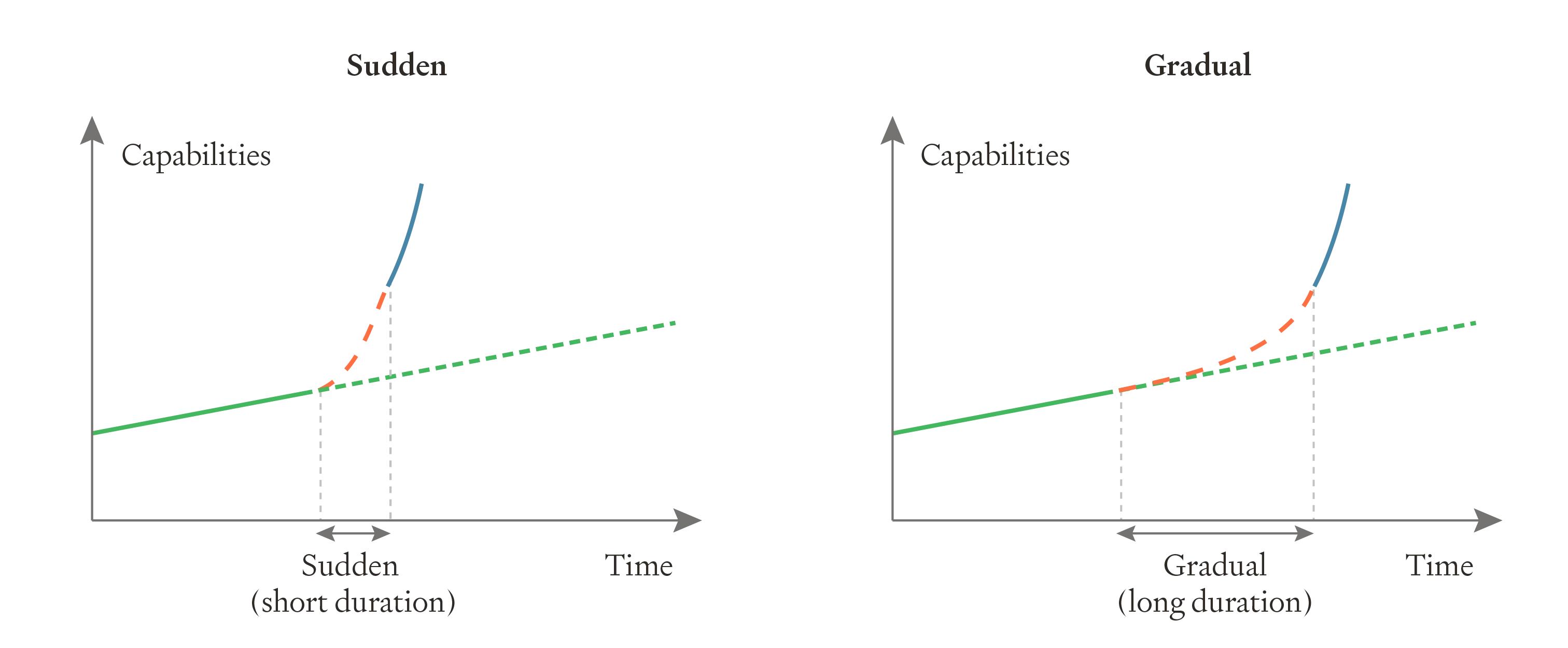
Mollick's theory is not about raw benchmark scores but about functional utility. Consider a hypothetical AI assistant for software development. It might excel at generating code, explaining logic, and writing documentation, but consistently fail at correctly updating import statements after a refactor. This single failure point makes the assistant unusable for the full refactoring task. A new model release that improves its understanding of code dependencies might only show a small overall score increase on a broad evaluation like HumanEval. However, for the developer using it, the tool suddenly transitions from "mostly helpful but unreliable" to "fully capable partner" for refactoring work. The economic value jumps discontinuously.
This pattern explains phenomena observed in the last two years: the sudden viability of AI for legal document review, the point where AI-generated marketing copy moved from "needs heavy editing" to "publishable," or the moment coding assistants shifted from autocomplete tools to primary drivers of simple feature implementation.
Implications for Measuring AI Progress
The bottleneck theory suggests that aggregate benchmarks like MMLU (Massive Multitask Language Understanding) or GPQA (Graduate-Level Google-Proof Q&A) may systematically understate the real-world impact of model iterations. A 2-point gain on MMLU could be meaningless if it's distributed evenly, but transformative if it's concentrated on a domain that was previously a blocking failure mode for a high-value application.
For businesses and developers, the lesson is to identify the specific bottlenecks in their own processes. The next model release that solves your particular blocking problem—be it parsing a specific document format, handling a rare edge case in customer support, or generating a particular type of schematic—will feel like a revolutionary leap, even if the release notes call it an incremental update.
gentic.news Analysis

Mollick's bottleneck theory provides a crucial lens for interpreting the AI development pace of 2025-2026. It contextualizes why releases like Google's Gemini 2.0 Flash in November 2025, which showed modest benchmark gains over its predecessor, nonetheless triggered rapid enterprise adoption for document processing workflows. The improvement likely targeted a specific bottleneck in multi-format parsing that unlocked entire business processes.
This aligns with a trend we've tracked: the shift from chasing aggregate benchmark leadership to targeted capability enhancement. As covered in our analysis of Anthropic's Claude 3.5 Sonnet update in August 2025, the focus was not on beating GPT-4o's MMLU score but on dramatically reducing "refusal rates" for sensitive business queries—a specific bottleneck for finance and legal applications. The result was a discrete jump in deployment for those sectors.
The theory also suggests why the competitive landscape feels so volatile. A company like xAI, with its Grok-2 model, doesn't need to beat OpenAI's GPT-5 or o3 on every metric to capture significant market share. It only needs to decisively solve a bottleneck for a valuable niche—say, real-time analysis of scientific datasets—to trigger a leap in adoption within that community. This explains the continued viability of smaller, focused models alongside generalist giants.
Looking forward, Mollick's framework implies that the most impactful AI research may increasingly focus on bottleneck identification and targeting, rather than uniform scaling. The recent surge in mixture-of-experts (MoE) architectures, which allow models to specialize, is a technical manifestation of this principle.
Frequently Asked Questions
What is an AI bottleneck in this context?
An AI bottleneck is a specific sub-task or skill within a larger workflow where current AI performance is below the minimum threshold for usability. While the AI may perform adequately on 80-90% of the workflow, failure at this bottleneck point renders the entire process unreliable or impossible to automate. For example, an AI might write good email drafts but fail to correctly pull the recipient's name from a CRM system, making it unusable for automated outreach.
How does this differ from just gradual improvement?
Gradual, linear improvement would mean each model version makes a task slightly faster or slightly more accurate. The bottleneck theory describes a phase change: a small underlying improvement pushes performance in a critical area from "below threshold" to "above threshold," which unlocks the entire task. The utility jumps from near-zero to high value almost instantly, even if the raw capability gain was small.
Can this theory predict where the next big AI leap will happen?
It provides a framework for prediction. Look for economically valuable jobs or industries where AI tools are already used in a limited, assisted capacity. Identify the specific, persistent pain point that users complain about—the part they always have to do manually. The next model that credibly solves that specific pain point will likely trigger a rapid, discrete jump in adoption and automation for that entire job function.
Does this mean broad benchmarks are useless?
Not useless, but incomplete. Broad benchmarks like MMLU measure average capability across many domains. They are good for tracking general progress and comparing model families. However, they can miss the concentrated gains on specific sub-skills that cause economic leaps. Practitioners should supplement broad benchmarks with targeted evaluations of the specific tasks that bottleneck their own applications.