In a recent social media post, Wharton professor and AI researcher Ethan Mollick made a pointed observation about the state of practical AI engineering. He noted that the sprawling toolkit developed to work with large language models—prompt engineering, skill files, connectors, retrieval-augmented generation (RAG) systems, and markdown documentation—is largely a "substitute" for a more fundamental, unsolved problem: continual learning.
Mollick's argument is that the current paradigm requires immense human effort to guide, constrain, and update static models. If AI systems could truly learn and adapt continuously from new data and interactions without catastrophic forgetting or manual intervention, the entire scaffolding of today's AI tooling would become obsolete, leading to rapid and significant change.
Key Takeaways
- Ethan Mollick observes that the entire ecosystem of prompts, skill files, and retrieval tools is a patch for AI's inability to learn continually.
- If solved, this would rapidly obsolete much current tooling.
The Current Workaround Ecosystem
Today, deploying an LLM for a specific, reliable task involves a complex stack of compensatory techniques:
- Prompt Engineering: Crafting precise instructions to steer a model's fixed knowledge and behavior.
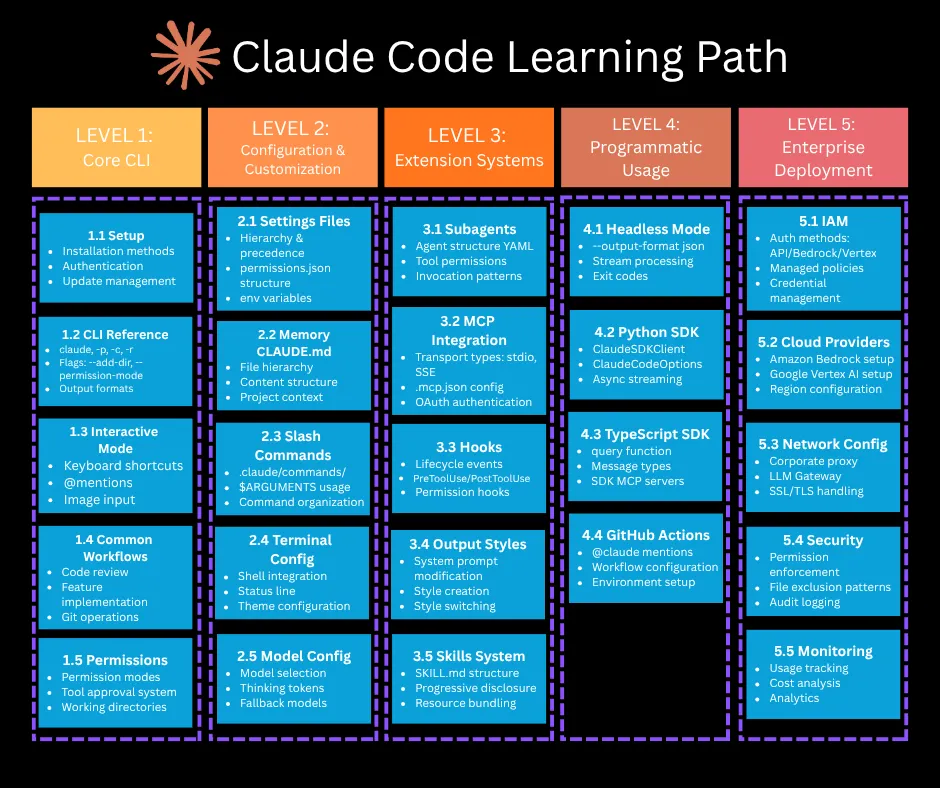
- Skill Files/Function Calling: Defining external tools and APIs for the model to use, as it cannot natively learn new capabilities.
- Connectors & RAG: Building pipelines to fetch and inject relevant, up-to-date information from external databases because the model's knowledge is frozen at its training cutoff.
- Orchestration & Documentation: Managing this fragile assembly of parts through markdown files and complex workflows.
As Mollick implies, this is not the elegant, autonomous intelligence often envisioned. It is a labor-intensive engineering discipline built to compensate for a model's fundamental inability to learn on the job.
The Unsolved Problem: Continual Learning
Continual learning (also called lifelong or incremental learning) is a long-standing challenge in machine learning. It refers to a system's ability to learn sequentially from a stream of data, accumulating knowledge over time while retaining and integrating previous skills. The primary obstacle is catastrophic forgetting—where learning new information abruptly degrades performance on previously learned tasks.
For large foundation models, the standard practice is periodic, costly, and disruptive "retraining" or "fine-tuning" on updated datasets. This is not continual learning; it's a batch process that creates a new static snapshot of the model.
What Would Change?
If robust continual learning were solved at scale for LLMs, the shift would be profound:
- The End of Knowledge Cutoffs: Models would stay current by learning from the world in near real-time, diminishing the core need for RAG for basic knowledge updates.
- Reduced Prompt Engineering: A model that learns from interaction would require less precise, initial prompting to understand a user's intent and domain.
- Evolving Capabilities: Skill files could be learned through demonstration and use, not just pre-defined. The model could genuinely improve at a task over time based on feedback.
- Simplified Stacks: The complex glue code connecting vector databases, tools, and the model would be internalized into a single, learning system.
The Road Ahead

Research into continual learning for LLMs is active but nascent. Techniques like parameter-efficient fine-tuning (LoRA, QLoRA), replay buffers, and architectural modifications are being explored. However, a solution that is stable, scalable, and cost-effective for production-grade models remains a key frontier.
Mollick's observation serves as a strategic lens for builders and investors. It asks: How much of your current tech stack is a permanent architecture, and how much is a temporary scaffold waiting for a foundational breakthrough?
gentic.news Analysis
Mollick's critique cuts to the heart of the AI engineering industry's current business model. The entire ecosystem of vector database companies (like Pinecone and Weaviate), orchestration platforms (LangChain, LlamaIndex), and specialized consulting is built atop what he frames as a compensatory layer. This aligns with a trend we've noted: the rapid commodification of basic RAG tooling and the subsequent pivot by these companies towards more complex "agentic" workflows, which are themselves another layer of workaround for autonomous learning.
This observation also provides crucial context for interpreting research announcements from entities like DeepMind, OpenAI, and Anthropic. When these labs discuss improved reasoning, planning, or "agent-like" behavior, the subtext is often a step toward systems that require less manual orchestration. For instance, OpenAI's reported work on "Strawberry" (or Q*) is fundamentally about enabling models to perform deeper, recursive reasoning—a capability that would reduce the need for external chain-of-thought prompting frameworks. The competitive race is not just toward bigger models, but toward models that require less external engineering to be useful.
Furthermore, this connects to the rising investment in neuromorphic computing and spiking neural networks (covered in our analysis of Intel's Loihi 3), where a core research promise is hardware that naturally supports continuous, efficient learning. The hardware, software, and algorithmic paths are all converging on the same fundamental problem Mollick identifies.
Frequently Asked Questions
What is continual learning in AI?
Continual learning is the ability of an artificial intelligence system to learn continuously from a stream of new data and experiences over its lifetime, integrating this new knowledge with what it has previously learned without catastrophically forgetting old skills. It mimics how humans and animals learn, in contrast to today's AI models which are typically trained once on a static dataset.
Why is continual learning so difficult for AI models like LLMs?
The primary challenge is catastrophic forgetting. When a neural network is trained on new data, the adjustments made to its parameters to accommodate this new information often overwrite the patterns that encoded previous knowledge. Large models also have immense computational and memory costs associated with frequent updates, making real-time learning impractical with current methods.
What are researchers doing to solve continual learning for LLMs?
Current research focuses on several approaches: 1) Parameter-Efficient Fine-Tuning (PEFT) methods like LoRA, which update only small, adapter modules to learn new tasks, leaving the core model intact; 2) Architectural methods that isolate or expand network components for new knowledge; 3) Replay-based methods that interleave old training data with new data; and 4) Meta-learning approaches that train models to be better at learning new things quickly.
If continual learning is solved, will prompt engineers be out of a job?
Not entirely, but the role would fundamentally change. The need for intricate, one-shot prompting to overcome knowledge gaps or behavioral quirks would diminish. Expertise would likely shift toward providing high-quality feedback and curating learning experiences for the AI, designing the environments and reward signals that guide its continuous improvement—a shift from "programmer" to "trainer" or "curator."