Key Takeaways
- The source article aims to dispel confusion by explaining that fine-tuning modifies a model's knowledge and behavior, while RAG provides it with external, up-to-date information.
- Choosing the right approach is foundational for any production LLM application.
What Happened

A new article on Medium seeks to cut through a persistent point of confusion in the development of Large Language Model (LLM) applications: the choice between fine-tuning and Retrieval-Augmented Generation (RAG). The core thesis is straightforward but vital—these are not interchangeable techniques but solve fundamentally different problems. This clarification is essential for technical leaders architecting AI systems, as misapplying either tool leads to wasted resources and failed projects.
Technical Details: Two Different Tools for Two Different Jobs
The article positions fine-tuning and RAG as complementary components in an AI stack, each with a distinct purpose.
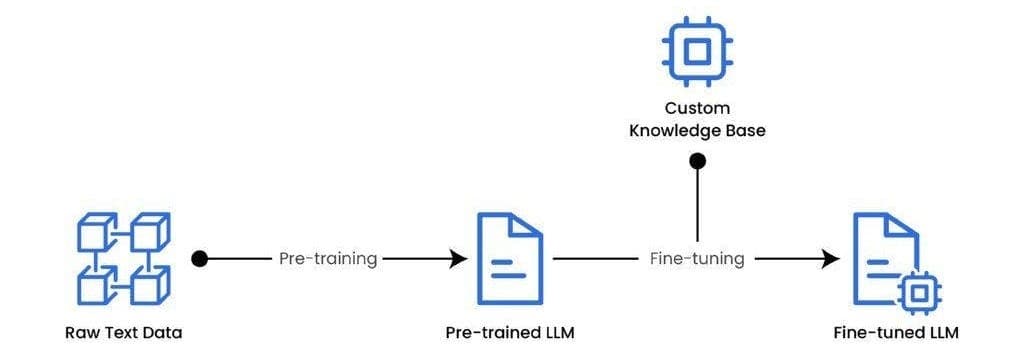
Fine-Tuning is the process of further training a pre-trained foundation model (like GPT-4 or Llama 3) on a specific, curated dataset. This adapts the model's weights, teaching it new skills, a specialized style, or proprietary knowledge that becomes part of its core reasoning. It's ideal for tasks like:
- Adopting a specific brand voice or tone of service.
- Learning a complex, structured internal taxonomy (e.g., product categorization).
- Mastering a rare or highly technical domain language.
The key outcome is a permanently changed model that excels at a narrow set of tasks but whose knowledge is frozen at the point of training.
Retrieval-Augmented Generation (RAG), in contrast, is an inference-time architecture. It keeps the core LLM's knowledge static but equips it with a "search engine"—a vector database of external documents (PDFs, knowledge bases, CRM data). For each user query, the RAG system first retrieves the most relevant snippets from this database and then instructs the LLM to generate an answer based solely on that provided context. It solves the problems of:
- Hallucination: The model is grounded in retrieved facts.
- Knowledge Recency: The database can be updated daily or hourly.
- Data Privacy: Sensitive source documents never need to be in the model's training data.
RAG is the go-to solution for building question-answering systems over dynamic, proprietary corporate data.
The article's crucial point is that the choice isn't "either/or" but "what for?" A sophisticated system might use a fine-tuned model for its superior reasoning in a domain, wrapped in a RAG pipeline to provide it with the latest operational data.
Retail & Luxury Implications
For retail and luxury AI leaders, this distinction maps directly to critical use cases and investment decisions.
When to Consider Fine-Tuning:
- Brand Voice & Copy Generation: Training a model on decades of campaign copy, press releases, and product descriptions to generate on-brand marketing and e-commerce content.
- Styling Assistant Personality: Creating a conversational agent with the curated expertise and tone of a master stylist or heritage maison archivist.
- Complex Attribute Normalization: Teaching a model to consistently interpret and tag vague product descriptions (e.g., "champagne" vs. "nude" vs. "blush" for color) according to a strict internal master data schema.
When RAG is the Default Choice:
- Dynamic Customer Service: Building an agent that answers questions based on the latest return policies, shipping statuses, loyalty program terms, and product inventory—all information that changes constantly.
- Internal Knowledge Search: Allowing store managers or regional directors to instantly query aggregated data from past season reports, supplier contracts, and operational manuals.
- Personalized Clienteling: Providing sales associates with a tool that can pull together a client's purchase history, noted preferences, and CRM interactions to suggest the next perfect product.
Attempting to use fine-tuning alone for a use case like customer service would result in a model that is instantly outdated. Conversely, using only RAG for tone-of-voice generation would fail to instill the deep, consistent brand essence that fine-tuning can achieve.
Implementation Approach

The technical and operational requirements differ significantly.
Fine-Tuning requires substantial upfront investment: a large, high-quality, domain-specific dataset; significant GPU compute resources (or managed cloud services); and ML engineering expertise for training, evaluation, and ongoing model management. The output is a new, standalone model artifact.
RAG is an architectural challenge. It requires building and maintaining a pipeline: a document ingestion system, a high-quality embedding model (like Gemini Embedding 2, which, as our KG data shows, is used in RAG systems), a vector database (e.g., Pinecone, Weaviate), and a robust retrieval-and-generation orchestration layer. The complexity lies in ensuring retrieval quality, managing context windows, and implementing evaluation metrics beyond simple relevance.
Governance & Risk Assessment
- Fine-Tuning Risk: The training data must be impeccably curated to avoid baking in biases, errors, or sensitive information that cannot be later removed without retraining. Model drift and the cost of periodic retraining are ongoing concerns.
- RAG Risk: Governance shifts to data access control. The system must have strict permissions ensuring a user or agent can only retrieve documents they are authorized to see. There is also the risk of the retrieval system failing, as highlighted by a cautionary tale about RAG system failure at production scale covered in our KG timeline (2026-03-25). The system's performance is only as good as its search index and the freshness of its data.
gentic.news Analysis
This foundational clarification arrives at a pivotal moment in enterprise AI adoption. Our Knowledge Graph intelligence shows Retrieval-Augmented Generation is a dominant trend, appearing in 97 prior articles and 5 this week alone. Recent history indicates a market consolidation around RAG for production systems; an enterprise trend report (2026-03-24) showed a strong preference for RAG over fine-tuning for deployable AI. This aligns with our own recent coverage, such as "Why Most RAG Systems Fail in Production: A Critical Look at Common Pitfalls" (2026-04-11), which delves into the real-world challenges of moving beyond prototypes.
Conversely, the discourse around Fine-Tuning is evolving. As noted in our KG timeline, there is a growing argument that fine-tuning is losing its potency as a unique differentiator (2026-03-19) in favor of data-quality and pipeline-focused approaches. This doesn't render it obsolete but reframes it as a specialized tool within a broader stack, precisely the point the source article makes.
For luxury and retail technical leaders, the takeaway is strategic: your AI roadmap must clearly separate initiatives that require capability specialization (often fine-tuning) from those that require dynamic knowledge access (almost always RAG). The most powerful systems, like the IKGR product or Claude Code referenced in our entity relationships, will combine both. Start by auditing your potential AI use cases through this lens. Invest in the data infrastructure for RAG as a foundational enterprise capability, and reserve fine-tuning projects for where a unique, enduring competitive behavior is the goal.