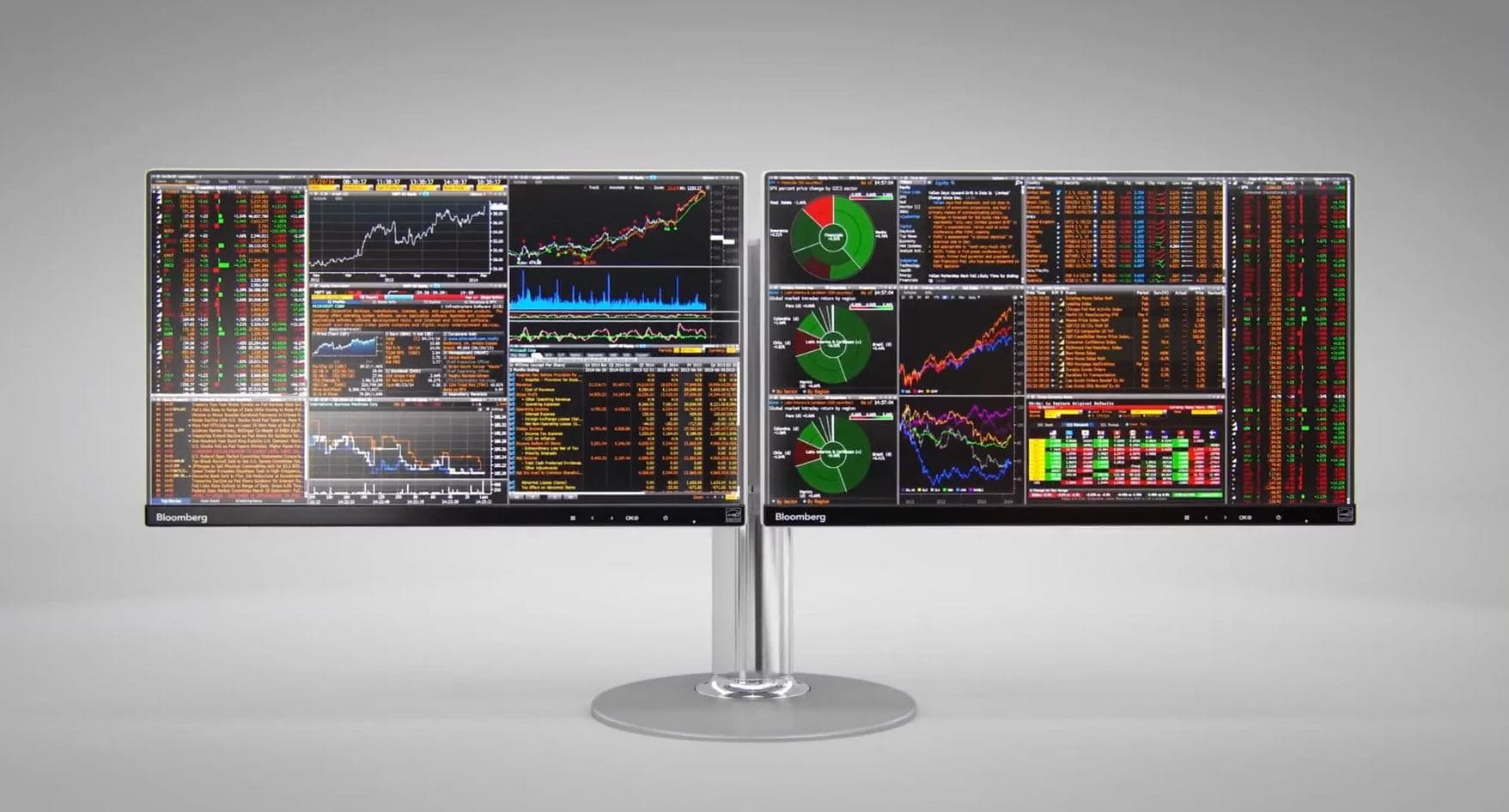
A developer has built and released a free skill for Anthropic's Claude AI that aims to replicate core functionalities of a Bloomberg Terminal, the expensive, industry-standard platform for financial professionals. The tool, called finance-skills, runs directly within the Claude interface, allowing users to query real-time market data, financial metrics, and analysis through natural conversation.
What Happened
The tool was highlighted in a social media post by AI educator Jaina Gandhi (@aiwithjainam). According to the post, "finance-skills" is a freely available skill that users can enable for their Claude instance. Once activated, it allows Claude to pull in financial data and perform analyses that typically require a subscription to a dedicated terminal service like Bloomberg or Refinitiv Eikon.
What the Tool Does
While the original post does not provide exhaustive technical documentation, it indicates the skill enables Claude to:
- Access real-time and historical market data (e.g., stock prices, indices, forex rates).
- Retrieve key financial metrics and fundamentals for companies.
- Perform financial analysis and generate summaries based on this data.
- Operate entirely within the Claude chat interface, removing the need to switch between a terminal and an AI assistant.
The core value proposition is accessibility. A Bloomberg Terminal license costs approximately $24,000 per user per year, putting it out of reach for most individuals, students, and small firms. This skill attempts to democratize access to a subset of that functionality by leveraging Claude's reasoning capabilities and connecting it to financial data APIs.
Technical Context & Limitations
This development is part of a broader trend of creating "skills" or "tools" for large language models (LLMs) that extend their capabilities beyond pre-training knowledge. These are typically custom-built integrations that use the model's function-calling or API-connectivity features to query external data sources.
For a tool like finance-skills to work, it must:
- Have secure access to reliable financial data feeds (potentially from sources like Yahoo Finance, Alpha Vantage, or other market data providers).
- Define a clear set of functions or APIs that Claude can call.
- Structure Claude's prompts to understand financial queries, call the correct data function, and interpret the results conversationally.
Important Caveats: The post does not specify the exact data sources, update frequency, or depth of analysis. It is unlikely this free tool matches the breadth, depth, low-latency, and exclusive analytics (e.g., Bloomberg's proprietary estimates and news) of the full Bloomberg Terminal. Its utility will be bounded by the quality and terms of its underlying data APIs.
Why It Matters

This release highlights the ongoing disruption of specialized, high-cost professional software by AI-augmented, general-purpose interfaces. The financial industry has long been defined by information asymmetry and expensive data access. Tools like this, even in a limited form, lower the barrier to entry for financial analysis and literacy.
For developers, it showcases the potential to build vertical-specific "co-pilots" by combining LLMs with domain-specific data pipelines. The model acts as a natural language interface to complex databases, which is a foundational pattern for enterprise AI adoption.
gentic.news Analysis
This development fits squarely into two major, converging trends we've been tracking. First, it exemplifies the democratization of high-cost professional tools via AI, a pattern we observed with the rise of coding assistants like GitHub Copilot disrupting traditional IDE markets. The financial data terminal, a fortress of exclusivity, is now facing the same pressure from lightweight, AI-powered alternatives.
Second, it underscores the strategic importance of Claude's expanding skill ecosystem. While OpenAI's GPTs and custom actions have garnered more attention, Anthropic has been steadily fostering a developer community around extending Claude for specific use cases. This finance skill is a tangible outcome of that strategy. It aligns with Anthropic's focus on building a trustworthy, enterprise-ready model; a reliable financial analysis tool directly serves that professional user base.
However, the critical question is data provenance and reliability. In our coverage of AI in finance, we've consistently noted that the value isn't just in the query interface but in the quality, latency, and licensing of the data. A free tool is inherently limited by the terms of free-tier data APIs, which often have rate limits and lack institutional-grade depth. This makes the tool excellent for education, retail investors, and preliminary research, but not a replacement for the Bloomberg Terminal in a professional trading or analysis context. The real competitive threat to Bloomberg may not be a free skill, but a well-funded startup that pairs a top-tier LLM with licensed, institutional data feeds at a fraction of the cost.
Frequently Asked Questions
How do I add the finance-skills tool to Claude?
While the exact installation process isn't detailed in the source, skills for Claude are typically added through Anthropic's developer console or by using a specific skill link/identifier within the Claude interface. You would likely need to visit the tool's repository (e.g., on GitHub) or a dedicated skill directory for setup instructions.
Is this tool as powerful as a real Bloomberg Terminal?
No. The free finance-skills tool provides a subset of functionality focused on data retrieval and basic analysis via an AI chat interface. A full Bloomberg Terminal offers unparalleled depth of data (including proprietary analytics, estimates, and news), ultra-low-latency feeds, a vast suite of built-in analytical functions (BLP), and direct communication (IB) capabilities that are not replicable by a simple API integration.
What are the potential risks of using a free financial AI tool?
The primary risks revolve around data accuracy, timeliness, and completeness. Free data APIs can have errors, delays, or missing information. Making financial decisions based on incomplete or stale data can lead to significant losses. Always verify critical data with primary sources before acting on it.
Could Bloomberg or other data providers shut this tool down?
Potentially, yes. If the tool scrapes data from websites or uses APIs in violation of their Terms of Service, the provider could issue a cease-and-desist or block access. Sustainable tools of this kind need formal data licensing agreements, which cost money, challenging the "free" model in the long term.