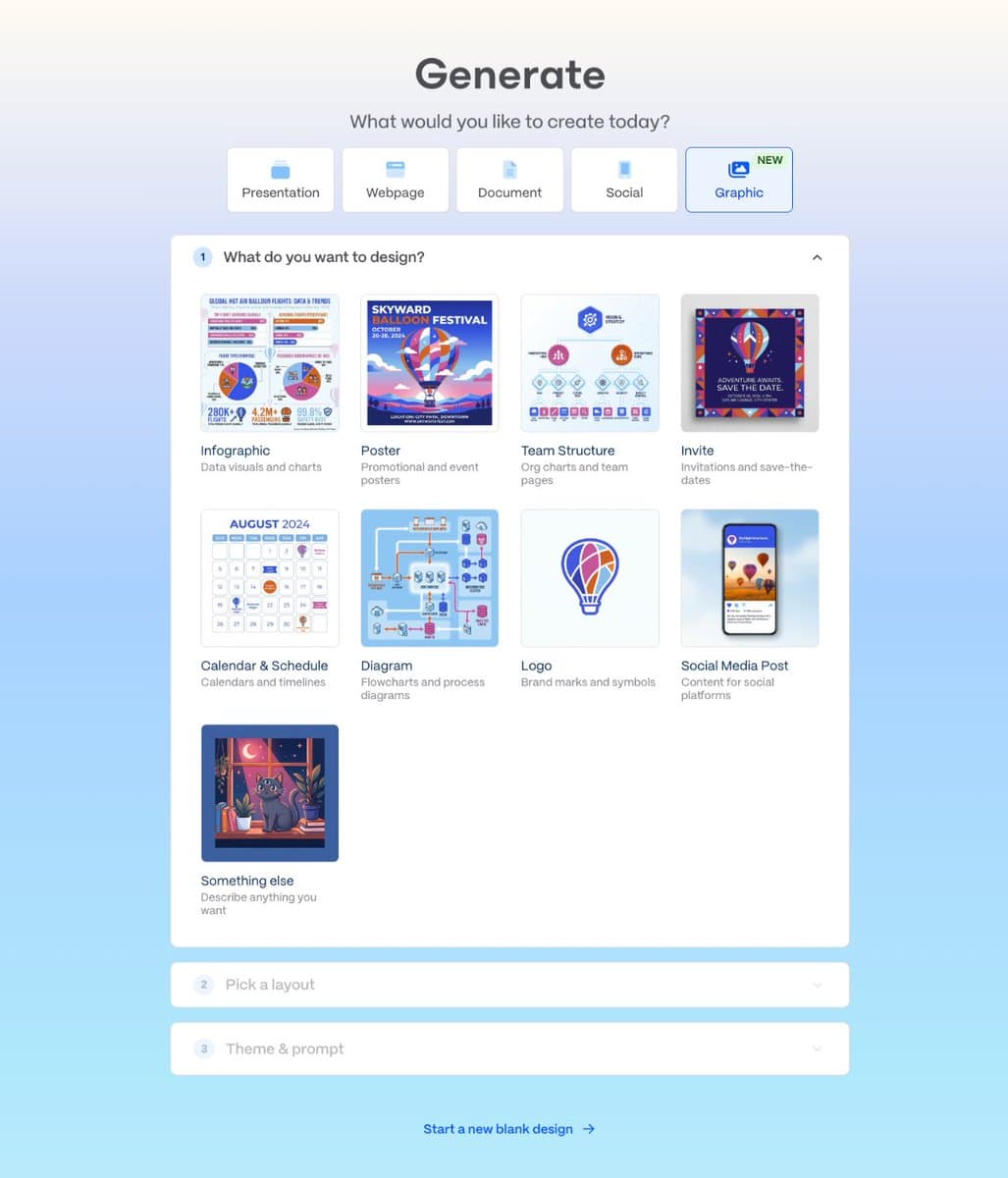
Gamma, the AI-powered presentation platform, has launched a new feature called Gamma Imagine. The tool is designed to generate professional-quality visual assets for presentations directly from a text description, aiming to streamline the slide creation process for users without design expertise.
What's New
Gamma Imagine allows users to type a prompt describing a visual concept—such as "a futuristic cityscape with flying cars" or "a bar chart showing Q3 revenue growth"—and receive a generated image formatted for a presentation slide. The feature is integrated directly into Gamma's editor, eliminating the need to switch to a separate design tool like Canva or Adobe Express, search for stock photos, or manipulate complex templates.
According to the announcement, the process takes "seconds" and requires "no design skills." The core promise is to make the addition of custom, relevant visuals a routine part of building a presentation, rather than a bottleneck that requires outsourcing or significant time investment.
Technical Details & Context
While the specific announcement did not detail the underlying model, Gamma's platform is built on a foundation of generative AI. The company previously leveraged large language models (like GPT-4) for structuring and writing presentation content. The Imagine feature likely integrates a text-to-image generation model—potentially a fine-tuned version of Stable Diffusion, DALL-E 3, or a proprietary model—directly into its workflow.
The move is a direct enhancement of Gamma's core value proposition: an end-to-end, AI-native document creation suite. Unlike general-purpose image generators, Imagine is presumably optimized for outputs that fit cleanly into business and presentation contexts, with appropriate aspect ratios, styles, and thematic consistency.
How It Compares
The presentation software market is rapidly adopting generative AI. Gamma's main competitor, Beautiful.AI, has long offered automated design, but its strength is in template-based layout adjustment rather than bespoke image generation. Microsoft PowerPoint and Google Slides have integrated AI co-pilots (Microsoft Copilot and Duet AI, respectively) for content generation and design suggestions, but their image creation capabilities are often tied to separate tools or are less seamless.
Gamma Imagine appears to compete more directly with the workflow of using Midjourney or DALL-E in one tab and a presentation tool in another. By baking this functionality in-house, Gamma aims to own the entire creative pipeline for a business communicator.
Gamma Imagine Integrated text-to-presentation-visuals Native, prompt-based in editor Beautiful.AI Automated slide layout & design Template & icon-based, not generative PowerPoint Copilot Content drafting, slide formatting Limited; uses Designer suggestions & Bing Image Creator Canva AI Multi-format design (social, docs, etc.) Powerful Magic Media for images & videoWhat to Watch
The success of Imagine will hinge on the quality, relevance, and commercial safety of its generated images. Business users have low tolerance for awkward anatomy, inaccurate data visualizations, or potential copyright issues from AI training data. Gamma will need to ensure its model is robustly filtered and aligned for professional use.
Furthermore, the feature's impact will be measured by whether it truly saves time for teams. If the generated visuals require significant editing or prompting to be usable, the value proposition weakens. Early user feedback will be critical to see if it moves beyond a novelty to a core utility.
gentic.news Analysis
Gamma's launch of Imagine is a logical and aggressive step in the vertical integration of AI for productivity software. This follows the company's 2024 Series B funding round led by Accel, which was explicitly aimed at expanding its AI capabilities beyond text generation. The move aligns with a clear trend we've tracked: specialized SaaS platforms are moving to own their full AI stack rather than relying on generic API calls, aiming to create more cohesive and differentiated user experiences.
This development also sharpens the competitive battle with Canva, which has heavily invested in its own Magic Media AI suite. While Canva is a broader design platform, its foray into presentations and documents puts it on a collision course with Gamma. Gamma's bet is that a dedicated, opinionated tool for presentations will outperform a generalist. The entity relationship graph shows Gamma and Canva as direct competitors in the AI-powered design space, with both receiving significant venture capital to fuel this race.
For technical leaders, the takeaway is the continued "de-skilling" of creative tasks through tightly integrated AI. The barrier to producing visually competent work is dropping rapidly. The strategic question for businesses is whether to adopt these all-in-one platforms like Gamma or assemble a best-of-breed suite (e.g., ChatGPT + Midjourney + PowerPoint). Gamma is betting that convenience and integration will win.
Frequently Asked Questions
What is Gamma Imagine?
Gamma Imagine is a new AI feature within the Gamma presentation platform that generates custom images for slides based on a user's text prompt. It is designed to create professional-looking visuals without requiring any design skills or leaving the Gamma editor.
How does Gamma Imagine differ from using DALL-E or Midjourney?
The key difference is integration. While DALL-E and Midjourney are standalone AI image generators, Gamma Imagine is built directly into the presentation creation workflow. You describe the visual you need for your slide, and it is generated and placed into your deck automatically, formatted correctly, without copying, pasting, or resizing.
Is Gamma Imagine free to use?
The announcement did not specify pricing details. Typically, advanced AI features like this are included in Gamma's paid subscription tiers (Pro or Team plans). It is unlikely to be available on a completely free plan due to the computational costs of image generation.
What kind of image prompts work best with Gamma Imagine?
For best results, prompts should be clear and descriptive of the desired scene, concept, or data visualization needed for a business presentation. Examples include "a diverse team collaborating in a modern office," "a flowing pipeline diagram for customer onboarding," or "an abstract background with geometric shapes and a blue color scheme."