What Happened
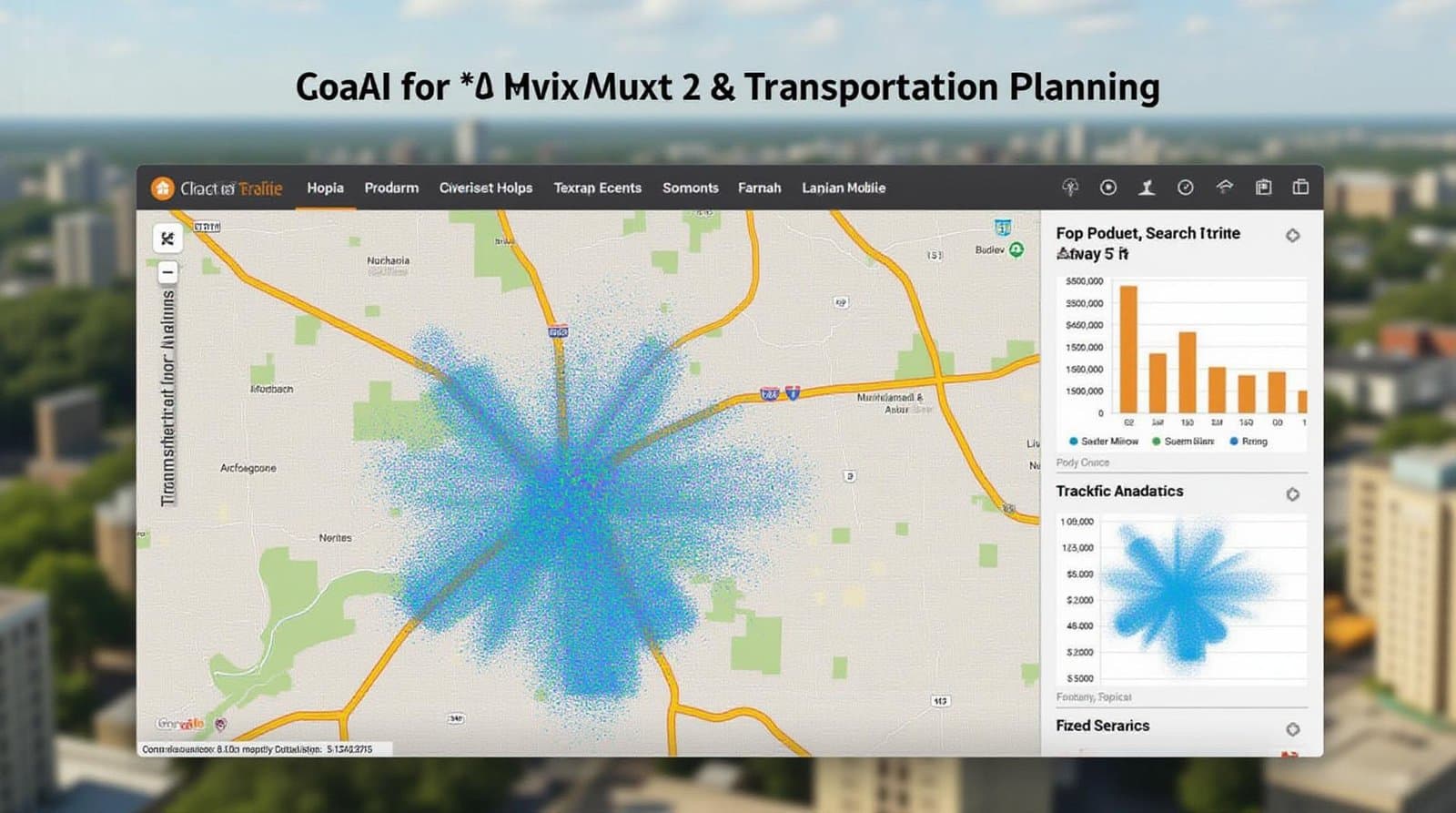
Researchers have developed a novel GeoAI Hybrid analytical framework that significantly outperforms conventional models in predicting urban traffic flow patterns. Published on arXiv as a preprint (submitted March 5, 2026), the study addresses the complex, nonlinear interaction between land use configuration and spatiotemporally heterogeneous mobility demand—a challenge that conventional global regression and time-series models struggle to capture across multiple travel modes.
The framework sequentially integrates three established techniques:
- Multiscale Geographically Weighted Regression (MGWR) to handle spatial heterogeneity
- Random Forest (RF) for feature importance analysis
- Spatio-Temporal Graph Convolutional Networks (ST-GCN) to model dynamic patterns
This combination allows the model to analyze three mobility modes simultaneously: motor vehicle, public transit, and active transport (walking/cycling).
Technical Details
The researchers applied their framework to an empirically calibrated dataset of 350 traffic analysis zones across six cities representing two contrasting urban morphologies. The results demonstrate substantial improvements over traditional approaches:

Performance Metrics:
- Root Mean Squared Error (RMSE): 0.119
- R²: 0.891
- Improvement over benchmarks: 23-62% better performance
Key Findings:
Predictor Importance: SHAP (SHapley Additive exPlanations) analysis revealed that land use mix is the strongest predictor for motor vehicle flows, while transit stop density most strongly predicts public transit usage.
Urban Traffic Typologies: DBSCAN clustering identified five functionally distinct urban traffic patterns with a silhouette score of 0.71, indicating well-separated clusters.
Spatial Autocorrelation Reduction: The GeoAI Hybrid residuals exhibited Moran's I=0.218 (p<0.001), representing a 72% reduction in spatial autocorrelation relative to ordinary least squares (OLS) baselines.
Transferability: Cross-city transfer experiments showed moderate within-cluster transferability (R²≥0.78) but limited cross-cluster generalizability, emphasizing the importance of urban morphological context.
The framework provides urban planners and transportation engineers with an interpretable, scalable toolkit for evidence-based multimodal mobility management and land use policy design.
Retail & Luxury Implications
While this research focuses on urban planning and transportation, several aspects have potential relevance for retail and luxury sectors:

Logistics and Supply Chain Optimization:
The ability to accurately model traffic flows across multiple transportation modes could enhance last-mile delivery planning for luxury goods. High-end retailers with same-day or scheduled delivery services could use similar approaches to predict optimal delivery routes and times, potentially reducing delays and improving customer experience.
Store Location Analysis:
The finding that land use mix strongly predicts vehicle traffic patterns suggests that retail location decisions should consider not just foot traffic but broader urban mobility patterns. Luxury brands selecting flagship locations might benefit from analyzing how different urban typologies affect accessibility via various transportation modes.
Customer Journey Mapping:
The multimodal approach (considering vehicles, transit, and active transport) aligns with how affluent customers actually move through cities. Understanding these patterns could inform everything from marketing campaigns timed with commute patterns to designing retail experiences that cater to customers arriving via different transportation modes.
Event Planning:
For luxury brands hosting events, the framework's ability to identify distinct urban traffic typologies could help predict attendance patterns and optimize logistics for high-profile launches or VIP shopping events.
However, it's important to note that this is academic research focused on urban planning applications. Retail applications would require adaptation and validation with retail-specific data, which represents a significant implementation gap.