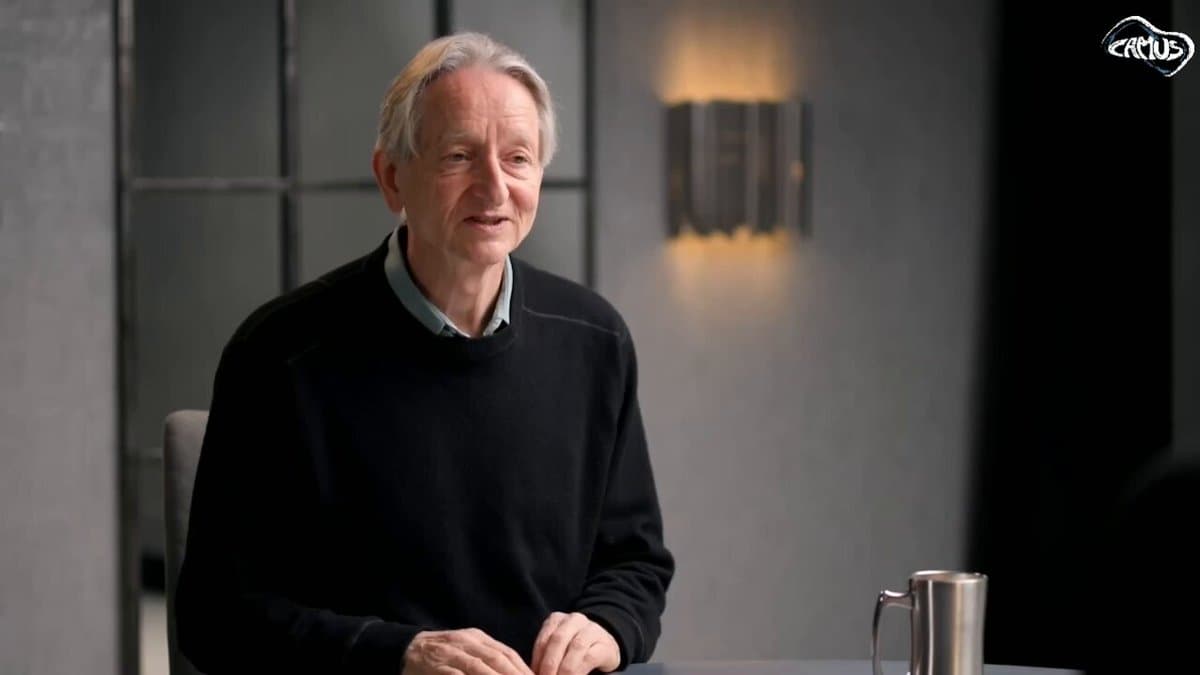
In a recent social media exchange that has sparked widespread discussion, Geoffrey Hinton—often called the "Godfather of AI" and a 2018 Turing Award winner (frequently compared to a Nobel Prize in computing)—offered unexpected career advice for an AI-dominated future. When asked about career prospects in a world approaching superintelligence, Hinton responded: "A good bet would be to be a plumber." He then added the crucial caveat: "But only until robots become very good."
This brief but loaded statement from one of AI's most respected voices encapsulates the complex relationship between artificial intelligence, employment, and the future of work. Hinton's comment, shared via X (formerly Twitter) by AI commentator Rohan Paul, has resonated across technology and labor discussions, highlighting both the immediate limitations and long-term potential of AI systems.
The Context of Hinton's Warning
Geoffrey Hinton's perspective carries particular weight given his foundational contributions to the field. His work on neural networks and deep learning in the 1980s and 1990s laid the groundwork for today's AI revolution, and his 2018 Turing Award recognized these transformative contributions. In recent years, however, Hinton has become increasingly vocal about AI's risks, having left Google in 2023 to speak more freely about his concerns regarding superintelligent systems.
Hinton's plumbing recommendation comes amid growing anxiety about AI's impact on white-collar professions. Large language models like GPT-4 and increasingly capable AI systems have demonstrated proficiency in tasks previously considered exclusively human domains: writing, coding, analysis, and even creative work. Meanwhile, physical trades like plumbing have remained relatively insulated from this wave of automation—at least for now.
Why Plumbing? The Physical Intelligence Gap
Hinton's suggestion highlights what roboticists call the "Moravec's Paradox"—the observation that high-level reasoning requires relatively little computation compared to low-level sensorimotor skills that have evolved over millions of years. While AI systems can now outperform humans at chess, Go, and complex strategic games, they struggle with the dexterity, adaptability, and physical intuition required for tasks like unclogging a drain or repairing a pipe in a cramped, unpredictable environment.
Plumbing represents a category of work that combines several challenging elements for automation:
- Unstructured environments: Every plumbing job presents unique spatial constraints and configurations
- Physical dexterity: Requires fine motor skills and manipulation of varied objects
- Problem-solving under uncertainty: Diagnosing issues without complete information
- Adaptability: Adjusting techniques to unexpected complications
- Customer interaction: Understanding and responding to human needs and concerns
These factors make plumbing—along with similar trades like electrical work, HVAC repair, and skilled construction—more resistant to near-term automation than many cognitive professions.
The Temporary Nature of the Advantage
Hinton's crucial qualification—"only until robots become very good"—acknowledges that this advantage is likely temporary. Robotics and embodied AI represent one of the field's most active research frontiers. Companies like Boston Dynamics, Tesla (with its Optimus robot), and numerous research institutions are making steady progress toward robots that can navigate complex physical environments and perform delicate manual tasks.
Recent advances in multimodal AI, combining vision, language, and physical control systems, suggest that the gap between digital and physical intelligence may be narrowing. Techniques like reinforcement learning in simulated environments, transfer learning to real-world applications, and improved robotic hardware are gradually extending AI's reach into the physical world.
Broader Implications for Education and Policy
Hinton's comment raises important questions about how societies should prepare for an AI-transformed workforce. His suggestion implicitly challenges the prevailing emphasis on STEM education as a universal solution to employment challenges. While technological skills remain valuable, they may not provide the long-term security many assume, particularly as AI systems become increasingly capable at programming, data analysis, and technical design.
This perspective suggests a more nuanced approach to workforce development might include:
- Revaluing skilled trades: Recognizing their current resistance to automation
- Emphasizing hybrid skills: Combining technical knowledge with physical or interpersonal abilities
- Prioritizing adaptability: Preparing workers for multiple career transitions
- Considering human-AI collaboration: Designing roles that leverage both human and machine strengths
Historical Parallels and Future Projections
The current moment echoes previous technological transitions while presenting unique challenges. During the Industrial Revolution, skilled artisans initially resisted mechanization before new roles emerged. The computer revolution similarly transformed office work while creating entirely new categories of employment. However, AI's potential to automate both physical and cognitive tasks simultaneously represents a qualitatively different challenge.
Economists are divided about whether AI will create sufficient new employment to replace what it displaces. Some point to historical patterns of technological job creation, while others note that AI's general-purpose nature might allow it to perform an unprecedented range of human work.
The Ethical Dimension of Automation
Hinton's career advice—delivered with characteristic dry wit—also touches on deeper ethical questions about automation priorities. If society can automate plumbing, should it? What work should remain human-dominated, either for practical or social reasons? These questions extend beyond economic efficiency to considerations of human dignity, community structure, and the value of skilled craftsmanship.
Some philosophers and economists argue for preserving certain forms of human work regardless of automation potential, suggesting that meaningful employment contributes to individual purpose and social cohesion in ways that pure efficiency calculations miss.
Conclusion: Navigating the Transition
Geoffrey Hinton's plumbing prescription serves as both practical short-term advice and a metaphor for broader workforce challenges. It reminds us that AI's impact will be uneven across professions, creating unexpected safe harbors and vulnerabilities. The trades' current advantage highlights the complex relationship between cognitive and physical intelligence—a gap that researchers are actively working to close.
As individuals consider career paths and societies design education systems, Hinton's perspective suggests several principles: avoid assuming any profession is permanently automation-proof, develop adaptable skill sets, and recognize that the most valuable human contributions may increasingly involve capabilities that complement rather than compete with AI systems.
The ultimate lesson may be that in an age of accelerating technological change, the most valuable career skill might be the ability to periodically reassess and reinvent one's professional identity—perhaps even transitioning from cognitive work to trades and back again as the automation frontier advances.
Source: Geoffrey Hinton's comments via X (formerly Twitter) as shared by @rohanpaul_ai