Escalating conflict in the Middle East has placed two critical maritime straits—the Strait of Hormuz and the Bab el-Mandeb Strait—at the center of a growing threat to the global AI chip supply chain. The situation, which has worsened in recent days, directly impacts the flow of essential materials and energy to the world's primary manufacturers of advanced semiconductors.
The Dual Chokepoint Threat

The analysis centers on two geographic bottlenecks:
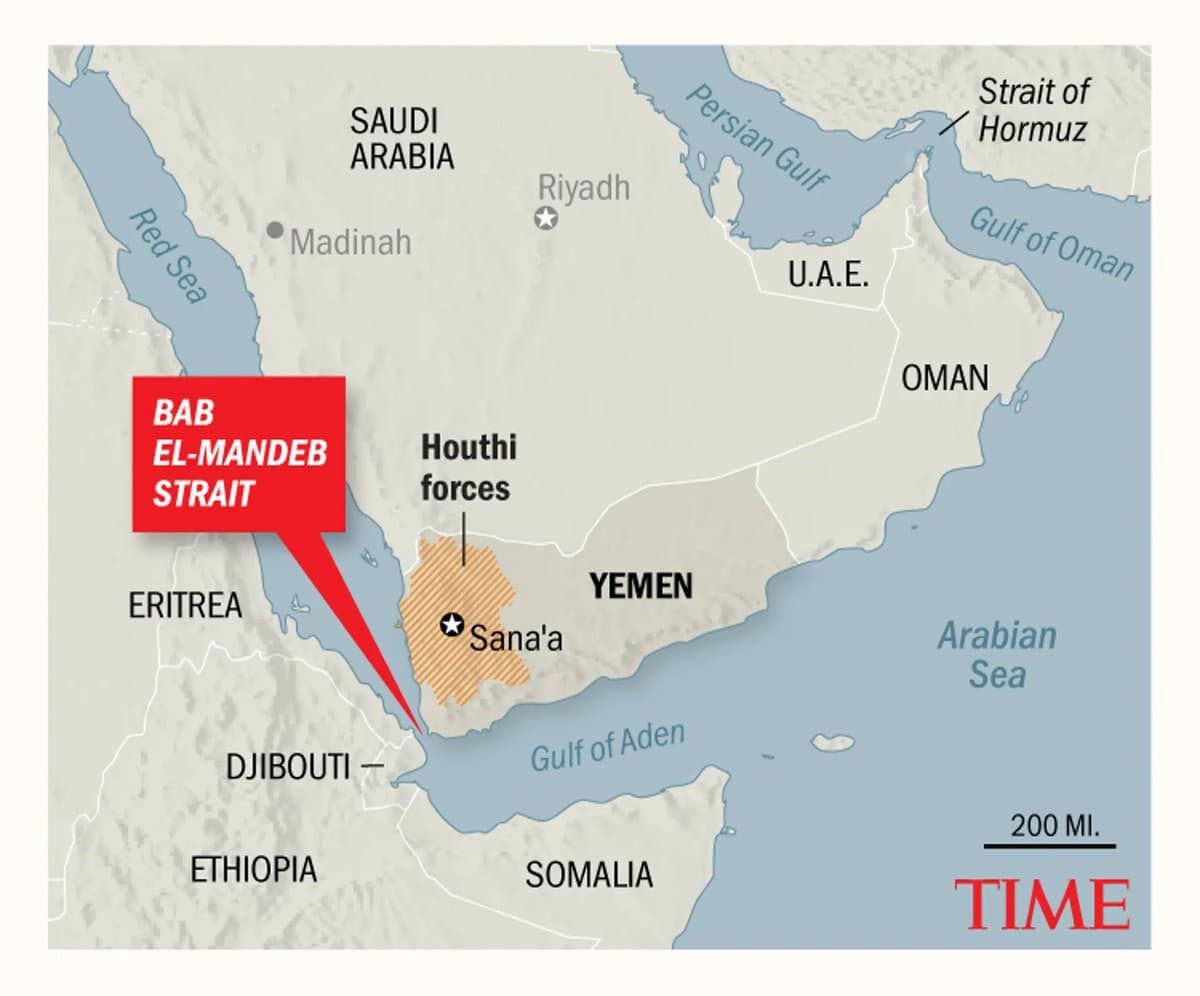
- The Strait of Hormuz: Already effectively shut due to regional conflict. This closure has had an immediate, tangible impact: a drone strike on Qatar's Ras Laffan facility—the world's largest helium plant—has knocked out approximately one-third of the global helium supply.
- The Bab el-Mandeb Strait: An 18-mile-wide passage between Yemen and Djibouti, controlled by Iran's Houthi allies. The Houthis have openly stated that closing this strait is "on the table."
While the Hormuz closure cripples a key material supply, a closure of Bab el-Mandeb would sever a critical energy export route, creating a compound crisis for chipmakers.
The Direct Impact on AI Chip Fabrication
The threat is not abstract; it targets specific, non-substitutable inputs for cutting-edge semiconductor manufacturing.
Helium is Non-Negotiable for Advanced Nodes
Helium is used to cool silicon wafers during fabrication at 3nm and below process nodes. There is no known substitute for this application. The loss of Qatar's output has immediate consequences:
- South Korea sources about 65% of its helium from Qatar.
- Taiwan faces a similar supply exposure.
These two regions are the epicenters of advanced AI chip production:
- SK Hynix manufactures an estimated 60% of the world's High Bandwidth Memory (HBM), the specialized DRAM inside every leading AI accelerator like NVIDIA's GPUs.
- TSMC produces roughly 90% of the world's leading-edge logic chips (sub-7nm), including those for Apple, AMD, and NVIDIA.
Both companies are now reportedly rationing helium.
Energy Supply Faces a Second Shock
A closure of the Bab el-Mandeb Strait would trigger an energy crisis. Saudi Arabia built a pipeline to the Red Sea port of Yanbu as a workaround for Hormuz closures. If Bab el-Mandeb closes, this last major export route from the region would be blocked.
Combined, the closure of both straits would block an estimated 25% of global energy supply. Taiwan, which imports over 95% of its energy and maintains only about 11 days of liquefied natural gas (LNG) reserves, would face a direct threat to the continuous power required by TSMC's gigafabs.
The Compounding Supply Chain Risk
The risks are not isolated; they converge on the same fragile infrastructure.
- Material Flow: Approximately 30% of global container shipping would be blocked from normal routing. This includes semiconductor manufacturing equipment, specialty chemicals, and finished chips.
- Convergent Vulnerability: The planned $500 billion AI data center buildout in 2026 depends on three interconnected pillars, all vulnerable to the same stretch of water:
- Helium from Qatar's Ras Laffan.
- Energy shipped through the contested straits.
- HBM memory chips from South Korea.
What This Means in Practice

For AI hardware developers and data center operators, this represents a tangible supply chain shock. Lead times for advanced GPUs and AI accelerators, already long, could extend further. Pricing for high-end components may see increased volatility. Contingency planning for critical infrastructure now must include geopolitical risk assessment of single-point-of-failure material supplies.
gentic.news Analysis
This analysis highlights a critical, and often underweighted, vulnerability in the AI hardware stack: geopolitical fragility in the physical supply chain. While the industry focuses on algorithmic breakthroughs and compute scaling, the foundation rests on a just-in-time logistics network that passes through some of the world's most volatile regions.
This situation connects directly to our previous reporting on the material constraints of the AI boom. In December 2025, we covered the helium shortage's initial impact on HBM production, noting SK Hynix's search for alternative suppliers. The current crisis is an acute escalation of that chronic issue. Furthermore, it validates concerns raised by TSMC founder Morris Chang for years about the concentration of advanced chipmaking in Taiwan, a region exposed to multiple strategic risks.
The trend here is a shift from demand-side constraints (e.g., wafer capacity) to supply-side shocks for enabling materials. Helium joins a list that includes neon (impacted by the Ukraine war) and high-purity quartz. For practitioners, this underscores the need to diversify not just chip suppliers, but the geographic and political sources of the raw and processed materials that make fabrication possible. The AI industry's roadmap is now inextricably linked to global trade routes and stability in the Middle East.
Frequently Asked Questions
Why is helium so critical for making AI chips?
Helium is an inert gas with extremely high thermal conductivity and a low boiling point. At advanced semiconductor nodes (3nm and below), the lithography and etching processes generate intense heat. Helium is used in cryogenic cooling systems to maintain the precise, ultra-low temperatures required to prevent wafer warping and ensure nanometer-scale accuracy. No other gas provides the same combination of non-reactivity and cooling performance.
Couldn't TSMC and SK Hynix just get helium from somewhere else?
In the short term, no. Qatar's Ras Laffan facility is the world's largest helium producer, and helium extraction is a byproduct of specific types of natural gas processing. Building new extraction and purification capacity takes years. Other major suppliers, like the United States, are already operating at capacity. This creates a global supply deficit that rationing cannot fully mitigate, potentially forcing fabs to slow production rates.
How would a chip production slowdown actually affect AI companies?
The impact would be sequential and multiplicative. First, lead times for new AI accelerator orders (from NVIDIA, AMD, or custom ASICs) would stretch from months to potentially over a year. Second, the cost of existing hardware (like H100/A100 GPUs) on the secondary market would spike due to scarcity. Third, and most significantly, the rollout timeline for next-generation chips (e.g., Blackwell successors) could be delayed, slowing the pace of achievable model scale and forcing AI labs to optimize more aggressively for efficiency on existing hardware.
Is there a long-term solution to this geographic concentration risk?
Long-term solutions are capital-intensive and slow. They include: 1) Helium recycling and conservation within fabs to reduce consumption. 2) Development of alternative cooling technologies that are less helium-dependent, though none are commercially viable at leading-edge nodes today. 3) Geographic diversification of advanced fabrication, a strategy being pursued by the US CHIPS Act and similar EU policies, but which will take most of this decade to achieve meaningful capacity. The immediate future remains one of heightened risk management.