The Rate Limit Problem for Deep Work
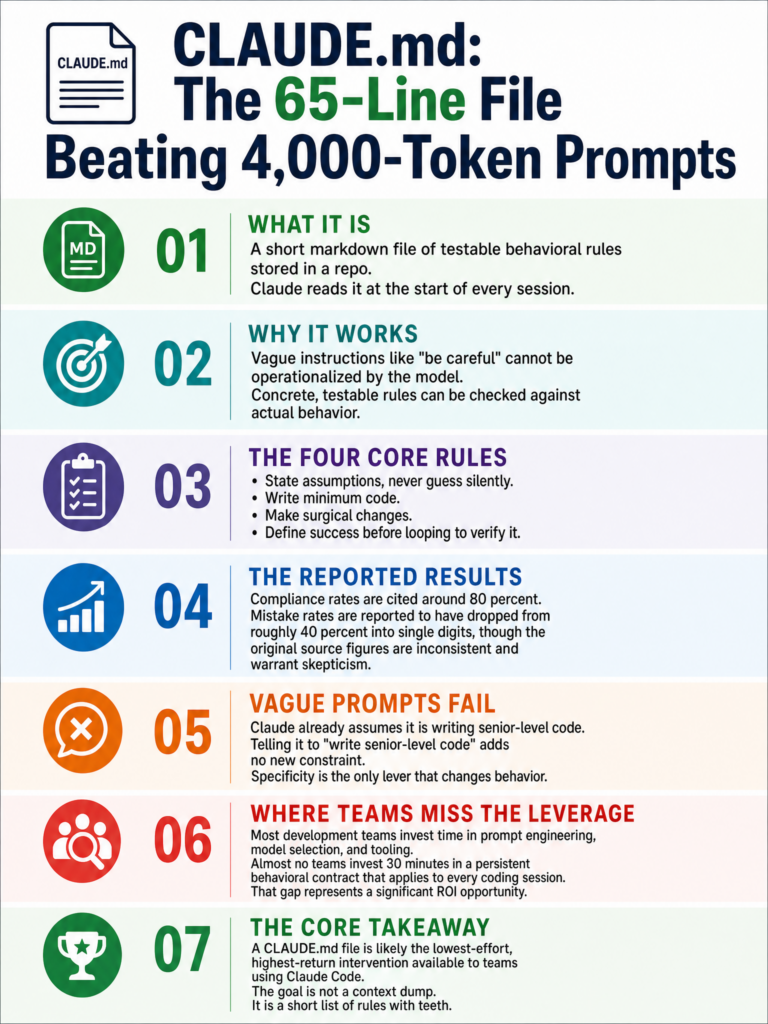
The official Claude Code subscription costs $20/month but enforces rate limits on requests. For most web development, this is fine. For deep, context-heavy work—like contributing to the Linux kernel—it's a workflow killer. A single session can involve loading dozens of files, tracing through stack traces, and reviewing patches, easily spanning 2-3 hours. Hitting a Rate limit exceeded message 90 minutes in means losing your loaded context and momentum.
The $2/Month Unlimited Proxy Solution
Instead of using the official Anthropic API endpoint, you can route Claude Code through a third-party proxy service. The source highlights SimplyLouie, which charges a flat $2/month for unlimited requests to the same Claude models. The setup is a simple environment variable change:
# Install Claude Code CLI globally
npm install -g @anthropic-ai/claude-code

# Point Claude Code to the proxy service
export ANTHROPIC_BASE_URL=https://simplylouie.com
export ANTHROPIC_API_KEY=your-key-here

# Run as usual
claude
Claude Code functions identically. Your requests go to the proxy, which forwards them to Anthropic and returns the responses. You get the same model intelligence without request throttling.
A Kernel Developer's Claude Code Workflow
With unlimited queries, your prompts can be expansive and iterative. Here’s the workflow used for Linux kernel contributions:
Subsystem Orientation: Load massive context without worry.
claude "I'm looking at the scheduler subsystem, specifically the CFS implementation in kernel/sched/fair.c. Give me a map of the key data structures and how they interact."Bug Investigation: Paste entire stack traces for analysis.
claude "Here's a stack trace from a kernel oops in the network stack: [paste stack]. Walk me through what each frame means and what state the system was in."Patch Review: Request comprehensive checks against kernel standards.
claude "Review this patch for correctness before I submit to LKML. Check for: locking violations, memory leak potential, style compliance with kernel coding standards."Commit Message Drafting: Leverage Claude's strength in structured writing.
claude "Draft a kernel commit message for this change. Include: what problem it solves, why this approach, any relevant Fixes: tags."
The Trade-offs and Considerations
This approach is powerful but comes with considerations. You are trusting a third-party proxy with your API traffic. While the source states SimplyLouie forwards requests to the official Anthropic API, you must evaluate the privacy and reliability of any proxy service. For mission-critical or sensitive proprietary work, the official subscription's direct integration and support may be worth the cost and limits. However, for open-source deep dives, personal projects, or any scenario where extended, unthrottled sessions are key, this proxy method is a compelling economic and workflow advantage.
gentic.news Analysis
This developer's workaround emerges directly from a significant ecosystem shift: the Linux kernel's official acceptance of AI coding assistants. Linus Torvalds recently merged documentation outlining strict guidelines for their use. This legitimizes tools like Claude Code for work on one of the world's most conservative codebases, creating immediate demand for professional-grade, long-session AI support. The $20/month Claude Code plan, designed for general use, hits a friction point with this new, intensive use case.
The proxy solution taps into a growing trend of API abstraction and cost optimization in the AI toolchain. It's similar to developers using services to manage GPT API costs, but applied here to Claude's coding-specific model. This story highlights a gap between standard SaaS pricing and the needs of power users performing deep systems programming—a gap that third-party services are quickly moving to fill. As AI becomes integral to more complex software maintenance, expect more developers to seek similar optimizations for unbroken flow states.