The Core Question — AI's Scalability vs. Luxury's Exclusivity
The Business of Fashion has framed the central strategic dilemma facing luxury brands in the age of artificial intelligence: Is AI fundamentally at odds with the core tenets of luxury? This is not a question about technical implementation, but about brand philosophy and market positioning.
The tension arises from a perceived conflict of values. Luxury is built on heritage, craftsmanship, scarcity, human touch, and exclusivity. It is a narrative sold through emotion, legacy, and often, a deliberate distance from the mass market. AI, in its current popular conception, is associated with automation, scalability, data-driven optimization, and accessibility. The fear is that integrating AI too deeply—whether in customer service, product design, or marketing—could mechanize the magic and democratize the exclusivity that justifies premium price points.
This debate is happening at the board level of major groups like LVMH, Kering, and Richemont. It's a question that precedes any RFP for a chatbot or a vision model. The article suggests the industry is grappling with where to draw the line: using AI for back-end logistics and inventory forecasting is one thing; using it to generate creative direction or to become the primary voice of the brand to a VIP client is another.
Why This Strategic Debate Matters for Retail & Luxury
For technical leaders in luxury, this philosophical debate directly translates into project scope, budget allocation, and success metrics.
Defining the "Human-AI Handoff": The critical decision is determining which customer and creative interactions must remain exclusively human. Can an AI concierge qualify a client for a haute couture appointment? Should an AI tool suggest color palettes for a new collection, or is that the sole domain of the creative director? The answers to these questions will define your architecture.
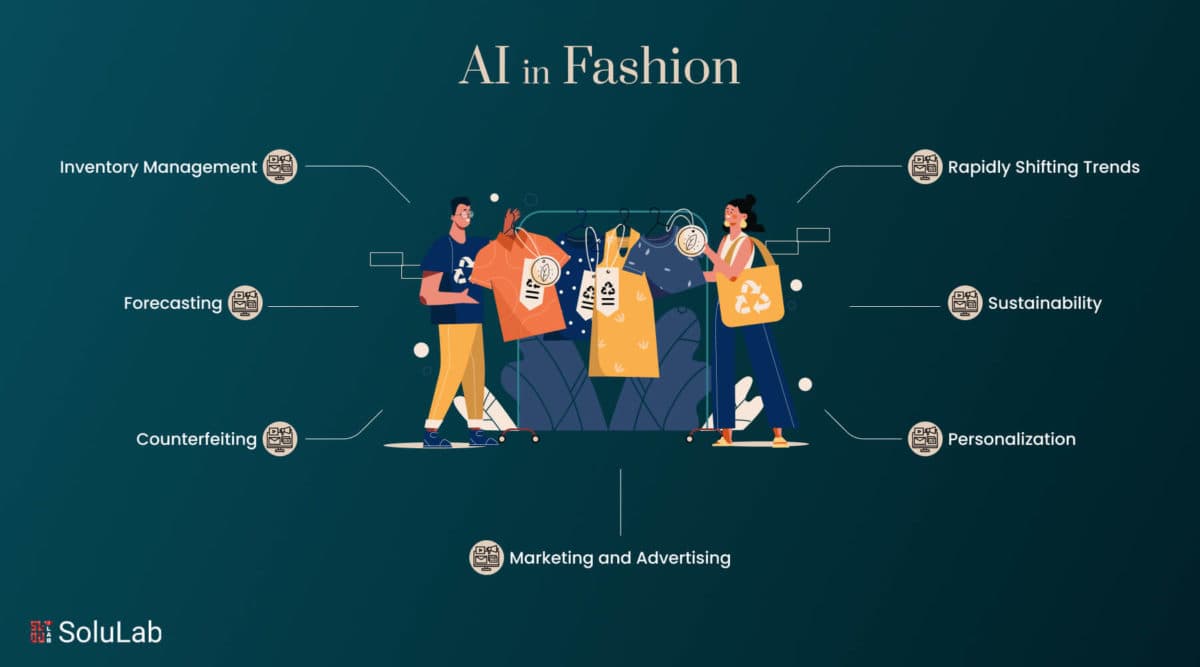
The "Invisible Engine" vs. "Visible Interface" Strategy: Many houses are adopting a strategy where AI is the powerful, invisible engine—optimizing supply chains, predicting regional demand for SKUs, or performing anti-counterfeiting analysis on social media imagery—but never the customer-facing persona. This preserves the human facade while leveraging efficiency gains.
Data Exclusivity as a New Luxury: One potential resolution to the tension is reframing AI not as a generic tool, but as a bespoke system trained on a brand's unique, proprietary data. The "luxury" becomes the AI model itself—a system imbued with the brand's specific history, aesthetic codes, and client knowledge, making it as exclusive as a private archive. This aligns with the trend of fine-tuning foundational models on proprietary datasets.
Business Impact — Navigating Perception and Reality
The business impact is less about direct ROI and more about brand equity risk management. A misstep in AI deployment that makes a brand feel generic or automated can cause significant reputational damage. Conversely, a clever, brand-coherent AI application (e.g., an AR try-on that feels magical, or a personal shopping assistant that demonstrates deep understanding of a client's history) can enhance perceived innovation and service.
The financial calculus involves:
- Risk: Potential dilution of brand value and alienation of core clientele.
- Opportunity: Significant efficiency savings in operations, hyper-personalization at scale, and new forms of digital product experience (e.g., digital-only fashion, AI-assisted custom design).
- Competitive Necessity: As competitors experiment, standing still is also a risk. The question becomes how to adopt, not if.
Implementation Approach — A Framework for Luxury AI
For AI leaders tasked with navigating this, the approach must be nuanced:
Start with Non-Dilutive Use Cases: Implement AI in areas far removed from the core creative and client mystery. Supply chain logistics, predictive inventory, sustainable material sourcing optimization, and counterfeit detection are safe harbors for proving value.
Develop a Brand AI Ethics Charter: Before building anything customer-facing, draft a charter. What are our brand's red lines? What data will we never use? What interactions will we never automate? This aligns technical teams with brand guardians.
Prioritize "Augmentation" over "Automation" in Creative & Client Domains: Frame tools as assistants to human experts. A design tool suggests options; a client insight tool surfaces hypotheses for a relationship manager to explore. The human remains the final curator and decision-maker.
Invest in Quality and Curation of Training Data: The output of an AI is only as good as its input. For a luxury brand, this means meticulously curating training datasets from your own archives, lookbooks, and successful client interactions—not scraping the public web. This is resource-intensive but protects brand integrity.
Governance & Risk Assessment
- Privacy as a Premium: Client data is the most sensitive asset. AI systems must be designed with privacy-by-design principles, often requiring on-premise or tightly controlled cloud deployments, exceeding GDPR standards.
- Bias and Aesthetic Drift: An AI trained on historical data could perpetuate outdated stereotypes or dilute a brand's evolving aesthetic. Continuous human oversight and "aesthetic guardrails" are required.
- Maturity Level: The technology for back-end optimization is mature. The technology for brand-safe, nuanced creative partnership is nascent and requires careful piloting. The biggest risk is overestimating the maturity of generative AI for core brand functions.
gentic.news Analysis
This philosophical debate highlighted by The Business of Fame occurs against a backdrop of furious technical development from major platform players seeking entry into the retail space. Google, a dominant entity in our coverage (appearing in 183 prior articles and 37 this week alone), is aggressively building the infrastructure upon which these luxury AI dilemmas will play out. This follows Google's recent launch of the Universal Commerce Protocol (UCP), an open-source standard for securing AI agent transactions, and its Agentic Sizing Protocol for retail AI—both aimed squarely at structuring and securing commerce for autonomous AI agents. Google's moves, alongside competitive pressure from Microsoft (via OpenAI) and Anthropic, are creating a toolbox of powerful, scalable AI capabilities. The luxury industry's central challenge is now to selectively adopt these powerful, generic tools and infuse them with exclusivity, curation, and brand-specific nuance.
The tension is not new; it's the digital-era manifestation of the eternal luxury conflict between craftsmanship and scale. The resolution will not be found in avoiding AI, but in architecting it as a bespoke service—turning the very technology of mass production into an instrument of personalized exclusivity. As we covered in our analysis of Google DeepMind's 'Learning Through Conversation' research, the future of these systems lies in iterative refinement through feedback. For luxury, the most crucial feedback loop will not be from users, but from brand stewards ensuring every AI output aligns with the house codes.