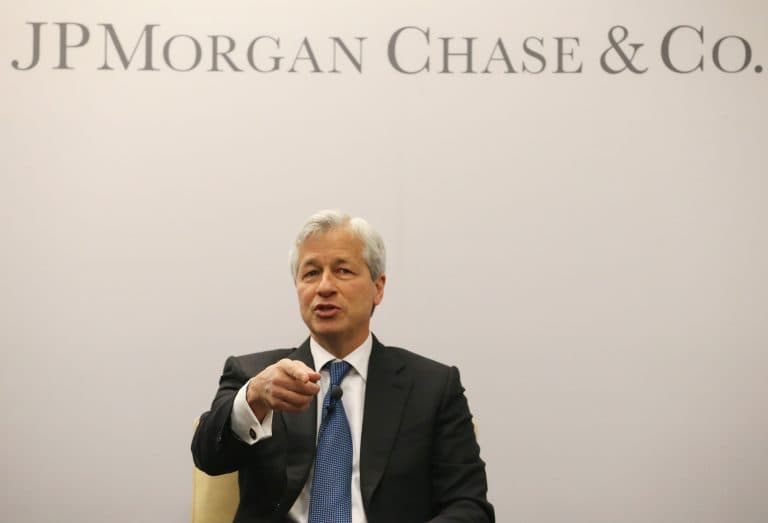
Jamie Dimon, CEO of JPMorgan Chase and one of the world's most influential financial leaders, has issued a stark warning about artificial intelligence's potential to trigger mass unemployment and subsequent civil unrest. In recent comments that have reverberated through corporate and policy circles, Dimon emphasized that policymakers must proactively address the coming economic disruption caused by AI adoption.
The Warning from Wall Street
Dimon's remarks represent a significant shift in tone from the financial sector's typically optimistic embrace of technological innovation. As head of the largest U.S. bank with over $3.7 trillion in assets, his perspective carries substantial weight in both financial and policy discussions. While many tech executives have focused on AI's productivity benefits, Dimon has highlighted the darker potential consequences that could emerge if the transition isn't managed carefully.
"He is aware that mass unemployment must be accompanied and supported by policymakers," the source notes, indicating Dimon's recognition that market forces alone cannot address the societal challenges posed by widespread AI adoption. This acknowledgment from a leading capitalist figure suggests a growing consensus that the AI revolution requires coordinated planning beyond corporate boardrooms.
The Corporate Awakening to AI's Societal Impact
Dimon's comments signal that "the debate about AI and unemployment has now reached the executive suites of the most important companies, particularly in the financial sector." This represents a crucial development, as financial institutions have been among the earliest and most aggressive adopters of AI technologies for trading, risk assessment, customer service, and compliance.
For years, discussions about AI's employment impact were largely confined to academic circles, think tanks, and technology companies. Now, with major corporations implementing AI at scale, their leaders are confronting the practical implications for their workforces and the broader economy. Dimon's warning suggests that corporate America is beginning to recognize that technological disruption without social planning could have destabilizing consequences.
Historical Context and Parallels
This isn't the first time technological revolutions have threatened employment structures. The Industrial Revolution displaced skilled artisans but eventually created new categories of work. The computerization of the late 20th century eliminated many clerical jobs while creating opportunities in information technology. However, AI presents unique challenges due to its potential to automate cognitive tasks previously considered exclusively human domains.
What makes Dimon's warning particularly noteworthy is his explicit connection between technological unemployment and civil unrest. History provides ample precedent for this concern: the Luddite movement of the early 19th century, labor unrest during industrialization, and more recent protests against globalization all demonstrate how economic displacement can translate into social instability.
The Financial Sector's Unique Position
Banks occupy a special position in the AI employment debate for several reasons. First, they employ millions globally across functions increasingly vulnerable to automation. Second, as lenders and investors, they have visibility into how AI is transforming entire industries. Third, their role in economic stability makes them particularly sensitive to systemic risks, including social unrest.
JPMorgan itself has been investing heavily in AI, with Dimon previously stating that the technology could eventually replace most human jobs at the bank. His recent comments suggest a growing awareness that what's optimal for corporate efficiency might not align with broader social stability without deliberate intervention.
Policy Implications and Required Responses
Dimon's call for policy intervention raises crucial questions about what form such interventions should take. Potential approaches include:
- Education and retraining programs to prepare workers for AI-augmented roles
- Social safety net expansions to cushion transitional periods
- Workweek reductions to distribute available work more broadly
- Tax policy adjustments to address wealth concentration from AI productivity gains
- New forms of social contracts between employers, employees, and governments
The challenge for policymakers will be designing interventions that don't stifle innovation while preventing the kind of social disruption Dimon warns about. This requires anticipating which sectors and demographics will be most affected and developing targeted responses.
The Global Dimension
While Dimon's comments focus on the U.S. context, AI's employment impact is a global concern. Developing economies that have built growth around labor-intensive industries face particular vulnerability. International coordination will be necessary to prevent a "race to the bottom" where countries compete by offering the least worker protections in pursuit of AI-driven efficiency.
Corporate Responsibility in the AI Transition
Dimon's remarks implicitly raise questions about corporate responsibility during technological transitions. If executives anticipate that their AI investments will eliminate jobs, what obligations do they have to affected workers and communities? This debate is likely to intensify as AI adoption accelerates.
Some companies are already experimenting with approaches like internal retraining programs, phased transitions, and partnerships with educational institutions. However, these remain exceptions rather than standard practice.
The Path Forward
The significance of Dimon's warning lies not in its novelty—experts have discussed AI's employment impact for years—but in its source. When one of the world's most powerful bankers expresses concern about civil unrest resulting from technological unemployment, it signals that these issues have moved from theoretical discussion to practical boardroom consideration.
As the source notes, "This debate was long overdue." With AI capabilities advancing rapidly and implementation spreading across industries, society has limited time to develop coherent responses. Dimon's comments may catalyze more serious discussion among business leaders about their role in managing the transition.
The coming years will test whether capitalism can successfully navigate what may be its most significant transformation since the Industrial Revolution. The alternative—widespread unemployment leading to social instability—represents a risk that even the most profit-focused executives now recognize must be addressed through collaborative effort between business and government.
Source: Based on comments from JPMorgan CEO Jamie Dimon as reported by @kimmonismus on X/Twitter.