Key Takeaways
- At its Capital Markets Day, Kering announced a new strategic division, 'Kering Next,' to manage beauty growth.
- The group will deepen its partnership with L'Oréal to scale brands like Gucci, citing the €3B success of YSL Beauty as a benchmark.
- This marks a major shift from in-house development to a capital-light, partnership-driven model.
The Strategic Pivot: From In-House to Partner-Led Growth
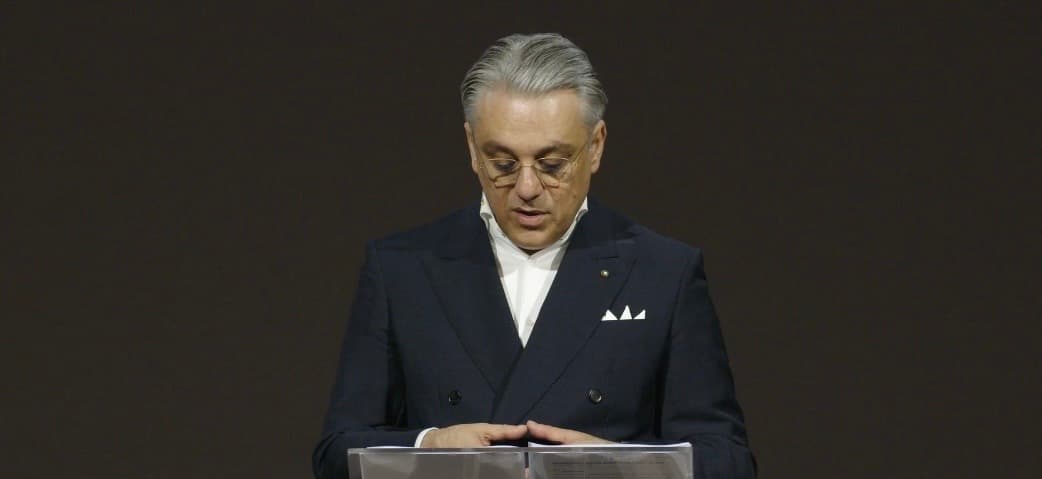
At its Capital Markets Day in Florence, Kering CEO Luca de Meo presented a clear strategic reset for the luxury conglomerate. A central pillar of this new direction is the formalization of beauty as a core growth engine, not a peripheral licensing operation. To execute this, Kering is creating a new division, "Kering Next," dedicated to expanding into adjacent categories like beauty and unlocking long-term value.
The most significant operational shift is Kering's decision to forgo building a massive, capital-intensive beauty infrastructure from scratch. Instead, the group is doubling down on its partnership with L'Oréal, announced in October 2025, positioning it as the fastest route to global scale. The logic is pragmatic: beauty success hinges on R&D, media investment, and distribution networks—capabilities where L'Oréal is a world leader.
Why This Partnership Model Matters for Luxury
Kering's move signals a broader evolution in how luxury groups approach category expansion. The traditional model often involved bringing operations in-house after licensing agreements expired, aiming for full control and margin capture. Kering is opting for a hybrid model: strategic ownership of the brand direction, paired with operational execution by a best-in-class partner.
CEO de Meo stated the partnership offers "immediate access to the most advanced beauty platform in research and development, global distribution, as well as an unmatched media reach." This allows Kering's brands to accelerate growth with lower capital intensity and risk, while still generating meaningful royalty revenue. The financial model shifts from bearing the full cost of infrastructure to sharing in the profits of a scaled operation.
The Proof is in the Performance: YSL Beauty as a Benchmark
Executives pointed to the undeniable success of Yves Saint Laurent Beauty, operated by L'Oréal, as the template. The business now generates approximately €3 billion in annual revenue. De Meo called this "a benchmark of possibility, not a ceiling," explicitly setting it as the target for Kering's other marquee brands.
Gucci was highlighted as having "very substantial" long-term potential, once its current licensing arrangements expire and can be integrated into the new L'Oréal-powered structure. This follows Kering's foundational moves in beauty over the past three years, including the acquisition of Creed in 2023 and fragrance launches for Bottega Veneta and Balenciaga. However, these were framed as necessary but insufficient steps to capture the full market opportunity.
Business Impact: A Capital-Light Path to Recurring Revenue
The immediate impact is strategic clarity. Beauty is now a formal, board-level priority under "Kering Next." The long-term impact is financial: the partnership model aims to deliver faster growth with significantly lower capital expenditure than building in-house. This frees capital for other brand resets, such as Gucci's product overhaul and store network optimizations for brands like Alexander McQueen, which were also detailed at the event.
The partnership de-risks the beauty expansion. L'Oréal brings decades of consumer insights, supply chain mastery, and retailer relationships that would take Kering years and billions to replicate. For L'Oréal, it deepens a lucrative relationship with a top-tier luxury portfolio, securing long-term brand partnerships beyond YSL.
Implementation & Governance: A New Division for a New Model
The creation of "Kering Next" is the key implementation mechanism. This division will be responsible for managing the partnership with L'Oréal, aligning brand creative direction with commercial execution, and overseeing the royalty stream. Success will depend on seamless collaboration between Kering's brand houses and L'Oréal's operational teams, ensuring the luxury identity is preserved at scale.
Governance risks are inherent in any partnership. Kering must maintain enough influence over product development, marketing, and pricing to protect brand equity. The precedent set by YSL Beauty suggests a workable model exists, but scaling it across multiple brands with distinct identities will be the true test.
gentic.news Analysis: A Trend in Luxury Ecosystem Strategy
This announcement is a definitive move in the ongoing strategic repositioning under CEO Luca de Meo. It follows Kering's previous major partnership announcement with L'Oréal in October 2025 and the acquisition of Creed in 2023, indicating a multi-year build-up to this capital-light beauty strategy. The move aligns with a broader industry trend where luxury groups are acting as ecosystem architects rather than pure vertical integrators, leveraging external best-in-class capabilities for non-core categories.
This strategy directly contrasts with the in-house approach historically favored by some rivals. It positions Kering to compete more aggressively in the high-margin beauty space without the associated balance sheet burden. The reference to Gucci's "very substantial" potential is a clear signal to the market: a major revenue stream is being systematically unlocked. For AI leaders in retail, this partnership model underscores the importance of strategic data sharing and integrated systems. The success of the L'Oréal partnership will rely on aligned customer insights, supply chain data, and performance analytics—areas where AI plays a critical enabling role in bridging two corporate giants.