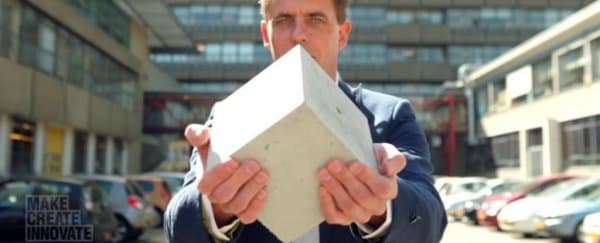
In a development that sounds more like science fiction than laboratory reality, scientists have unveiled a groundbreaking "living building material" that fundamentally reimagines what construction materials can do. This innovative material, embedded with photosynthetic cyanobacteria, not only captures atmospheric carbon dioxide through sunlight but actually self-reinforces over time—potentially creating structures that repair themselves while actively cleaning the air.
The Biological Breakthrough
At the heart of this innovation are cyanobacteria—ancient photosynthetic microorganisms often called blue-green algae. Researchers have successfully integrated these living organisms into a concrete-like matrix, creating what might be described as "bio-concrete." Unlike traditional concrete, which is responsible for approximately 8% of global CO₂ emissions due to its production process, this living material operates in reverse: it consumes carbon dioxide as it grows and strengthens.
The cyanobacteria perform photosynthesis within the material, using sunlight to convert atmospheric CO₂ into organic compounds. This biological process not only removes greenhouse gases from the air but also produces calcium carbonate—the same mineral that forms natural limestone and seashells—which gradually reinforces the material's structure.
400 Days of Validation
What makes this development particularly compelling is the extensive validation behind it. Researchers have collected over 400 days of laboratory data demonstrating the material's durability and performance. This extended testing period is crucial for establishing credibility in the construction industry, where materials must withstand decades of environmental stress.
The data reportedly shows consistent carbon capture capabilities and measurable strengthening over time. Unlike conventional concrete, which inevitably degrades, this living material appears to maintain or even improve its structural integrity through biological processes.
The Self-Repairing Promise
The most futuristic aspect of this technology is its potential for self-repair. Traditional concrete structures develop micro-cracks that eventually expand, requiring costly maintenance and reducing lifespan. The cyanobacteria in this living material could theoretically fill these cracks with newly produced calcium carbonate, effectively healing minor damage before it becomes structural.
Imagine a building that patches its own cracks, a bridge that reinforces its own supports, or a road that fills its own potholes—all while removing carbon from the atmosphere. This represents a complete paradigm shift from our current approach to infrastructure maintenance and sustainability.
AI's Role in Biological Material Design
While the original source doesn't explicitly detail AI's involvement, the development of such sophisticated bio-hybrid materials increasingly relies on artificial intelligence and computational modeling. Designing materials that successfully integrate living organisms with inorganic matrices requires:
- Predictive modeling of biological behavior in constrained environments
- Optimization algorithms for material composition and microstructure
- Simulation of long-term performance under various environmental conditions
- Genetic analysis to identify or engineer optimal cyanobacteria strains
AI systems can analyze thousands of potential biological-inorganic combinations, predict their interactions, and accelerate what would otherwise be a painstaking trial-and-error process. This represents a growing trend where AI serves as a bridge between biology and materials science.
Environmental Implications
The environmental potential of this technology is staggering. The construction industry accounts for nearly 40% of global carbon emissions when considering building operations and construction materials. A material that actively captures carbon while serving structural purposes could transform buildings from environmental liabilities to carbon sinks.
If widely adopted, cities could become massive carbon capture networks. Every building, bridge, and piece of infrastructure would contribute to carbon removal rather than emissions. This aligns with emerging concepts of "regenerative design" where human systems actively improve rather than merely minimize harm to natural systems.
Challenges and Future Development
Despite its promise, several challenges remain before living building materials become practical:
- Scalability: Laboratory success must translate to industrial-scale production
- Durability: Materials must withstand diverse climates and conditions
- Regulation: Building codes don't account for living, evolving materials
- Cost: Initial production will likely exceed conventional materials
- Public perception: Acceptance of "living" structural elements
Researchers will need to address how these materials perform in freezing temperatures, extreme heat, and variable humidity. The cyanobacteria must remain viable but controlled—active enough to perform their functions but not so active that they compromise structural integrity.
The Broader Context of Bio-Hybrid Materials
This development fits within a growing field of bio-hybrid materials that combine biological and synthetic components. Other researchers are developing:
- Self-healing polymers with embedded bacterial spores
- Biological bricks grown from fungi and agricultural waste
- Photosynthetic coatings that generate oxygen while protecting surfaces
- Living sensors that change color in response to environmental toxins
What distinguishes this cyanobacteria concrete is its combination of structural function, carbon capture, and self-repair—addressing multiple sustainability challenges simultaneously.
Toward a Living Built Environment
The implications extend beyond technical specifications to philosophical questions about our relationship with the built environment. For centuries, we've constructed inert, static structures. This technology suggests a future where buildings are dynamic, responsive, and integrated with natural systems.
We might eventually see buildings that:
- Adjust their properties based on seasonal changes
- Communicate structural health through visible biological signals
- Contribute to urban ecosystems rather than displacing them
- Have lifespans measured in centuries rather than decades
This represents a fundamental rethinking of architecture from something we build to something we cultivate.
Conclusion
The development of living building materials with embedded cyanobacteria marks a significant milestone in sustainable construction. Backed by substantial laboratory data, this technology offers a compelling vision: structures that repair themselves while cleaning the atmosphere.
While practical implementation remains years away, the research demonstrates that radical alternatives to conventional materials are not only possible but actively being developed. As climate challenges intensify, such innovations become increasingly vital. This living concrete doesn't just represent a new material—it represents a new relationship between human construction and natural processes, where buildings become partners in environmental regeneration rather than sources of degradation.
The path forward will require collaboration across biology, materials science, architecture, and artificial intelligence. But the potential reward—a built environment that actively improves our planet—makes this one of the most exciting frontiers in sustainable technology today.