Key Takeaways
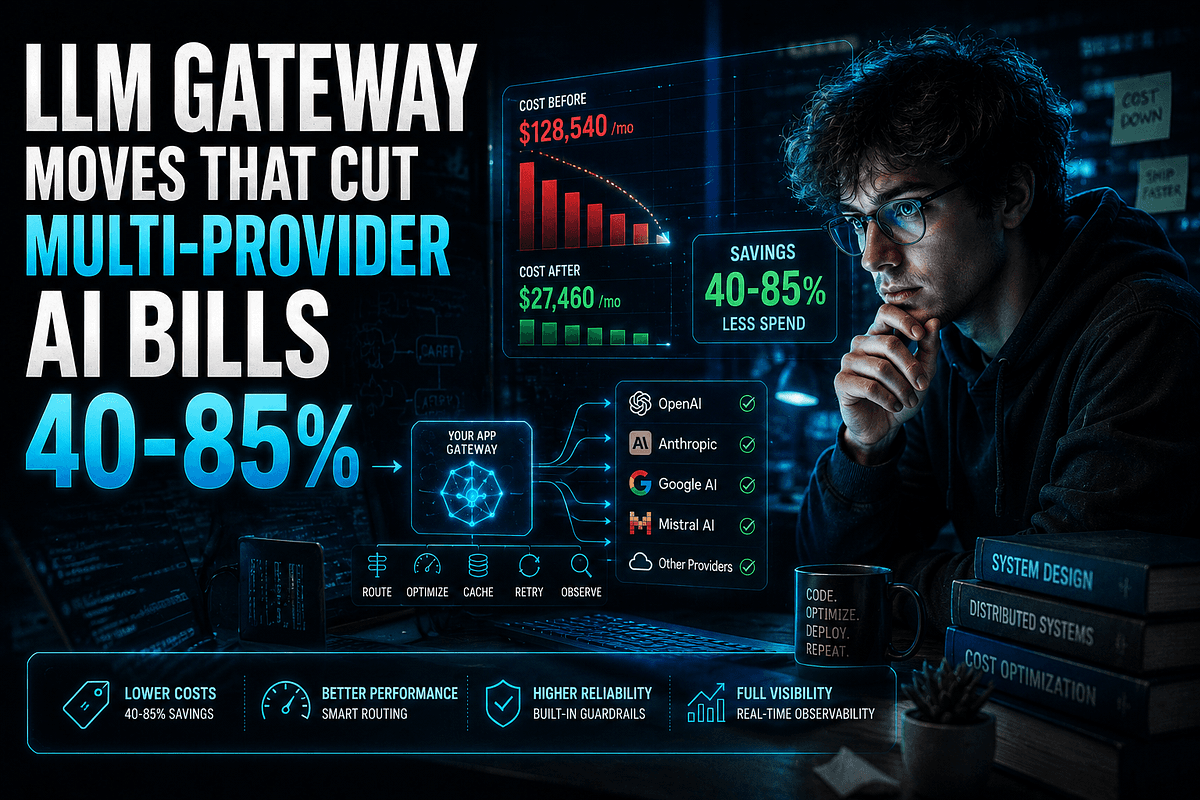
- Towards AI details an LLM gateway routing layer that cuts multi-provider AI costs by 40–85%, with pricing from $0.10 to $30 per million tokens.
- It matters for retail teams managing escalating AI spend.
What Happened
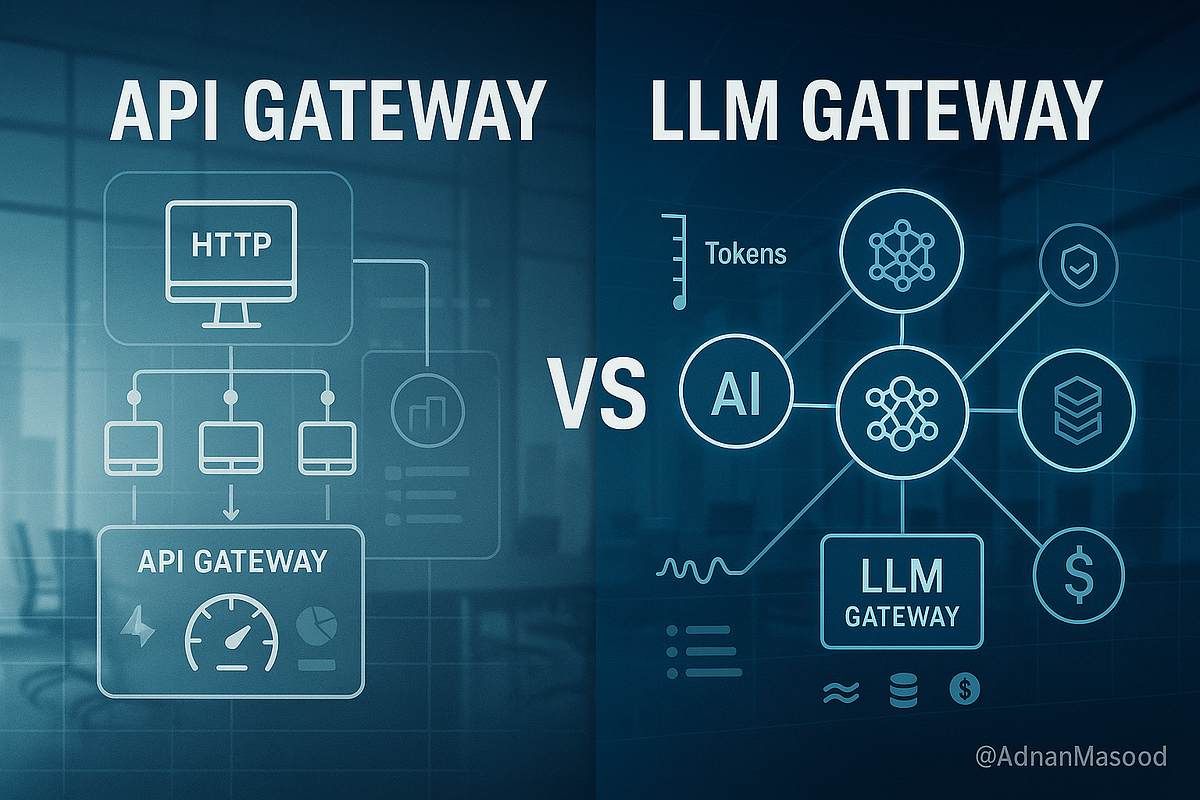
Towards AI published a guide on building an LLM gateway—a routing layer that dynamically directs each AI request to the most cost-effective model that can handle it. The article reports that this approach can cut multi-provider AI bills by 40–85%, addressing a common pain point: teams prototype with frontier models, ship, and then watch cloud costs balloon without revisiting whether every request needs top-tier inference.
The article cites mid-2026 pricing ranging from $0.10 per million input tokens for budget models to $30 per million for frontier reasoning models—a 100× gap on output tokens. It argues that most production workloads include a mix of tasks, and not all require the most expensive models.
Technical Details
The core concept is the LLM gateway, a middleware layer that sits between your application and multiple LLM providers. It evaluates each incoming request—based on task complexity, latency requirements, and quality tolerance—and routes it to the best-suited model. This could mean using a small, fast model for classification tasks and a frontier model only for complex reasoning or creative generation.
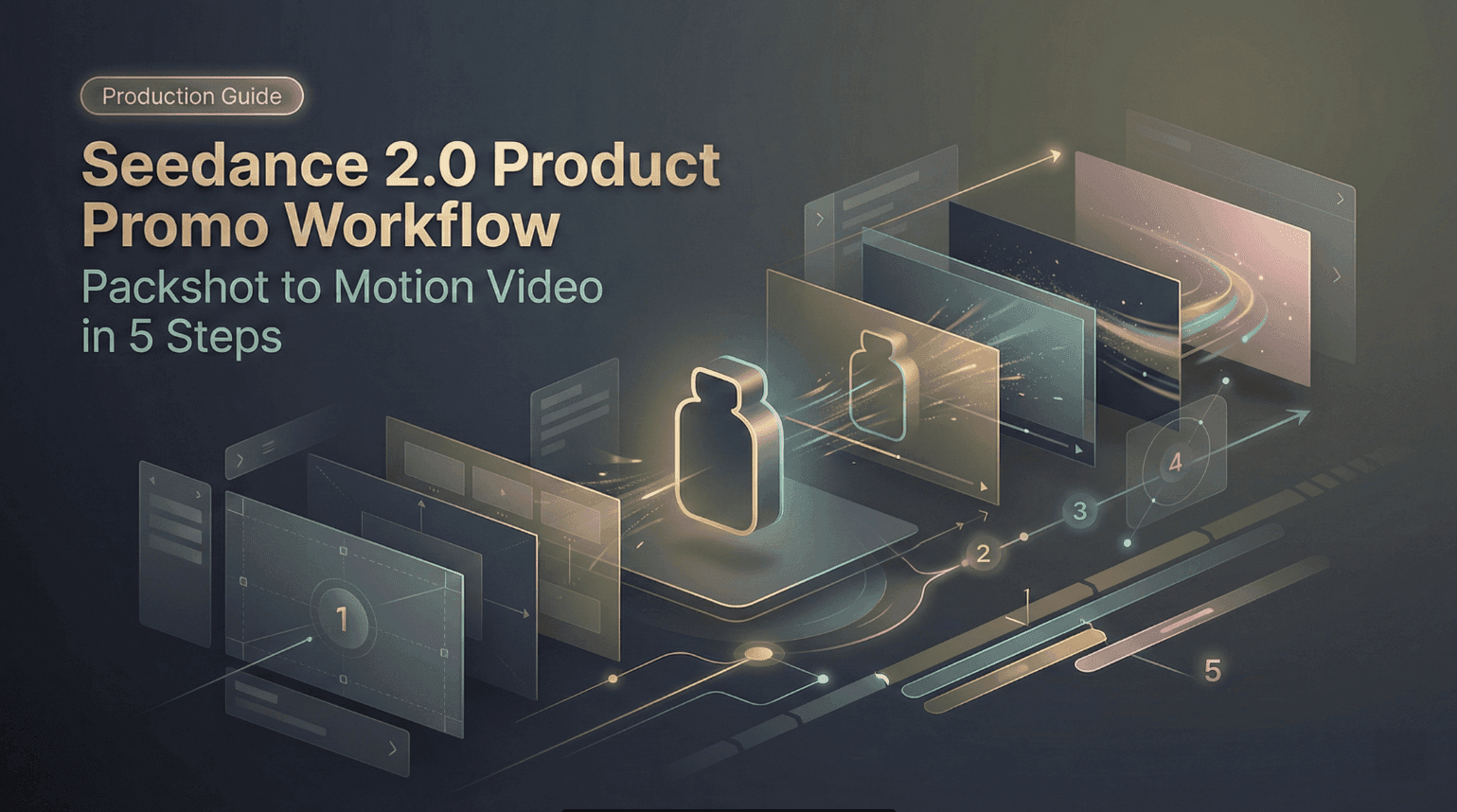
The article outlines five sequential steps to architect such a system, emphasizing production readiness without compromising performance. Key elements likely include:
- Request classification: Determining the complexity of each query.
- Model selection logic: Mapping request types to appropriate models.
- Fallback mechanisms: Ensuring reliability if a chosen model fails.
- Cost tracking: Monitoring spend per model and per task.
- Continuous optimization: Adjusting routing rules based on real-world performance.
The 40–85% savings range reflects variability across workloads—some tasks can be fully handled by budget models, while others still require premium inference.
Retail & Luxury Implications
For retail and luxury AI teams, the LLM gateway approach is directly applicable. Consider typical retail AI use cases:
- Customer service chatbots: Many queries are simple FAQs (order status, return policies) that a budget model can handle. Only complex, multi-turn conversations need frontier models.
- Product recommendations: Basic collaborative filtering or rule-based suggestions don't need frontier reasoning. Even embedding-based retrieval can use cheaper models.
- Content generation: Marketing copy, product descriptions, and social media posts vary in complexity. Simple templates can be automated with small models, while brand-voice-sensitive luxury copy may warrant a premium model.
- Visual search: Vision models have similar cost tiers; not all image queries need the most powerful model.
In luxury, where brand voice and quality are paramount, the gateway's value lies in selective deployment: use frontier models for high-stakes tasks (e.g., personalized styling advice) and budget models for routine operations. The savings can be reinvested in other AI initiatives.
Business Impact
The financial impact is significant. A retail company spending $40,000 per month on LLM APIs (as the article's example) could save $16,000–$34,000 monthly—$192,000–$408,000 annually. For larger enterprises with million-dollar AI budgets, the savings are proportionally larger.
Beyond direct cost savings, a gateway improves vendor leverage and reduces lock-in. It also enables faster experimentation—teams can test new models without committing to a single provider.
However, the article is honest about the need for careful implementation. Routing logic must be tuned to avoid quality degradation, and monitoring is essential to ensure user experience remains consistent.
Implementation Approach
Implementing an LLM gateway requires:
- Infrastructure: A service (e.g., Kong, LiteLLM, or custom) that intercepts API calls.
- Routing rules: Define criteria for model selection (e.g., task type, token budget, latency target).
- Integration: Connect to multiple providers (OpenAI, Anthropic, Google, etc.).
- Testing: Validate output quality on a sample of requests.
- Monitoring: Track cost, latency, and quality metrics.
Complexity is moderate—it's a software engineering effort, not a research project. Most teams can implement a basic gateway in weeks. The article's five-step approach suggests a structured path, likely starting with auditing existing usage and ending with continuous optimization.
Governance & Risk Assessment
- Privacy: Routing requests to multiple providers increases data exposure. Ensure all providers meet your compliance standards (e.g., GDPR, CCPA).
- Bias: Cheaper models may have different bias profiles. Monitor for fairness, especially in customer-facing applications.
- Quality risk: Misrouting a complex task to a budget model could degrade user experience. Implement fallback and quality checks.
- Maturity: The gateway concept is mature—tools like LiteLLM and Kong are production-ready. But routing rules require ongoing tuning.
gentic.news Analysis
The LLM gateway is a pragmatic, high-ROI pattern for retail AI teams. The 40–85% savings figure aligns with industry anecdotes—many workloads are simpler than they appear. For luxury brands, the key is to define quality thresholds carefully; a $30-per-million-token model may be worth it for a personalized concierge service, but not for a size-guide query.
This article is Part 2 of a series (Part 1 covered agentic fraud detection), indicating a practical, engineering-focused narrative. Retail leaders should treat this as a blueprint for cost governance as AI adoption scales.
One caution: the 40–85% range is an estimate, not a guarantee. Actual savings depend on workload mix. Teams should pilot with a subset of traffic to validate before full rollout.
For retail, the gateway also enables more agile vendor strategies—switching models as new ones emerge (e.g., open-source options) without rewriting application code. This is a strategic advantage in a fast-moving market.
Overall, this is a must-read for any retail AI leader facing escalating API costs. The implementation effort is modest, and the potential savings are substantial.
Source: pub.towardsai.net