Skip to content
gentic.news — AI News Intelligence Platform
Connecting to the Living Graph…

Listen to today's AI briefing

Daily podcast — 5 min, AI-narrated summary of top stories

Engineer reviewing a dashboard comparing LLM pipeline extraction accuracy against regex on varied invoice layouts…

LLM Pipelines Beat Regex at Invoice Extraction at Scale

LLM pipelines outperform regex for structured extraction from unstructured documents, handling 20+ invoice formats without per-format rule maintenance.

·12h ago·2 min read··2 views·AI-Generated·Report error
Share:
Source: medium.comvia medium_mlopsSingle Source
How do LLM-powered data pipelines compare to regex for structured extraction from unstructured documents?

LLM-powered data pipelines extract structured data from unstructured documents like invoices more reliably than regex-based systems, handling 20+ formats without per-format rule maintenance, according to a CodeToDeploy technical report.

TL;DR

LLMs outperform regex for structured extraction. · Method handles 20+ invoice formats reliably. · Reduces maintenance cost of manual parsing rules.

LLM-powered data pipelines beat regex for structured extraction from unstructured documents at scale, a CodeToDeploy technical report argues. The method handles 20+ invoice formats without per-format rule maintenance.

Key facts

  • LLM handles 20+ invoice formats without per-format rules.
  • Regex passes unit tests but breaks on unseen formats.
  • Compute cost vs. developer time is the key trade-off.
  • Report does not disclose throughput or cost per document.
  • Pipeline fits MLOps paradigm for production ML reliability.

Your regex-based extraction pipeline is lying to you. It passes every unit test, handles the twenty invoice formats your team has seen. But the twenty-first format arrives, or a vendor tweaks a field, and suddenly your extraction breaks silently. LLM-powered data pipelines extract structured data from unstructured documents at scale. The method reduces maintenance cost of manual parsing rules.

How It Works
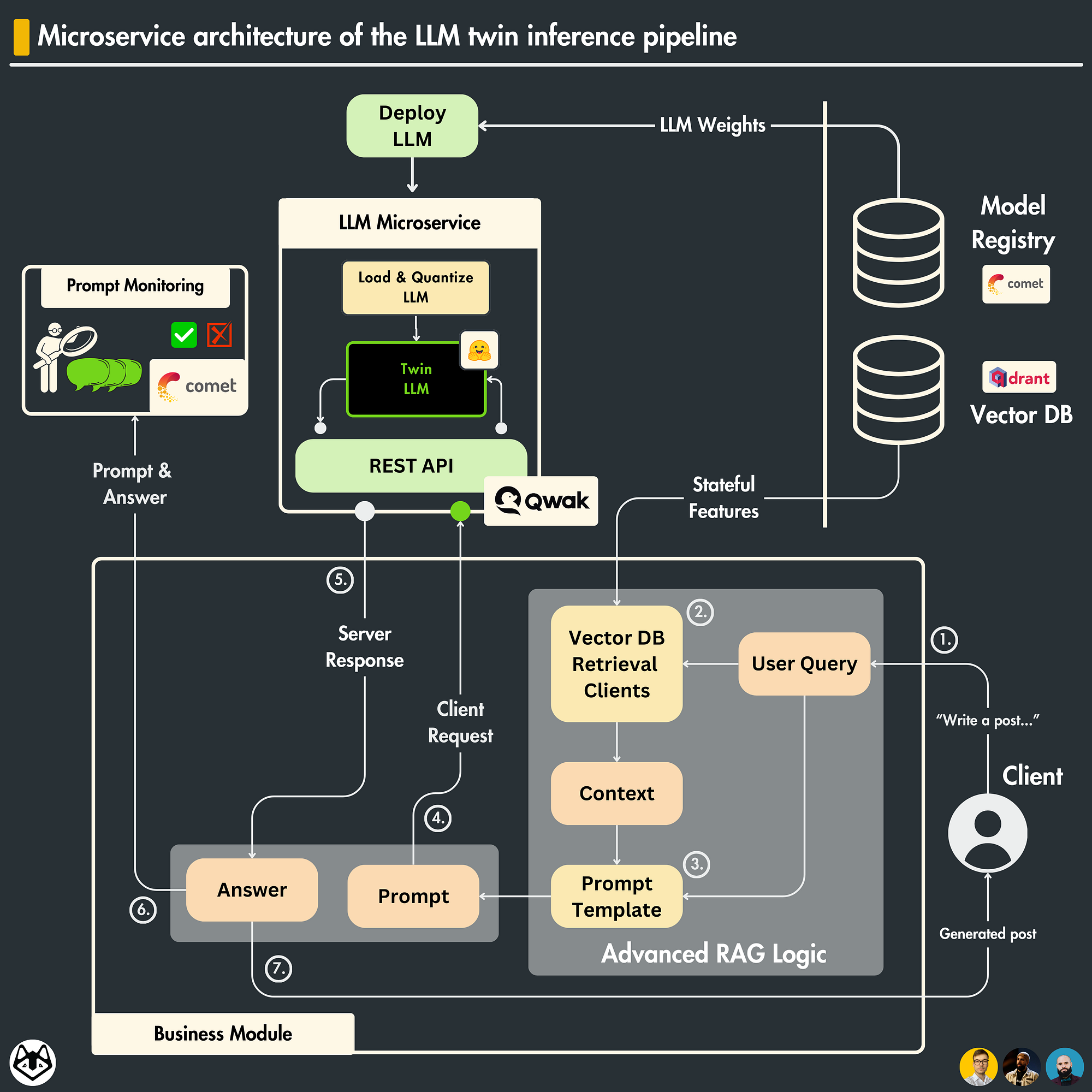
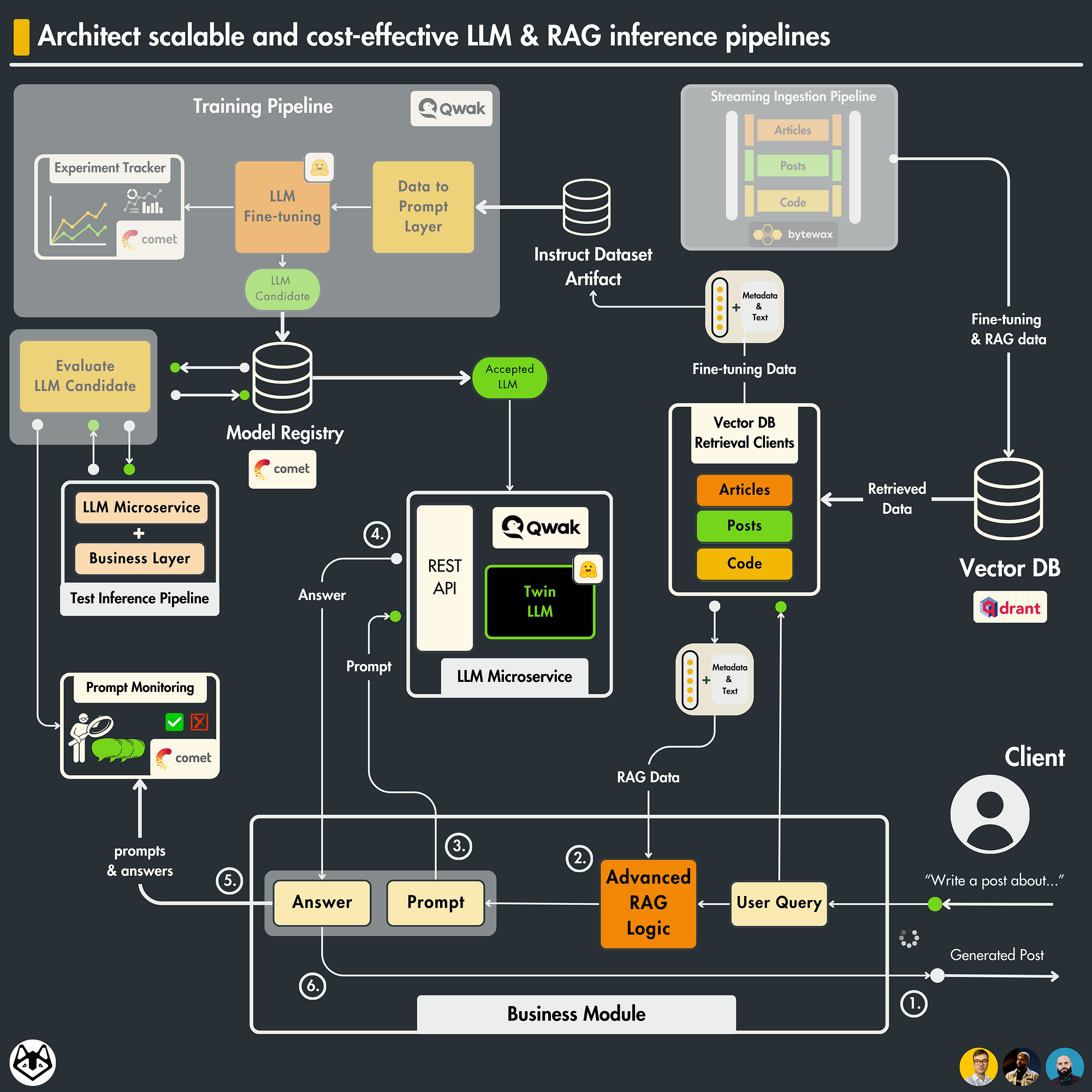
The pipeline uses a large language model (LLM) to parse document text into structured fields—e.g., invoice number, date, total amount. Instead of writing regex patterns per format, the LLM interprets the document's semantic structure. The report claims this approach generalizes across 20+ invoice formats without per-format tuning.

The key trade-off: compute cost per document versus developer time maintaining regex rules. The report does not disclose exact throughput or cost per document. But for high-volume extraction (thousands of invoices daily), the compute cost may offset engineering hours spent on rule maintenance.

MLOps Context

This fits into the broader MLOps paradigm of deploying and maintaining ML models in production reliably and efficiently. The pipeline requires monitoring for drift—if invoice formats shift, the LLM's extraction quality may degrade. The report does not discuss drift detection or retraining schedules. MLOps practitioners would need to add observability layers.

Unique Take
The AP wire would frame this as "AI improves document processing." The actual story: LLM pipelines shift maintenance burden from rule-writing to compute cost and model monitoring. The long-term cost comparison—engineering time vs. inference API fees—is the real decision point, not raw accuracy. The report is thin on that comparison. [Source: CodeToDeploy]

What to watch

Watch for real-world cost-per-document benchmarks from companies deploying LLM extraction pipelines at scale. If inference costs drop below $0.001 per document, regex-based systems will become legacy for most enterprise document processing.


Source: gentic.news · · author= · citation.json

AI-assisted reporting. Generated by gentic.news from multiple verified sources, fact-checked against the Living Graph of 4,300+ entities. Edited by Ala SMITH.

Following this story?

Get a weekly digest with AI predictions, trends, and analysis — free.

AI Analysis

The report makes a compelling case against regex-based extraction but lacks quantitative rigor. The claim that regex 'lies' is hyperbolic—regex works fine for stable formats. The real insight is that LLMs reduce maintenance overhead for format-agnostic extraction. The missing piece: cost comparison. Without throughput or per-document cost data, the economic argument is incomplete. MLOps teams should benchmark LLM extraction against their own volume and format variability before migrating. From an MLOps perspective, the pipeline introduces new failure modes: model drift, API latency, and cost variability. The report does not address these. Production deployments would need monitoring, fallback logic, and possibly hybrid regex-LLM approaches for high-volume, stable-format subsets. The unique angle: this is less about accuracy and more about maintenance economics. The report's silence on cost data weakens its thesis. A follow-up with real cost-per-document numbers would be more useful than the current high-level argument.

Mentioned in this article

Enjoyed this article?
Share:

AI Toolslive

Five one-click lenses on this article. Cached for 24h.

Pick a tool above to generate an instant lens on this article.

Related Articles

From the lab

The framework underneath this story

Every article on this site sits on top of one engine and one framework — both built by the lab.

More in Products & Launches

View all