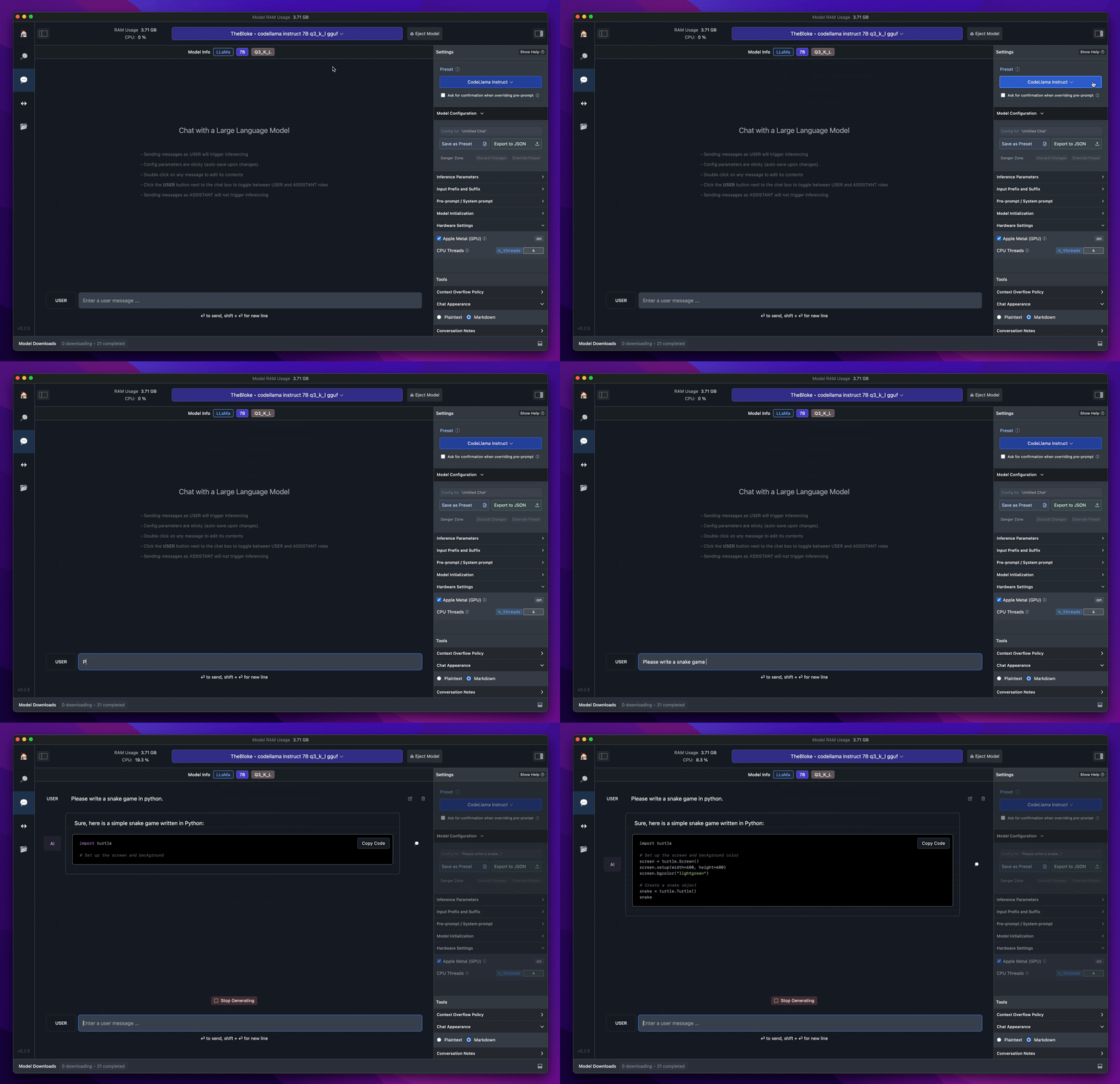
Adrien Grondin, a former engineer at Hugging Face, has announced he has joined the team at LM Studio, the popular desktop application for running large language models (LLMs) locally. Grondin, known by his handle @adrgrondin on X, shared the news in a post, stating, "The team behind the app is amazing and I couldn't be more proud."
Grondin was a significant contributor at Hugging Face, where he played a key role in developing and maintaining Hugging Face Spaces, the platform that allows developers to build, host, and share ML demo applications directly in their browser. His move from a major cloud-centric AI hub to a company focused on local, private inference marks a notable shift in the AI talent landscape.
What Happened
Adrien Grondin has transitioned from Hugging Face to LM Studio. While his specific role at LM Studio was not detailed in the announcement, his background in developer-facing platforms and ML tooling suggests he will be involved in product development, likely focusing on improving the user experience, expanding model support, or enhancing the application's underlying engine for running models like Llama, Mistral, and Gemma offline.
Context
LM Studio has rapidly gained traction among developers and enthusiasts who prioritize privacy, cost control, and offline capability. It provides a streamlined GUI to discover, download, and run open-source LLMs on a personal computer without requiring an API key or sending data to external servers. This local-first approach positions it differently from Hugging Face's primary web-based ecosystem, though both serve as critical gateways to open-source models.
Grondin's hiring follows a period of significant growth and feature development for LM Studio, which has become a go-to tool for experimenting with the latest quantized models from the community.
gentic.news Analysis
This personnel move is more significant than a standard job change. It represents a talent migration from platform giants to focused, product-driven startups in the AI tooling layer. Hugging Face has established itself as the "GitHub for AI," a central repository and collaboration platform. In contrast, LM Studio represents the burgeoning local inference category, which has exploded in demand as model sizes have become more manageable for consumer hardware.
Grondin's expertise in building Spaces—essentially a seamless cloud demo environment—is now being applied to the opposite problem: creating an equally seamless local experience. This indicates LM Studio is investing heavily in developer experience and platform robustness, potentially aiming to become the standard desktop environment for local model interaction, much like OBS is for streaming or VS Code is for development.
The competition for engineering talent with deep experience in ML tooling and developer ecosystems is intensifying. For LM Studio, hiring someone with Grondin's pedigree is a strong signal of their ambition and the resources they are willing to deploy to win the desktop AI runtime battle. It also suggests the company may be looking to build more community and sharing features into its platform, areas where Grondin's background at Hugging Face would be directly applicable.
Frequently Asked Questions
What is LM Studio?
LM Studio is a desktop application for Windows and macOS that allows users to run open-source large language models (LLMs) locally on their personal computers. It features a model hub, an in-app chat interface, and a local server mode that mimics an OpenAI-compatible API, enabling other applications to connect to it.
Who is Adrien Grondin?
Adrien Grondin is a software engineer previously at Hugging Face, where he was a key contributor to Hugging Face Spaces. Spaces is a platform that lets users create and host machine learning web applications (demos) easily, forming a core part of the Hugging Face community ecosystem.
Why does this hire matter for the AI tooling space?
It highlights the strategic value of engineers who understand both machine learning and developer platform design. Grondin's move from a centralized, cloud-based platform (Hugging Face) to a local-first tool (LM Studio) reflects a broader trend where specialized, user-friendly desktop applications are competing with web platforms for developer mindshare, especially in areas like private, offline AI inference.
What does LM Studio do that Hugging Face doesn't?
While Hugging Face provides a vast model repository and online tools, LM Studio specializes in the local execution of those models. It handles model downloading, quantization compatibility, and provides a simple GUI and local API server, all running entirely on the user's machine without an internet connection after setup, which is not the primary focus of the Hugging Face web platform.