Key Takeaways
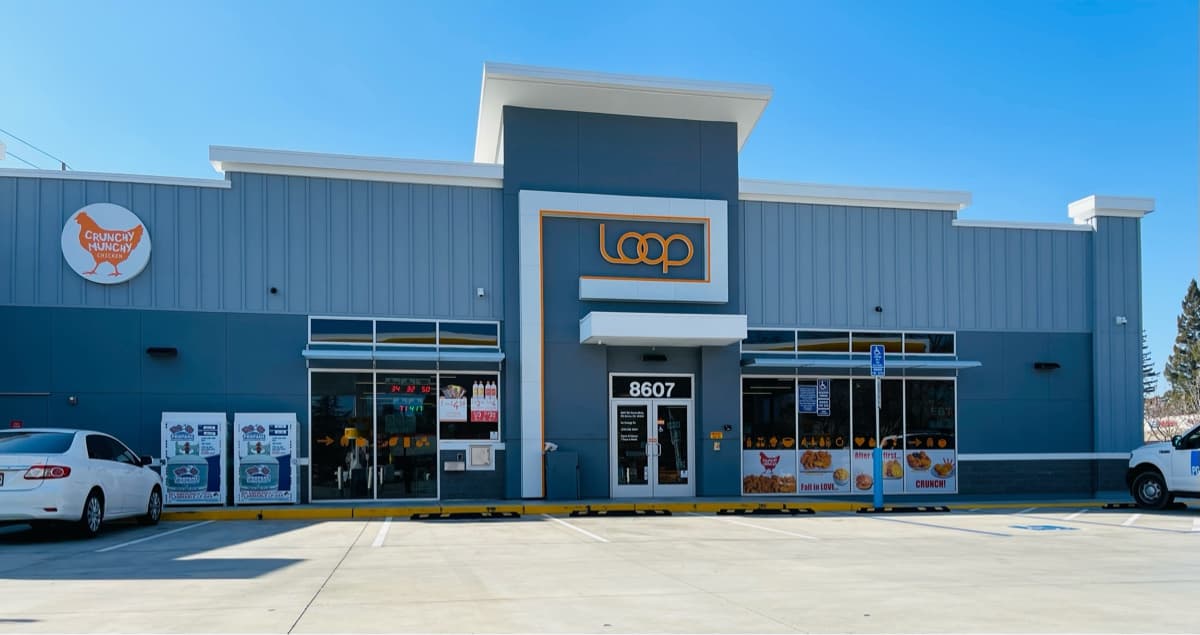
- Loop Neighborhood Markets has deployed Tote's Genie AI agent for customer service, while Frasers Group reports a 25% uplift in conversion rates since launching its own AI shopping assistant for its premium fashion retailer.
- This indicates a clear shift towards operational AI agents in retail.
The Deployments

Two distinct retail AI deployments have been announced, signaling continued momentum for AI-powered shopping assistants moving from pilot to production.
First, Loop Neighborhood Markets, a convenience store chain, has deployed Tote's Genie AI agent. While specific performance metrics were not provided in the source, the deployment represents an implementation of an AI agent designed to handle customer service and shopping interactions within the convenience retail context. Tote's Genie is positioned as an automated assistant to guide customers.
Separately, Frasers Group—the retail conglomerate that owns brands like Sports Direct and Flannels—has launched an AI-powered shopping assistant for its premium fashion retailer, Frasers. The company reported a 25% uplift in conversion rates since the assistant's introduction. This is a tangible, quantified business outcome that directly links AI implementation to a key retail metric.
Why This Matters for Retail & Luxury
These announcements, while from different retail segments (convenience and premium fashion), underscore a unified trend: the operationalization of conversational AI to drive commerce.
For luxury and premium retail, the Frasers case is particularly instructive. A 25% increase in conversion is not a marginal improvement; it's a transformative result that can significantly impact revenue, especially in high-average-order-value environments. This suggests that well-implemented AI assistants can effectively guide customers through consideration, answer product questions, and reduce friction in the path to purchase.
The Loop Neighborhood Markets deployment, while in a different sector, demonstrates the broadening applicability of the technology. The core use case—providing instant, scalable, and consistent customer interaction—translates directly to luxury e-commerce, where high-touch service is expected but difficult to scale 24/7 with human staff.
Business Impact
The Frasers Group result provides a rare public benchmark. A 25% uplift in conversion rates is a compelling ROI argument for investing in AI shopping assistants. For a luxury brand, where conversion rates are already carefully optimized and each customer's lifetime value is high, even a single-digit percentage increase would justify the investment.
The impact extends beyond direct sales. These AI agents:
- Provide 24/7 scalable expertise: They can articulate product details, material provenance, and brand stories consistently, anytime.
- Reduce operational burden: They handle routine inquiries, freeing human staff for more complex, high-value interactions that truly require a personal touch.
- Generate first-party data: Every interaction is a data point on customer intent, preferences, and unanswered questions, informing merchandising, marketing, and product development.
The lack of specific metrics from the Loop deployment is common for early-stage rollouts but highlights the importance of establishing clear measurement frameworks from the start.
Implementation Approach

These are not simple chatbots. To achieve the results Frasers reports, the assistant likely involves:
- A sophisticated LLM backbone: Capable of understanding nuanced customer queries about fashion, fit, and style.
- Deep product catalog integration: The AI must have real-time access to accurate inventory, detailed product attributes (materials, sizing, care instructions), and rich media.
- Brand-aligned training: The assistant's tone, language, and knowledge must reflect the brand's premium positioning. It cannot sound generic.
- Orchestration with commerce systems: The ability to not just answer questions but to facilitate actions—adding to cart, checking availability, initiating checkout.
For luxury brands, the bar for quality is even higher. Hallucinations (the AI inventing product details) are unacceptable. The implementation requires rigorous grounding in truth, likely through Retrieval-Augmented Generation (RAG) architectures that tether the AI's responses to verified brand and product data.
Governance & Risk Assessment
Maturity Level: Early Majority. These are no longer science projects. The Frasers result shows a production system delivering measurable business value. The technology is moving past the innovator phase.
Key Risks & Mitigations:
- Brand Dilution: An AI that communicates in a tone deaf to the brand's heritage is a liability. Mitigation requires extensive prompt engineering, fine-tuning, and continuous monitoring of interactions.
- Data Privacy: Conversations must be handled securely. Customer data used for personalization must comply with GDPR, CCPA, and other regulations. Clear disclosure that the user is interacting with an AI is also becoming a best practice.
- Over-reliance: The AI should enhance, not replace, human connection. A clear escalation path to a human specialist for complex or sensitive matters is crucial in luxury.
- Technical Debt: Choosing between building a custom solution (high control, high cost) and licensing a platform like Tote's Genie (faster deployment, less control) requires strategic alignment with long-term tech roadmaps.
gentic.news Analysis
This story fits into a clear pattern of retail conglomerates moving aggressively to deploy AI at scale. Frasers Group is a major force in UK retail, and its public reporting of a positive metric is a signal to the entire industry. This follows a broader trend of multi-brand groups leveraging their scale to implement new technologies across their portfolios, achieving cost efficiencies and shared learnings.
The deployment by Loop Neighborhood Markets also highlights that the AI assistant model is not confined to high-fashion. The underlying technology—natural language understanding, task completion, and system integration—is becoming a commodity that can be adapted to various retail verticals, from convenience to luxury.
For our audience—AI leaders at luxury houses—the takeaway is twofold. First, the conversion rate proof point from Frasers is a powerful data point to secure executive buy-in and budget. It moves the conversation from "Can we do this?" to "How do we do this right for our brand?" Second, it underscores the importance of implementation quality. The value is not in having an AI assistant, but in having one that is deeply integrated, accurately informed, and perfectly aligned with the brand's voice and customer expectations. The race is now about execution excellence, not just technological adoption.
The next frontier will be connecting these digital shopping assistants to omnichannel experiences, where an interaction that starts online can be seamlessly continued in-store with a sales associate who has full context, truly blending AI scalability with human warmth.