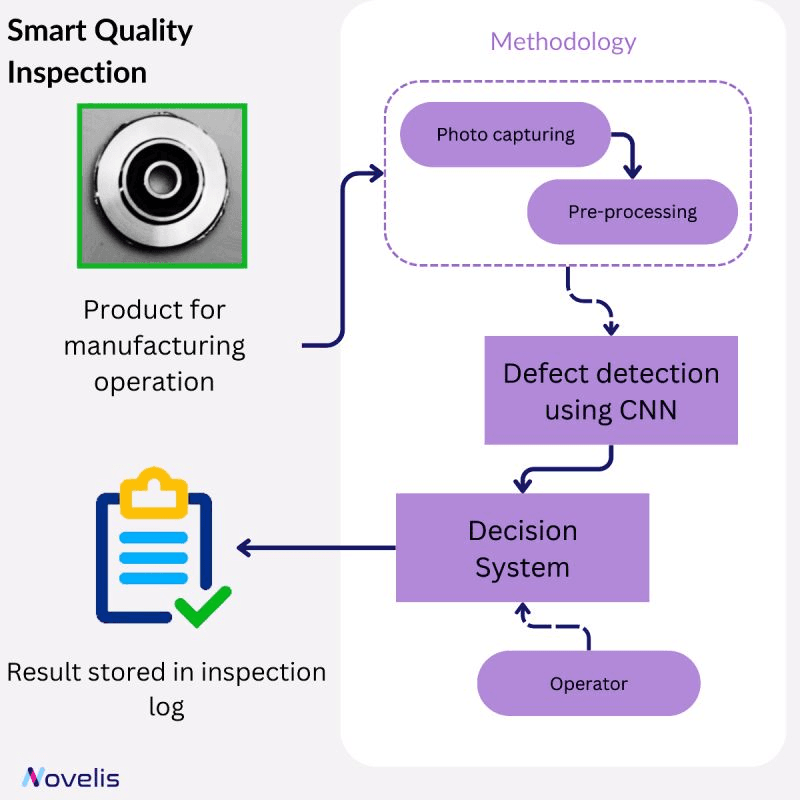
In the high-stakes world of industrial manufacturing, where a single undetected defect can lead to catastrophic failures or massive product recalls, artificial intelligence systems are increasingly being deployed for quality control and anomaly detection. However, a persistent challenge has emerged: multimodal large language models (MLLMs), while powerful, often display unwarranted confidence in their judgments, especially when analyzing fine-grained details in complex industrial environments.
Researchers from the arXiv community have now introduced a groundbreaking solution to this problem with M3-AD (Reflection-aware Multi-modal, Multi-category, and Multi-dimensional Benchmark and Framework for Industrial Anomaly Detection), published on February 10, 2026. This framework represents a significant advancement in making AI systems more reliable and self-aware in critical industrial applications.
The Confidence Problem in Industrial AI
Industrial anomaly detection presents unique challenges that differ substantially from general computer vision tasks. Manufacturing environments often involve intricate components with subtle variations, complex textures, and reflective surfaces that can confuse even sophisticated AI systems. While current MLLMs have moved industrial inspection toward a zero-shot paradigm—where systems can identify anomalies without extensive training on specific defects—they suffer from what researchers call "high-confidence unreliability."
"These models tend to produce high-confidence yet unreliable decisions in fine-grained and structurally complex industrial scenarios," the researchers note in their paper. This is particularly problematic because in industrial settings, false negatives (missing actual defects) can have severe consequences, while false positives (flagging normal variations as defects) can unnecessarily halt production lines.
The M3-AD Framework: A Two-Pronged Approach
The M3-AD framework addresses these challenges through two complementary components:
M3-AD-FT (Fine-Tuning Resource): This component provides reflection-aligned fine-tuning data designed specifically to teach models when and how to question their initial judgments. Unlike traditional training data that focuses solely on correct answers, this resource includes examples that encourage models to recognize uncertainty and ambiguity in complex scenarios.
M3-AD-Bench (Evaluation Benchmark): This systematic cross-category evaluation platform allows researchers to test models across diverse industrial scenarios, materials, and defect types. The benchmark includes multi-dimensional assessment criteria that go beyond simple accuracy metrics to evaluate decision reliability, confidence calibration, and self-correction capability.
RA-Monitor: The Reflection Engine
At the heart of the M3-AD framework is RA-Monitor (Reflection-Aware Monitor), which models reflection as a learnable decision revision process. This innovative component guides models to perform controlled self-correction when initial judgments appear unreliable.
RA-Monitor works by:
- Confidence Assessment: Evaluating the model's certainty about its initial decision
- Reliability Scoring: Calculating the likelihood that the confidence is warranted given the complexity of the input
- Controlled Revision: Triggering a re-evaluation process when confidence and reliability scores diverge
- Explanation Generation: Providing reasoning for both initial and revised decisions
"RA-Monitor essentially teaches AI systems to say 'I might be wrong about this' when faced with ambiguous or complex patterns," explains the research team. "This is a fundamental shift from traditional anomaly detection systems that typically output a single decision without self-assessment."
Experimental Results and Industry Implications
Extensive experiments conducted on the M3-AD-Bench demonstrate that systems incorporating RA-Monitor significantly outperform both open-source and commercial MLLMs in zero-shot anomaly detection and analysis tasks. The framework shows particular strength in scenarios involving:
- Reflective surfaces common in automotive and electronics manufacturing
- Fine-grained textures found in textiles, composites, and precision components
- Structural complexity in assembled products and machinery
- Multi-modal inputs combining visual, thermal, and acoustic data
The implications for manufacturing industries are substantial. By reducing both false positives and false negatives, M3-AD could help manufacturers achieve higher quality standards while minimizing production disruptions. The framework's ability to work in zero-shot scenarios means it can be deployed more quickly across different manufacturing environments without extensive retraining.
The Broader AI Reliability Movement
M3-AD represents part of a growing movement within the AI research community to address reliability and self-awareness in artificial intelligence systems. This development follows arXiv's previous work on benchmarks like GAP and initiatives focused on AI agent reliability, including SkillsBench.
The framework's approach to "reflection-aware" learning aligns with increasing concerns about AI systems that appear confident but make critical errors—a problem that has gained attention across various AI applications from medical diagnosis to autonomous systems.
Implementation and Future Directions
The research team has announced that code for M3-AD will be released on GitHub, making this technology accessible to both academic researchers and industrial practitioners. The framework's modular design allows integration with existing industrial inspection systems and various MLLM architectures.
Future research directions include extending the reflection-aware approach to other industrial applications beyond visual inspection, such as predictive maintenance, process optimization, and supply chain monitoring. The researchers also note potential applications in safety-critical domains like aerospace and medical device manufacturing, where decision reliability is paramount.
As manufacturing becomes increasingly automated and quality standards continue to rise, frameworks like M3-AD that enhance AI reliability while maintaining zero-shot capabilities will likely play a crucial role in the next generation of industrial automation systems.
Source: arXiv:2603.00055v1, "M3-AD: Reflection-aware Multi-modal, Multi-category, and Multi-dimensional Benchmark and Framework for Industrial Anomaly Detection" (February 10, 2026)