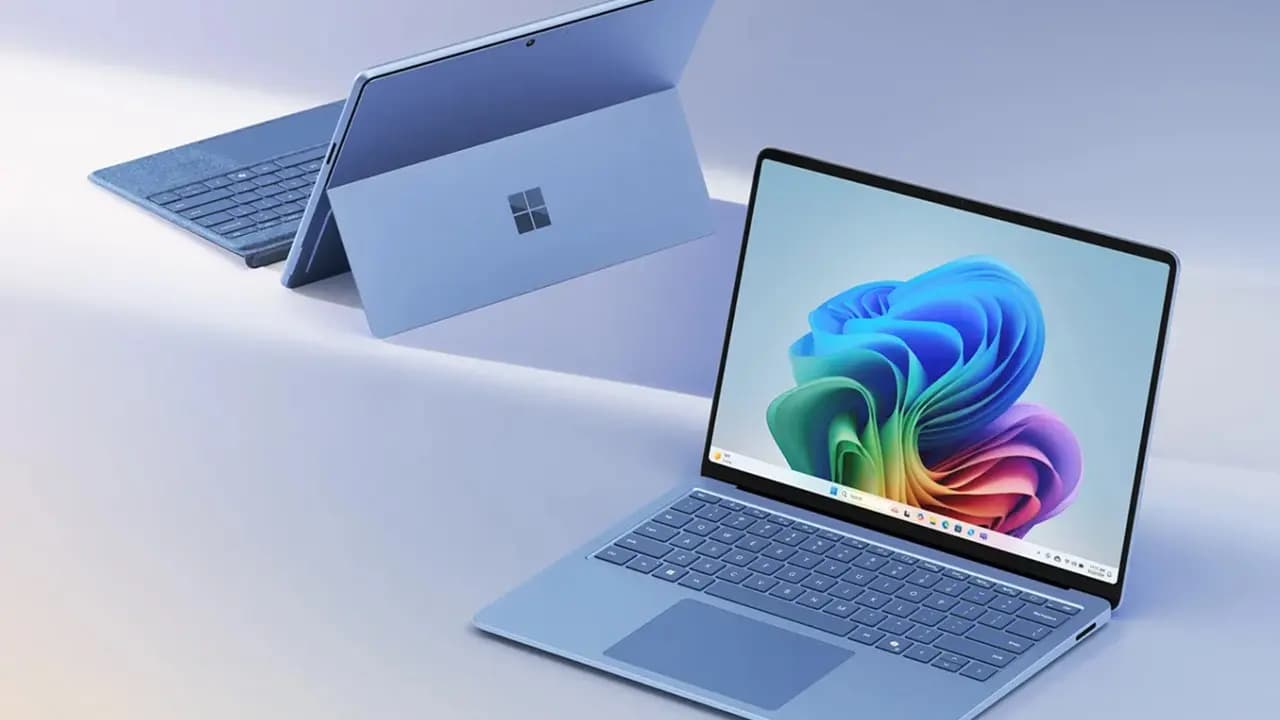
Microsoft has implemented significant price increases across its entire Surface PC lineup, according to reports from industry observers. The move comes as the company aggressively positions its hardware as the foundation for its AI-powered "Copilot+ PC" initiative.
Key Takeaways
- Microsoft has implemented substantial price increases for its entire Surface PC portfolio.
- This move likely reflects the higher component and development costs associated with integrating next-generation AI capabilities into the Copilot+ PC platform.
What Happened
Multiple reports indicate that Microsoft has raised the prices of all its Surface devices by a substantial margin. Specific examples cited include the Surface Pro 12-inch, which launched at a lower price point last year. While exact percentage increases vary by model and configuration, the adjustment appears to be a broad, portfolio-wide shift rather than an update to a single SKU.
Context: The AI Hardware Premium
This pricing action occurs against the backdrop of Microsoft's major push into AI-integrated personal computing. In 2024, the company unveiled the "Copilot+ PC" category, featuring systems with dedicated Neural Processing Units (NPUs) capable of 40+ TOPS (Trillion Operations Per Second). These PCs are designed to run AI workloads locally, including features like Recall, Cocreator, and advanced Windows Studio Effects.
The development and integration of these specialized AI silicon (like the Qualcomm Snapdragon X Elite and Plus processors) and the software stack to support them represent a significant R&D investment. Industry analysts have long speculated that the advanced components required for Copilot+ PCs—including high-performance NPUs, larger memory configurations to handle local AI models, and premium designs for thermal management—would carry a cost premium over traditional PCs.
Microsoft's Surface line has historically served as the flagship hardware showcase for Windows capabilities. With the Copilot+ PC launch, Surface devices are positioned as the premium tier of this new AI-ready category. The price increase likely reflects this repositioning, passing some of the higher bill-of-materials costs onto consumers and commercial buyers.
Market and Competitive Landscape
The price hike places Surface devices at an even higher premium compared to offerings from traditional PC OEMs like Dell, HP, Lenovo, and Acer, who are also launching Copilot+ PCs. Microsoft's strategy appears to be one of maintaining a high-margin, premium brand image rather than competing on price. This aligns with Apple's approach with its MacBook line, which also commands a significant price premium, particularly for models featuring its own Apple Silicon with enhanced AI capabilities.
For enterprise and prosumer customers, the increased cost adds to the total cost of adoption for deploying AI-capable fleets. It may accelerate the bifurcation of the PC market into standard productivity machines and higher-priced AI workstations.
gentic.news Analysis
This pricing move is a direct commercial manifestation of the AI hardware transition we've been tracking since the Copilot+ PC announcement. It confirms the financial reality we noted in our analysis of the Snapdragon X Elite architecture: integrating performant, power-efficient NPUs and designing systems for sustained AI workloads is not cheap. Microsoft is using its Surface line to establish a new, higher price ceiling for what it defines as a premium AI PC experience.
Strategically, this aligns with Microsoft's broader pattern of using Surface to de-commoditize the Windows hardware ecosystem. By setting a high bar on price and specs, it pressures OEM partners to also move upmarket, thereby increasing the average selling price (ASP) of the entire Windows PC category. This is crucial for Microsoft's ecosystem health, as more capable hardware enables more advanced (and potentially subscription-based) AI features in Windows and Copilot.
However, the price increase carries significant risk. The value proposition of Copilot+ PCs is still being proven to consumers. Features like Recall have faced privacy scrutiny, and the library of compelling native AI applications remains in its infancy. If early adopters don't perceive a clear, daily utility for the local AI capabilities that justifies the price premium, demand could soften. Microsoft is betting that its AI software pipeline will mature quickly enough to validate the hardware investment. The success of this bet will be a key indicator for the entire AI PC market segment in 2026.
Frequently Asked Questions
How much did Microsoft raise Surface prices?
While Microsoft has not released an official statement detailing the increases, reports from reliable tech journalists indicate the increases are significant and apply across the entire portfolio. The exact percentage varies by model, but some configurations may see price jumps of several hundred dollars compared to their previous launch MSRPs.
Why is Microsoft raising prices now?
The primary driver is almost certainly the increased cost of components and engineering required for its AI-focused Copilot+ PC platform. These devices require more advanced processors with powerful NPUs, often more RAM and storage to handle local AI models, and potentially more sophisticated cooling systems. Microsoft is positioning Surface as a premium AI hardware brand and adjusting prices to match that positioning.
Should I buy a Surface now or wait?
If you are considering a new PC primarily for traditional productivity tasks, the value proposition of a higher-priced AI-focused Surface may be low. You might find better value in non-Copilot+ PCs or previous-generation Surface devices. If you are a developer, creator, or early adopter specifically wanting to experiment with local AI features like Recall, live translations, and AI-powered creative tools, a Copilot+ PC like the new Surface is the only option, but you are paying an early adopter premium.
How do the new Surface prices compare to Apple's MacBooks?
The price increase brings Surface Pro and Surface Laptop pricing even closer to equivalent MacBook Air and MacBook Pro configurations. The competition is now less about price and more about ecosystem (Windows/macOS), specific AI feature sets (Copilot vs. Apple Intelligence), and design preferences. Both companies are betting that their integrated AI experiences will justify their premium pricing.