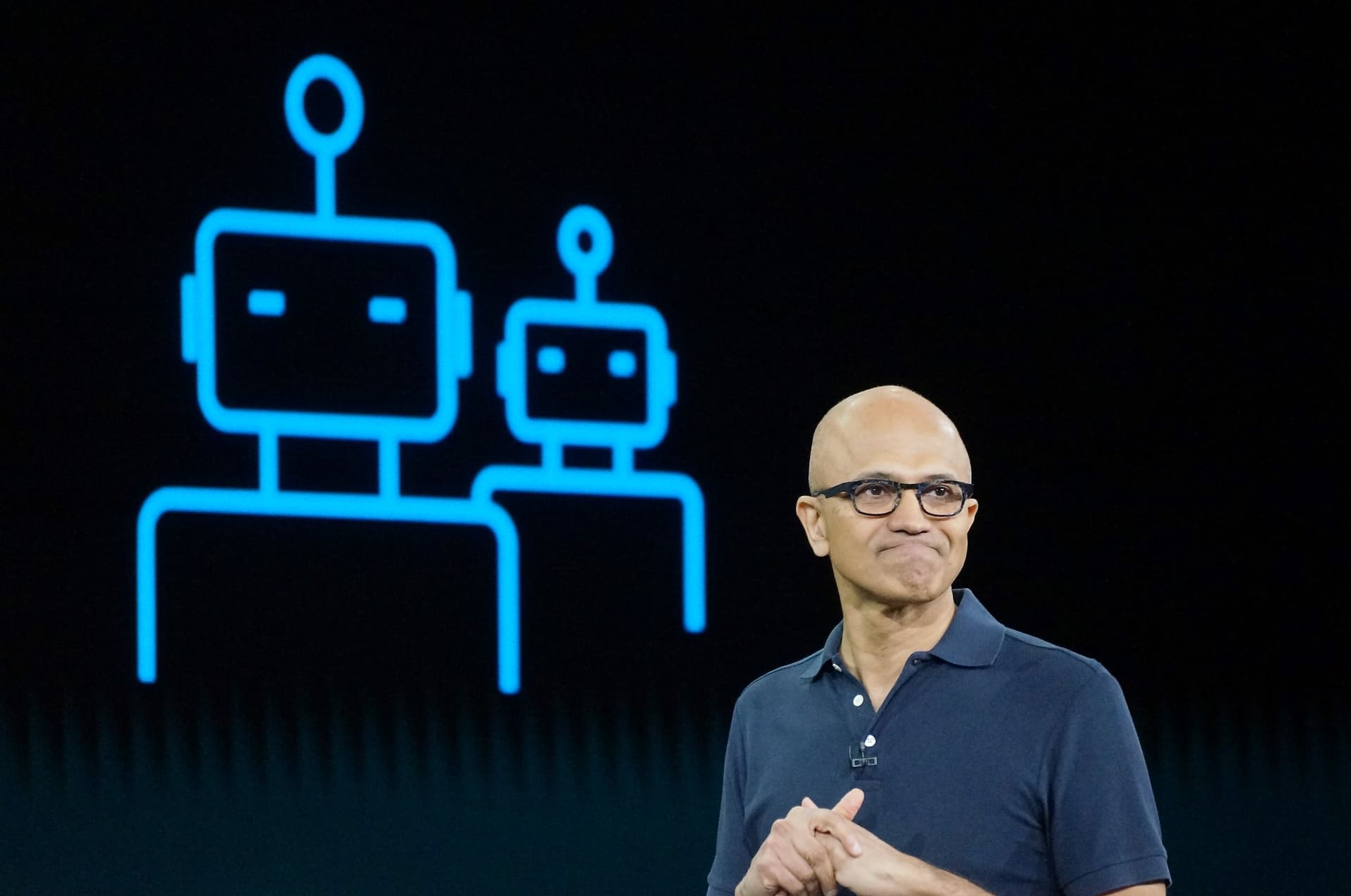
Satya Nadella defined AI's supply-side economics as 'Tokens per Dollar per Watt' in a recent interview. The Microsoft CEO framed this as the new equation for every company, industry, and country competing in the AI age.
Key facts
- Nadella defined AI economics as 'Tokens per Dollar per Watt'
- Metric collapses compute cost and energy efficiency
- Microsoft committed over $50B in AI infrastructure by 2026
- Data centers consume 1-2% of global electricity
- Framing targets companies, industries, and countries
Satya Nadella, CEO of Microsoft, introduced a new framing for AI economics during an interview on the "Microsoft India" YouTube channel. He described the supply side of AI's physical economics as "Tokens per Dollar per Watt" — a unit that captures the cost and energy efficiency of generating AI output According to @rohanpaul_ai.
Nadella's formulation collapses two critical dimensions into a single metric: the cost of compute (dollars) and the energy required (watts) to generate a unit of AI output (tokens). This mirrors the historical shift in computing from raw clock speed to performance per watt, a transition that defined the mobile and cloud eras.
"The new equation for the AI age for every Company or Industry or Country," Nadella said, emphasizing the universal applicability of the metric. He then repeated "Infrastructure, Infrastructure and Infrastructure" — a nod to the massive capital expenditure required to compete.
What the Metric Means
By tying tokens to both dollars and watts, Nadella is signaling that AI's bottleneck is not just compute cost but energy availability. Data centers already consume 1-2% of global electricity, and AI workloads are projected to multiply that demand. A "tokens per dollar per watt" framework forces operators to optimize across both dimensions simultaneously.
The framing also implicitly critiques the current race for raw scale, where companies like OpenAI and Google compete on model size and training compute without always disclosing inference cost or energy footprint. Nadella's unit would make those tradeoffs transparent.
Why It Matters
Microsoft has committed to over $50 billion in cloud and AI infrastructure spending by 2026, including data center buildouts and energy partnerships. Nadella's metric provides a strategic lens for that investment: not just building more compute but building more efficient compute per watt.
For enterprises and governments, the equation becomes a decision framework. A country with cheap renewable energy (watts) and favorable hardware supply chains (dollars) can produce tokens more competitively. This could reshape where AI infrastructure gets built — favoring regions with abundant clean power like Iceland, Quebec, or the Middle East.
Nadella did not provide a specific numerical target or benchmark for the metric, nor did Microsoft disclose internal measurements. The statement is a strategic framing rather than a technical specification.
What to watch
Watch for Microsoft's Q3 2026 earnings call (expected late April) for any disclosure of internal tokens-per-dollar-per-watt metrics across Azure OpenAI workloads. Also track whether AWS or Google Cloud adopt similar framing in their own infrastructure messaging.