What Happened
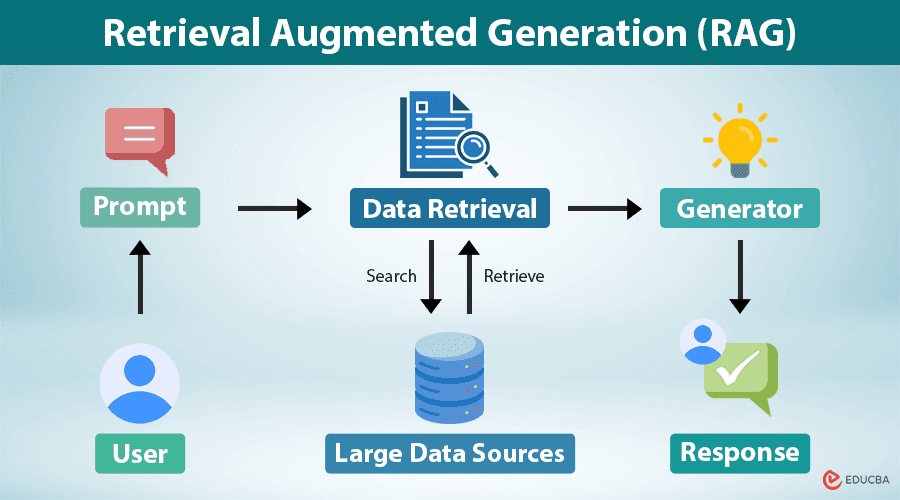
Researchers have published a new study on arXiv titled "Beyond Relevance: On the Relationship Between Retrieval and RAG Information Coverage" that systematically investigates a fundamental question in retrieval-augmented generation (RAG) systems: can upstream retrieval metrics reliably predict the information coverage of final generated responses?
The paper addresses a gap in current understanding—while the intuitive connection between good retrieval and good generation seems obvious, this relationship hadn't been rigorously studied until now. The researchers conducted extensive experiments across multiple benchmarks and evaluation frameworks to provide empirical evidence about this relationship.
Technical Details
The study analyzed 15 text retrieval stacks and 10 multimodal retrieval stacks across four different RAG pipelines. The experiments spanned:
- Text RAG benchmarks: TREC NeuCLIR 2024 and TREC RAG 2024
- Multimodal benchmark: WikiVideo
- Evaluation frameworks: Auto-ARGUE and MiRAGE
The core research question was whether retrieval metrics (particularly those measuring information coverage rather than just relevance) correlate with the "nugget coverage" in generated responses—essentially, how much of the key information from retrieved documents actually appears in the final output.
Key Findings
Strong correlation exists: The study found "strong correlations between coverage-based retrieval metrics and nugget coverage in generated responses at both topic and system levels."
Alignment matters: The relationship holds most strongly when retrieval objectives align with generation goals. When what the retrieval system is optimized for matches what the generation system needs to produce, retrieval metrics become better predictors.
Pipeline complexity affects coupling: More complex iterative RAG pipelines can partially decouple generation quality from retrieval effectiveness. In simpler pipelines, retrieval quality directly constrains generation quality; in more sophisticated iterative approaches, the generation component can compensate somewhat for retrieval shortcomings.
Empirical validation: The findings provide "empirical support for using retrieval metrics as proxies for RAG performance," giving practitioners a more efficient way to evaluate RAG systems without always needing to run full generation and evaluation cycles.
Retail & Luxury Implications
For retail and luxury companies implementing RAG systems—which are increasingly common for customer service, product information synthesis, market intelligence, and internal knowledge management—this research offers several practical insights:
1. More Efficient RAG Evaluation
Retail organizations deploying RAG for customer-facing applications (like personalized shopping assistants or detailed product Q&A systems) can use retrieval metrics as early indicators of system performance. Instead of waiting for full end-to-end testing with expensive generation and human evaluation, teams can monitor retrieval coverage metrics to catch performance degradation early.
2. Better Pipeline Design Decisions
The finding about alignment between retrieval and generation objectives is particularly relevant for retail applications. Consider:
- Product recommendation RAG: If the generation goal is to produce personalized recommendations, retrieval should focus on finding diverse product options that match user preferences, not just the most relevant single product.
- Customer service RAG: If the goal is comprehensive troubleshooting, retrieval should prioritize coverage of all possible solutions rather than just the most likely one.
Understanding this alignment requirement helps teams design better retrieval strategies from the start.
3. Strategic Investment Guidance
The research suggests that for simpler RAG implementations (common in early-stage deployments), improving retrieval quality will have direct, measurable impact on generation quality. For more mature, iterative RAG systems (where the LLM can ask follow-up questions or refine its retrieval), generation capabilities become more important.
This helps retail AI leaders allocate resources appropriately: early-stage projects should focus on retrieval optimization, while mature systems might benefit more from generation model improvements.
4. Multimodal Considerations
The inclusion of WikiVideo in the study highlights that these principles apply to multimodal RAG as well—relevant for luxury brands using visual search, product image analysis, or video content understanding. The same correlation between retrieval coverage and generation quality likely applies when retrieving visual information for multimodal responses.
5. Practical Implementation Strategy
Based on the findings, retail AI teams should:
- Instrument retrieval coverage metrics alongside traditional relevance metrics in their RAG monitoring
- Align retrieval objectives with specific business use cases (coverage for comprehensive responses vs. precision for concise answers)
- Choose pipeline complexity based on available resources and tolerance for retrieval limitations
- Use retrieval metrics as leading indicators in development and testing cycles
The research provides empirical justification for what many practitioners suspected but couldn't prove: that you can't generate what you don't retrieve, and that retrieval quality—particularly coverage quality—fundamentally constrains what's possible in RAG outputs.