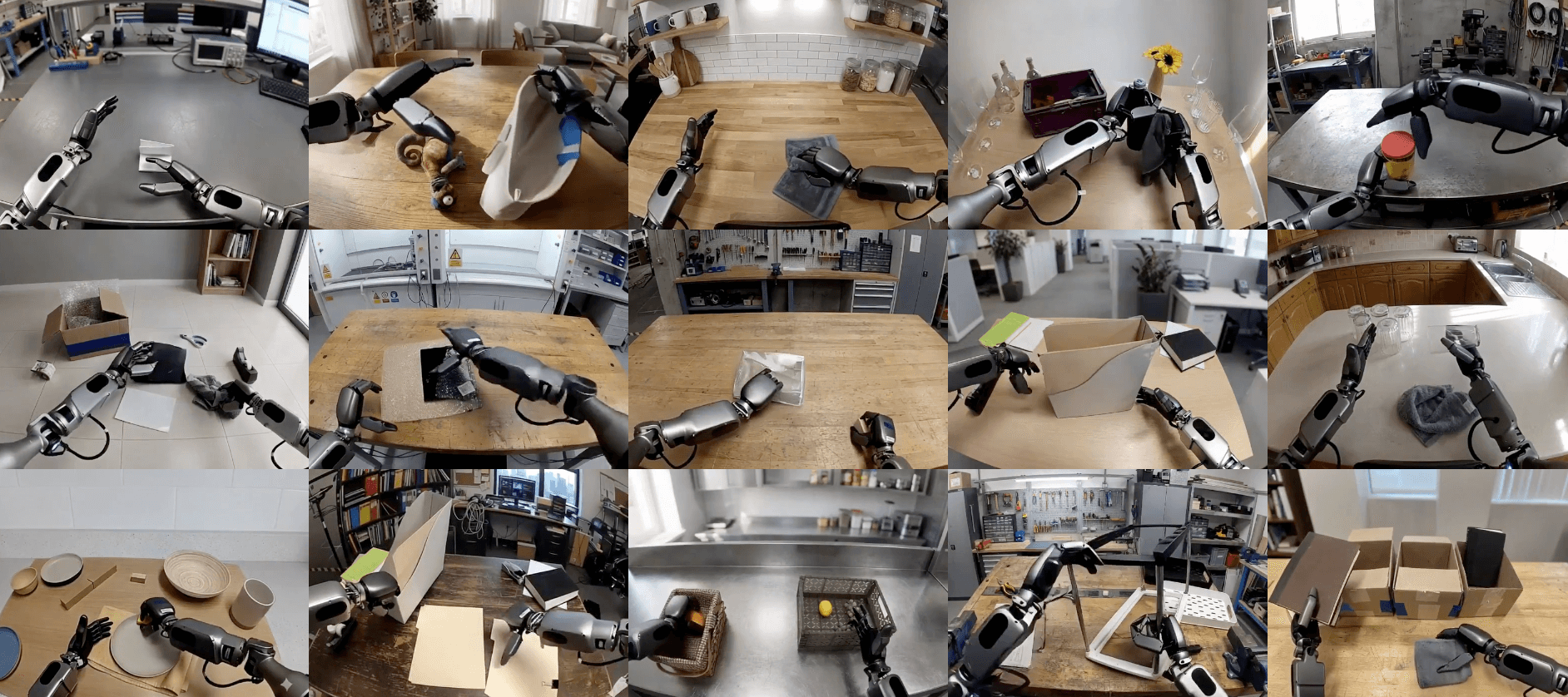
In a move that could fundamentally reshape how robots learn about the physical world, NVIDIA has released DreamDojo, a fully open-source, generalizable robot world model that represents a radical departure from traditional simulation approaches. Trained on an unprecedented 44,711 hours of real-world human video data—the largest egocentric human video dataset ever assembled—DreamDojo doesn't simulate physics through equations but instead "dreams" the results of robot actions directly in pixels.
The Physics Engine Problem
For decades, robotics development has relied on physics engines—complex systems of manually coded equations that attempt to replicate real-world physical interactions. These engines require perfect 3D models of environments and objects, painstakingly calibrated parameters, and significant computational resources. The results are often brittle: robots trained in simulation frequently fail when encountering the messy, unpredictable reality of the physical world.
This "sim-to-real gap" has been one of the most persistent challenges in robotics. While simulation allows for rapid, safe experimentation, the transfer of learned behaviors to actual robots remains problematic. Objects in the real world have different weights, textures, and behaviors than their simulated counterparts. Surfaces aren't perfectly flat, and physics engines struggle with complex interactions like cloth manipulation, liquid handling, or deformable objects.
How DreamDojo Works: Learning from Human Experience
DreamDojo takes a fundamentally different approach. Instead of trying to mathematically model physics, it learns from 44,711 hours of human video footage spanning 6,015 unique tasks across 9,869 different scenes. This massive dataset, called DreamDojo-HV, captures how humans naturally interact with their environment—how we open doors, pour liquids, manipulate tools, and navigate spaces.
The model learns to predict what will happen next in a sequence of actions, but it does so in pixel space rather than in a parameterized physics simulation. When given a starting image and a proposed robot action, DreamDojo generates a predicted outcome image—it literally "dreams" what the world will look like after the action is performed.
This approach has several advantages:
- No manual physics coding required – The model learns physical relationships from data
- Natural handling of complex phenomena – Things like fluid dynamics, cloth behavior, and complex collisions emerge from the data
- Direct visual feedback – Robots can plan using the same visual information humans use
- Generalization potential – Training on diverse human activities may lead to more flexible understanding
The Scale of the Dataset
The sheer scale of DreamDojo-HV deserves special attention. 44,711 hours represents approximately 5.1 years of continuous video footage. This isn't just quantity—the diversity matters equally. With 6,015 unique tasks and 9,869 different scenes, the dataset captures an extraordinary range of human activities and environments.
This scale is made possible by NVIDIA's recent hardware advances, including their Blackwell Ultra GB300 NVL72 systems which reportedly deliver up to 100x inference performance gains versus previous Hopper architecture baselines. The computational demands of processing nearly 45,000 hours of video and training a model to predict pixel-level outcomes would have been prohibitive just a few years ago.
Implications for Robotics Development
Accelerated Training Cycles
DreamDojo could dramatically reduce the time required to train robots for new tasks. Instead of building custom simulations for each application, developers could use DreamDojo to rapidly test action sequences in a learned model of reality. This could move robotics development from months to days for many applications.
Democratization of Robotics
By releasing DreamDojo as open-source, NVIDIA is potentially democratizing advanced robotics development. Smaller companies, research institutions, and even individual developers could access capabilities that previously required massive investments in simulation infrastructure and expertise.
Better Real-World Performance
Because DreamDojo learns from actual human interactions rather than idealized physics models, robots trained with it may better handle the complexities of real environments. The model has seen how objects actually behave when humans interact with them—including all the imperfections, variations, and edge cases that physics engines struggle to capture.
Strategic Context: NVIDIA's Broader AI Ecosystem
DreamDojo arrives amidst a period of unprecedented dominance for NVIDIA in AI hardware. Recent announcements include:
- Blackwell Ultra GB300 NVL72 systems with claims of 50x higher performance per megawatt
- 35x lower cost per token for AI inference
- Forging alliances with venture capital firms to identify and fund AI startups in India
- Achieving unprecedented market dominance in AI hardware
DreamDojo represents a strategic move beyond hardware into the AI software and model ecosystem. By providing powerful open-source tools, NVIDIA creates demand for its hardware while positioning itself at the center of the AI development ecosystem.
Challenges and Limitations
Despite its promise, DreamDojo faces significant challenges:
- Computational requirements – Training and running such models remain resource-intensive
- Dataset biases – The model inherits any biases or limitations in the training data
- Safety concerns – Predicting in pixel space may miss subtle physical constraints
- Generalization limits – The model may struggle with scenarios far outside its training distribution
The Future of Robot Learning
DreamDojo represents a paradigm shift from "simulation-first" to "observation-first" approaches in robotics. Instead of trying to perfectly model reality and then train robots within that model, we're now building systems that learn reality from observation and then simulate within that learned model.
This approach aligns with broader trends in AI toward foundation models—large, general-purpose models that can be adapted to many tasks. Just as large language models learn the structure of language from vast text corpora, DreamDojo learns the structure of physical interaction from vast video corpora.
Looking forward, we might see:
- Integration with language models – Combining physical understanding with language reasoning
- Real-time adaptation – Models that continuously learn from new observations
- Multi-modal understanding – Combining visual prediction with other sensor data
- Collaborative learning – Robots sharing learned physical understanding
Conclusion
NVIDIA's release of DreamDojo marks a significant milestone in robotics and AI. By leveraging massive-scale human video data and predicting directly in pixel space, it offers a compelling alternative to traditional physics-based simulation. While challenges remain, the open-source nature of the project means the broader research community can now build upon this foundation.
As robotics moves from controlled environments into our homes, workplaces, and public spaces, tools like DreamDojo that learn from human experience rather than mathematical abstraction may prove essential. The next generation of robots may not just be programmed or trained—they may learn to "dream" their way through our world, guided by thousands of hours of human experience captured in pixels.
Source: NVIDIA Releases DreamDojo: An Open-Source Robot World Model Trained on 44,711 Hours of Real-World Human Video Data (MarkTechPost)