Key Takeaways
- Claude Opus 4.7's updated tokenizer means the same input can cost 40%+ more than 4.6.
- Use the Claude Token Counter to measure real costs before upgrading.
What Changed — The Opus 4.7 Tokenizer Update
Anthropic's Claude Opus 4.7 uses an updated tokenizer that changes how text is processed. While pricing remains the same ($5/M input, $25/M output), the same input now maps to more tokens—anywhere from 1.0–1.35× more depending on content type.
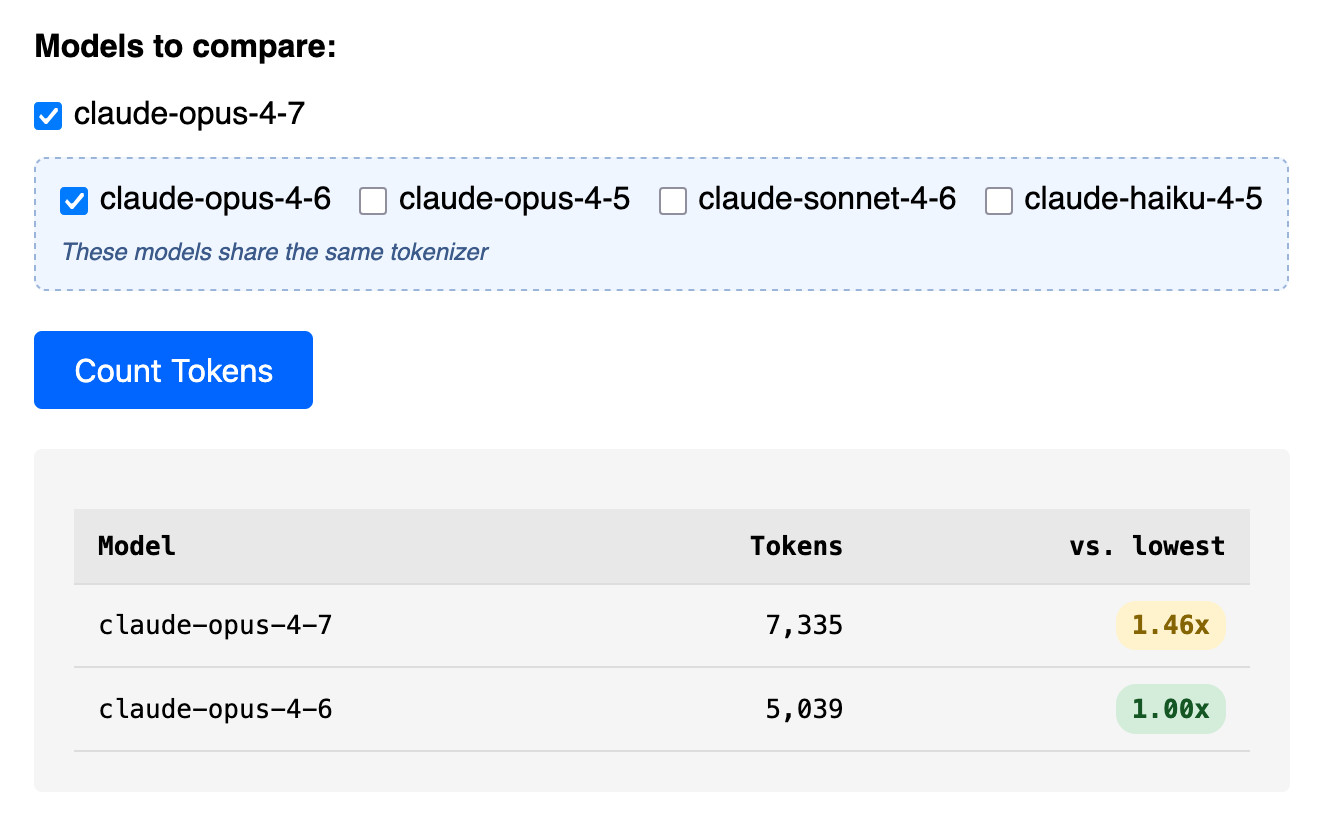
Simon Willison's testing revealed even higher multipliers:
- System prompt text: 1.46× more tokens in Opus 4.7 vs 4.6
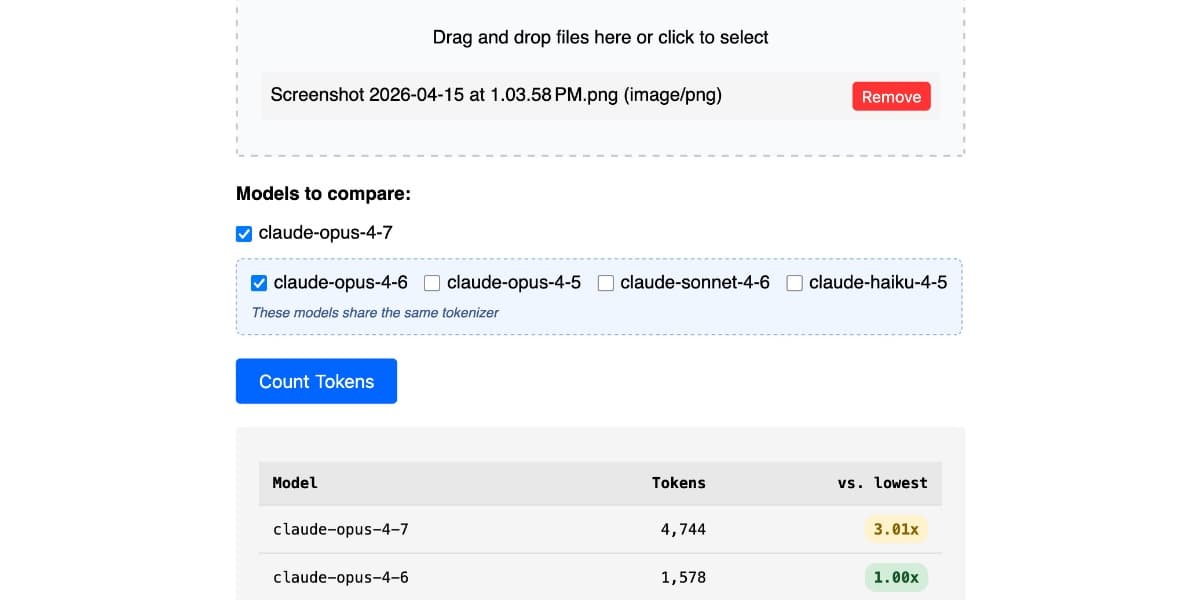
- High-resolution image (3456×2234 PNG): 3.01× more tokens
- Text-heavy PDF: 1.08× more tokens
The key insight: Opus 4.7 can handle higher-resolution images (up to 2,576 pixels on the long edge vs previous limits), which explains the dramatic image token increase. For standard-resolution images, token counts are nearly identical.
What It Means For Your Claude Code Workflow
If you're using Claude Code with Opus 4.7, you're likely paying more than you think. That 40%+ token inflation translates directly to increased costs for:
- System prompts in your CLAUDE.md files
- Code context you provide
- Documentation and comments you include
This follows Anthropic's pattern of model evolution where tokenizer changes impact cost calculations. The company maintains the same per-token pricing but changes how tokens are counted—a subtle but important distinction for developers tracking expenses.
Try It Now — Measure Before You Migrate
Use Willison's updated Claude Token Counter to compare your actual usage:
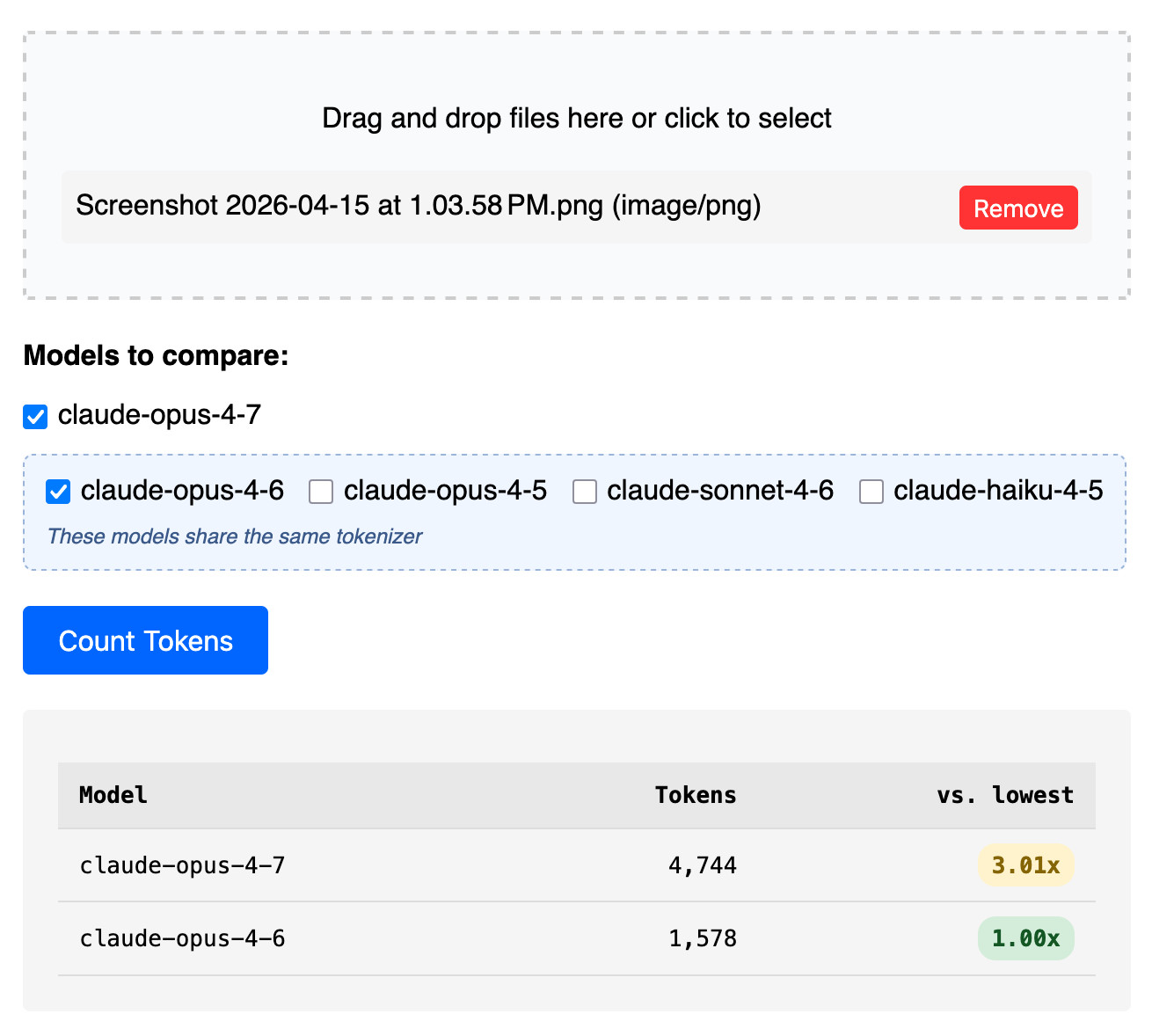
- Paste your system prompt to see the 4.7 vs 4.6 difference
- Upload code files to measure token inflation for your specific codebase
- Test with images if you use screenshots or diagrams in prompts
For CLI users, you can integrate token counting into your workflow:
# Get token counts for your CLAUDE.md file
curl -X POST https://api.anthropic.com/v1/tokenize \
  -H "x-api-key: YOUR_KEY" \
  -H "anthropic-version: 2023-06-01" \
  -d '{
    "model": "claude-opus-4.7",
    "text": "$(cat CLAUDE.md)"
  }'
When To Stick With 4.6
Based on Willison's findings:
- If you use high-resolution images: Consider downsampling before sending to 4.7, or stick with 4.6 for image-heavy workflows
- If cost is primary concern: 4.6 remains more token-efficient for text processing
- If you need vision improvements: 4.7's better high-res support might justify the token increase
The Bottom Line for Claude Code Users
Don't assume "same pricing" means "same cost." The tokenizer change in Opus 4.7 represents a hidden cost increase that affects every prompt you send. Use the comparison tool to make data-driven decisions about when to upgrade versus when to maintain your current 4.6 workflow.
This aligns with our previous coverage of Claude system prompt changes—Anthropic continues to optimize model performance while adjusting the underlying economics. As developers, we need to track these changes at the token level, not just the headline pricing.