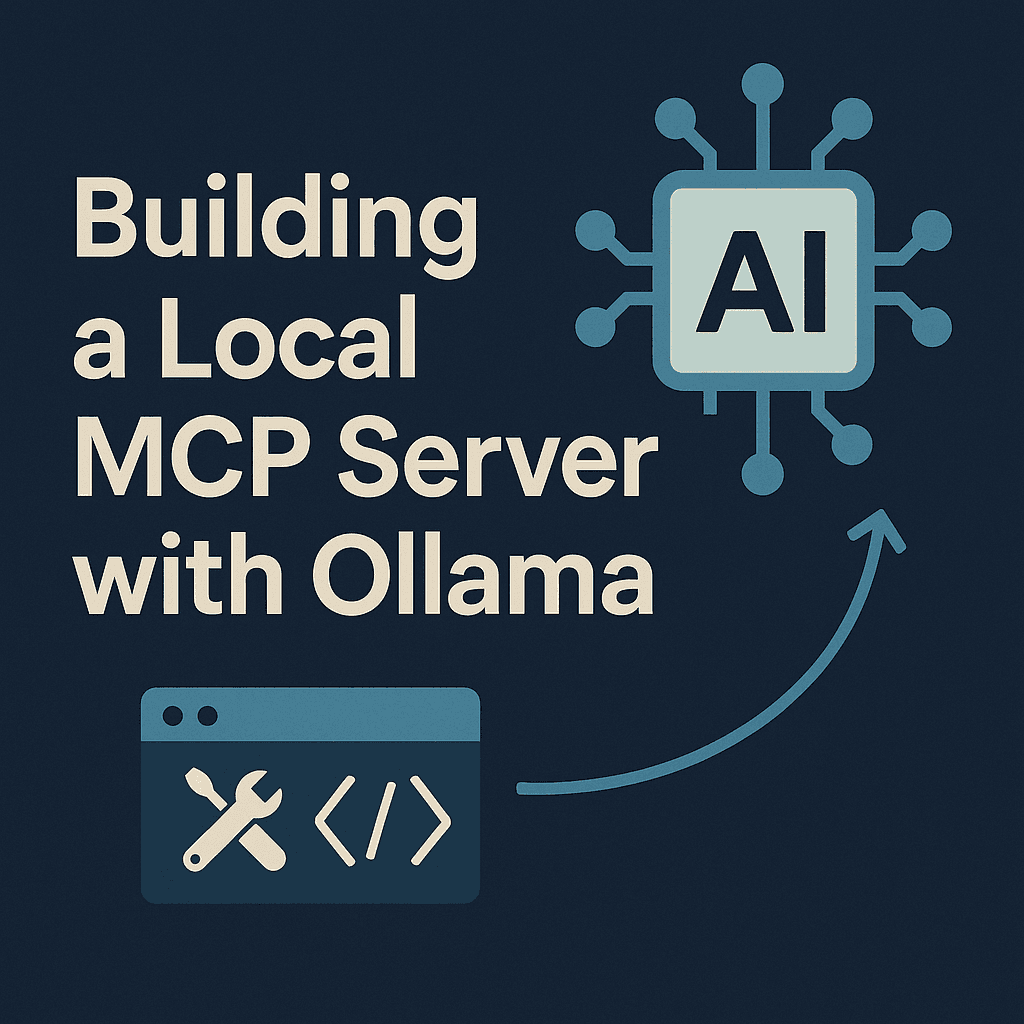
Ollama, the open-source framework that simplifies running large language models (LLMs) locally, has gained a new backend option: Apple's MLX framework. This integration, announced via a developer's social media post, allows users to run Ollama-powered models using MLX as the underlying execution engine on macOS systems with Apple Silicon.
What Happened
The integration means that when running Ollama on a Mac with an M-series chip (M1, M2, M3, or M4), users can now optionally use Apple's MLX framework instead of the default backend. MLX is Apple's machine learning array framework specifically designed for Apple Silicon, offering optimized performance by leveraging the unified memory architecture and GPU capabilities of Apple's chips.
This is not a separate version of Ollama but rather a backend option within the existing Ollama ecosystem. Users can configure Ollama to use MLX for model loading, computation, and inference.
Technical Context
Ollama has become the de facto standard for running LLMs locally on personal computers, supporting models like Llama 3.2, Mistral, Gemma, and CodeLlama. It handles model downloading, quantization, and provides a simple API and CLI interface. Previously, Ollama primarily used its own optimized backend or could leverage other frameworks like llama.cpp.
Apple's MLX framework, announced in December 2023 and steadily developed since, provides Python APIs similar to NumPy and PyTorch but with automatic GPU acceleration on Apple Silicon. Key advantages include:
- Unified memory: No data copying between CPU and GPU
- Composable function transformations: Automatic differentiation, vectorization, and compilation
- Apple Silicon optimization: Direct Metal Performance Shaders integration
How to Use It
While the announcement didn't include detailed installation instructions, typical usage would involve:
- Installing the MLX backend for Ollama
- Configuring Ollama to use MLX instead of the default backend
- Pulling and running models as usual through Ollama's CLI or API
The integration should work with existing Ollama models, though performance characteristics may differ between backends.
Performance Implications
The MLX backend could offer several advantages for Mac users:
- Better GPU utilization: MLX is designed to maximize Apple Silicon GPU performance
- Memory efficiency: Unified memory architecture reduces overhead
- Native optimization: Direct Metal API access rather than translation layers
However, actual performance gains would need to be benchmarked against Ollama's existing backend and llama.cpp implementations. Factors like model size, quantization level, and specific chip generation would affect results.
Limitations and Considerations
- macOS only: MLX only runs on macOS with Apple Silicon
- Early integration: This appears to be a new, potentially experimental feature
- Model compatibility: While most models should work, some may require specific MLX adaptations
- Quantization support: MLX's quantization capabilities may differ from Ollama's default backend
gentic.news Analysis
This integration represents a logical convergence of two important trends in the local LLM ecosystem: the democratization of model deployment through tools like Ollama, and hardware-specific optimization through frameworks like MLX.
Apple has been steadily building its MLX ecosystem since its December 2023 announcement, with notable releases including MLX 0.1.0 in February 2024 and ongoing improvements to its model zoo. The Ollama integration follows Apple's pattern of building bridges to popular open-source tools rather than creating competing standalone products. This mirrors Apple's approach with Core ML and Create ML—providing the underlying infrastructure while letting the community build the user-facing tools.
For the local LLM community, this development continues the trend of specialization and optimization. Where initially llama.cpp served as the universal solution, we're now seeing targeted optimizations for specific hardware platforms: MLX for Apple Silicon, CUDA for NVIDIA, ROCm for AMD, and DirectML for Windows. This fragmentation, while potentially confusing for beginners, ultimately leads to better performance for users who can match their software stack to their hardware.
Interestingly, this comes at a time when Apple is reportedly developing its own on-device AI features for iOS 18 and macOS 15. While MLX is positioned as a general-purpose framework, its growing adoption in tools like Ollama creates a stronger ecosystem for Apple's AI ambitions. If developers become accustomed to MLX-optimized models, transitioning to Apple's proprietary AI services becomes smoother.
Frequently Asked Questions
What is Ollama?
Ollama is an open-source framework that makes it easy to run large language models locally on your computer. It handles downloading models, managing different model versions, and provides both command-line and API interfaces for interacting with models.
What is Apple MLX?
MLX is Apple's machine learning framework designed specifically for Apple Silicon chips (M1, M2, M3, M4). It provides Python APIs similar to NumPy and PyTorch but with automatic GPU acceleration optimized for Apple's unified memory architecture.
How do I switch Ollama to use the MLX backend?
While specific instructions weren't provided in the announcement, typically this would involve installing an MLX-compatible version of Ollama or configuring an existing installation to use MLX as the computation backend. Check Ollama's GitHub repository or documentation for updated installation instructions.
Will my existing Ollama models work with the MLX backend?
Most models should work, but performance and compatibility may vary. Some models might require conversion or quantization specific to MLX. It's recommended to test with your specific models and monitor for any issues or performance changes.
Is MLX faster than Ollama's default backend on Mac?
Potentially, but it depends on the specific model, quantization, and hardware. MLX is optimized for Apple Silicon's unified memory and GPU, which could provide performance benefits, but actual results need to be benchmarked. For some models and tasks, the difference might be minimal or even negative if the model isn't fully optimized for MLX.