According to a report from AI researcher and commentator @kimmonismus, OpenAI has completed the pretraining phase for its next major model, internally codenamed "Spud." This model is widely believed to be the forthcoming GPT-5.5. The report, based on internal communications, states that CEO Sam Altman told staff to expect a "very strong model" within weeks that could "really accelerate the economy."
What Happened
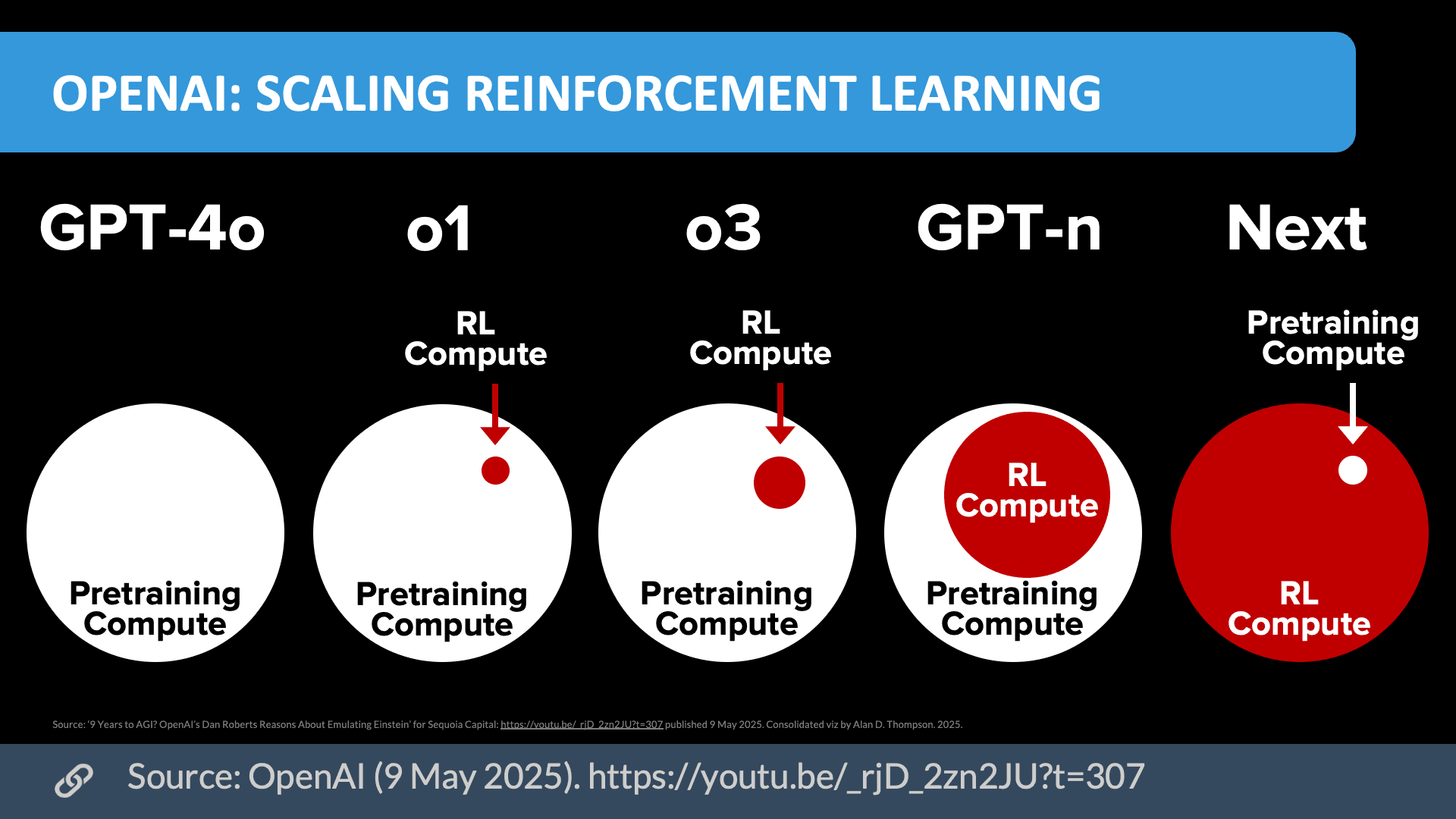
The core claim is that OpenAI has finished pretraining Spud from scratch. This signifies a significant engineering effort, as it implies the development of a new foundational architecture, a new training data mix, and training at a new scale. It is explicitly described as not being a fine-tune or iteration on the existing GPT-4 model family. This is a clean-slate build.
To free up the massive computational resources required for launching and serving this new model, OpenAI has reportedly made a drastic decision: halting its Sora text-to-video generation project entirely. The report claims this move cost the company a $1 billion investment from Disney, underscoring the strategic priority placed on Spud.
Internally, the project is being led by President Greg Brockman's scaling organization. Altman has reportedly stepped back from direct safety oversight to focus on the critical infrastructure challenges of datacenter buildout and AI chip supply chains.
Context & Strategic Shift
The reported cancellation of Sora is a major strategic pivot. Sora, unveiled in February 2024, was OpenAI's flagship video generation model, demonstrating remarkable coherence and physics understanding in early demos. Its shelving suggests OpenAI is consolidating its resources on a single, high-impact product line: the GPT series and its associated chat and API products.
The move to a completely new foundation ("new architecture, new data mix, new scale") aligns with industry speculation that incremental improvements on the Transformer architecture are reaching limits. A new architecture could target fundamental improvements in reasoning, efficiency, or multimodality.
What to Watch
The key claims to verify are:
- The official announcement of GPT-5.5/Spud, expected within "weeks" according to the report.
- Benchmarks and capabilities. The promise is a "very strong model" with economic impact. Performance on reasoning benchmarks (like MATH, GPQA), coding (SWE-Bench), and multimodal tasks will be critical.
- Confirmation on Sora's status. OpenAI has not publicly commented on Sora's development timeline since its initial research preview.
- API and product integration. How quickly the new model will be available via the ChatGPT interface and API, and what new product features it might enable.
gentic.news Analysis
This report, if accurate, reveals a high-stakes consolidation strategy at OpenAI. The company is choosing to go "all-in" on its core conversational AI product line at the expense of a promising but resource-intensive side project in video generation. This follows a pattern of OpenAI focusing its commercial efforts where it has the clearest product-market fit and revenue stream: the GPT API and ChatGPT Plus subscriptions.
The decision reportedly involves significant financial sacrifice (the Disney deal), indicating that internal benchmarks for Spud must be exceptionally compelling. It also highlights the extreme and growing compute bottleneck in frontier AI. Training and serving state-of-the-art models now requires trade-offs between different model families within the same company.
This development places immense pressure on the upcoming model reveal. After the departure of key safety-focused researchers earlier this year and Altman's reported shift to infrastructure, the launch of Spud will be a pure test of scaling and product execution. The success or failure of this bet will likely define OpenAI's trajectory for the next 12-18 months, especially as it faces continued strong competition from Anthropic's Claude 3.5 Sonnet and the open-source community.
Frequently Asked Questions
What is GPT-5.5 'Spud'?
GPT-5.5 'Spud' is the reported internal codename for OpenAI's next major AI model. According to the source, it is a completely new foundation model built from scratch with a new architecture and data mix, not an iteration on GPT-4. It is expected to be released as a successor to the current GPT-4 series.
Why would OpenAI cancel Sora?
The report claims Sora was canceled to free up computational resources (compute) for the launch and servicing of GPT-5.5 'Spud'. Training and running frontier AI models require massive amounts of specialized AI chips (GPUs/TPUs). By halting Sora's development, OpenAI can reallocate its limited compute budget entirely to its flagship GPT product line, which has a direct and proven revenue model.
When will GPT-5.5 be released?
Based on the report, OpenAI CEO Sam Altman told staff to expect the model within "weeks." However, this is an internal target and not an official public release date. The timeline could refer to an internal deployment, a limited preview, or a full public launch.
What does this mean for the AI competitive landscape?
If GPT-5.5 delivers a significant leap in capability, it would reassert OpenAI's technical leadership in foundational models, potentially pulling ahead of competitors like Anthropic's Claude and Google's Gemini. However, the strategic retreat from video generation (Sora) may cede that specific frontier to other well-funded players like Runway, Kling, or Google's Veo.