In a strategic move that signals a significant evolution in its global expansion strategy, OpenAI has announced a landmark partnership with Pine Labs, one of India's largest merchant payment platforms. This collaboration, reported by TechCrunch on February 18, 2026, represents OpenAI's most substantial foray into enterprise fintech solutions in the world's fastest-growing major economy. The partnership will see Pine Labs embed OpenAI's application programming interfaces (APIs) directly into its payments and commerce stack, enabling AI-driven automation of high-volume settlement, reconciliation, and invoicing workflows.
The Partnership Mechanics: AI Meets Payments Infrastructure
At its core, this partnership represents a technical integration with profound practical implications. Pine Labs, which processes billions of dollars in transactions annually across hundreds of thousands of merchant locations in India, will leverage OpenAI's reasoning capabilities to automate complex financial workflows that have traditionally required significant manual intervention.
The integration enables software agents to match transactions across multiple banking systems, generate invoices automatically, and reconcile payments with unprecedented accuracy and speed. This addresses a critical pain point in India's rapidly digitizing economy, where the volume of digital transactions has exploded in recent years, creating operational bottlenecks for businesses of all sizes.
Strategic Context: OpenAI's Expanding Enterprise Ambitions
This partnership represents a deliberate pivot for OpenAI beyond its consumer-facing ChatGPT products toward embedded enterprise solutions. The move comes amidst a series of strategic initiatives from the AI research organization, including recent partnerships with 2,427 universities globally to provide free AI tool access to students and high-profile collaborations with entities like Abu Dhabi's MGX.
OpenAI's partnership with Pine Labs specifically targets what the companies describe as "AI-led commerce" acceleration in India. This aligns with India's national ambition to position itself as a global hub for applied artificial intelligence, particularly in sectors where technology can drive efficiency at scale.
The Indian Fintech Landscape: A Perfect Testing Ground
India represents an ideal market for such an AI integration for several reasons. First, the country has undergone a remarkable digital payments revolution following demonetization in 2016 and the subsequent rise of the Unified Payments Interface (UPI). Second, India's merchant ecosystem is vast and diverse, ranging from street vendors to multinational retailers, creating complex reconciliation challenges. Third, the government's "Digital India" initiative has created favorable regulatory conditions for fintech innovation.
Pine Labs, with its extensive merchant network and established infrastructure, provides OpenAI with immediate scale and real-world testing grounds for its enterprise AI solutions. The partnership allows OpenAI to demonstrate the practical business value of its technology beyond conversational interfaces, potentially creating a blueprint for similar integrations in other markets.
Technical Implementation: Beyond Simple Automation
The integration goes beyond basic automation to incorporate what the companies describe as "AI-driven reasoning." This suggests the use of more advanced models capable of understanding context, making inferences, and handling exceptions in financial workflows. While the specific OpenAI models being deployed haven't been disclosed, the partnership likely leverages capabilities from OpenAI's evolving model portfolio, which includes specialized systems like GPT-5.3 Codex for coding tasks and reasoning capabilities demonstrated in recent scientific applications.
The practical implementation involves software agents that can understand transaction patterns, identify discrepancies across banking systems, generate context-aware invoices, and potentially even predict cash flow needs based on historical data. This represents a significant advancement over traditional rules-based automation systems.
Competitive Implications and Market Positioning
This partnership positions OpenAI directly in competition with both traditional enterprise software providers and specialized fintech AI companies. By embedding its technology at the infrastructure level of one of India's largest payment platforms, OpenAI gains a strategic foothold that could be difficult for competitors to dislodge.
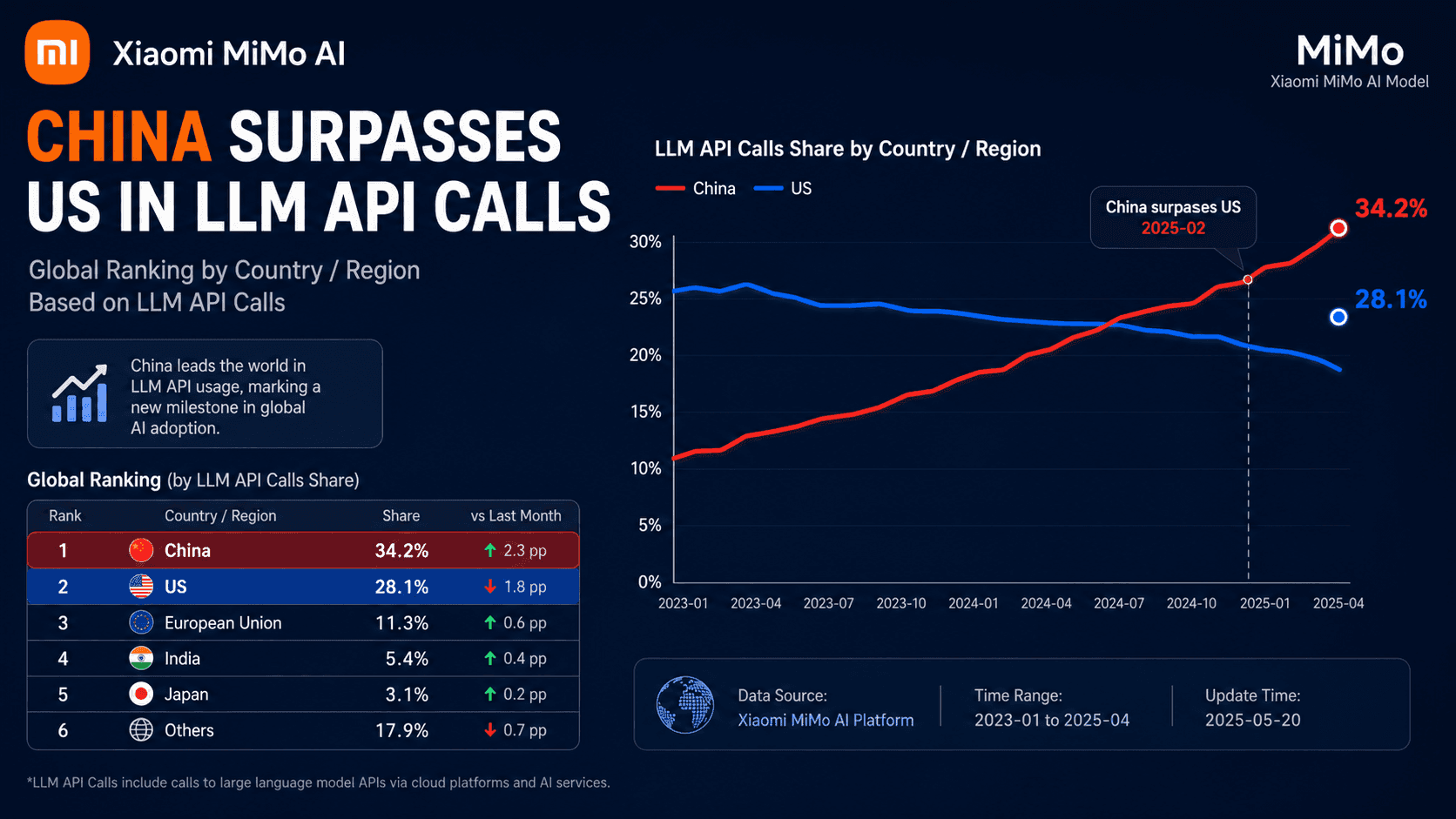
The move also represents a diversification of OpenAI's revenue streams beyond API calls to its general models and premium subscriptions. Enterprise integrations of this scale typically involve more complex commercial arrangements with guaranteed service levels and customized implementations.
Broader Implications for AI Adoption in Business
Beyond the immediate fintech applications, this partnership signals a broader trend in AI adoption: the movement from standalone AI tools to AI embedded within core business workflows. As AI capabilities mature, the greatest value may come not from asking AI systems questions, but from having them silently optimize complex processes in the background.
The Pine Labs integration demonstrates how AI can move from being a productivity tool for individual workers to becoming an operational component of business infrastructure. This represents a more profound, if less visible, transformation in how businesses operate.
Challenges and Considerations
Despite the promising potential, several challenges merit consideration. First, financial systems require extreme reliability and accuracy—errors in settlement or reconciliation can have serious financial consequences. Second, regulatory compliance in financial services is complex, particularly in a market like India with evolving digital governance frameworks. Third, the partnership will need to address data privacy and security concerns inherent in financial data processing.
The success of this integration will depend not just on the technical capabilities of OpenAI's models, but on the robustness of the implementation, the quality of the training data, and the effectiveness of human oversight mechanisms.
Future Trajectory and Expansion Possibilities
If successful, this partnership could serve as a template for similar integrations in other markets and sectors. The same reasoning capabilities applied to payment reconciliation could potentially be adapted for supply chain management, logistics optimization, or healthcare administration.
For OpenAI, the Pine Labs partnership represents a strategic beachhead in the enterprise market. Success here could pave the way for similar embedded AI solutions across other business functions and geographic markets. It also demonstrates a maturation of OpenAI's business strategy as it moves from research organization to enterprise solutions provider.
Conclusion: A Watershed Moment for Applied AI
The OpenAI-Pine Labs partnership represents more than just another corporate collaboration—it signals a new phase in the practical application of artificial intelligence. By embedding AI reasoning capabilities directly into critical financial infrastructure, the partnership demonstrates how advanced AI can move from experimental technology to operational necessity.
As India continues its rapid digital transformation, such integrations could accelerate the efficiency of entire economic sectors. For OpenAI, this partnership represents both a validation of its technology's enterprise readiness and a strategic expansion into one of the world's most important emerging markets. The success or failure of this integration will provide valuable insights into how AI can transform not just how we interact with technology, but how entire business ecosystems function.
Source: TechCrunch, February 18, 2026