What Happened
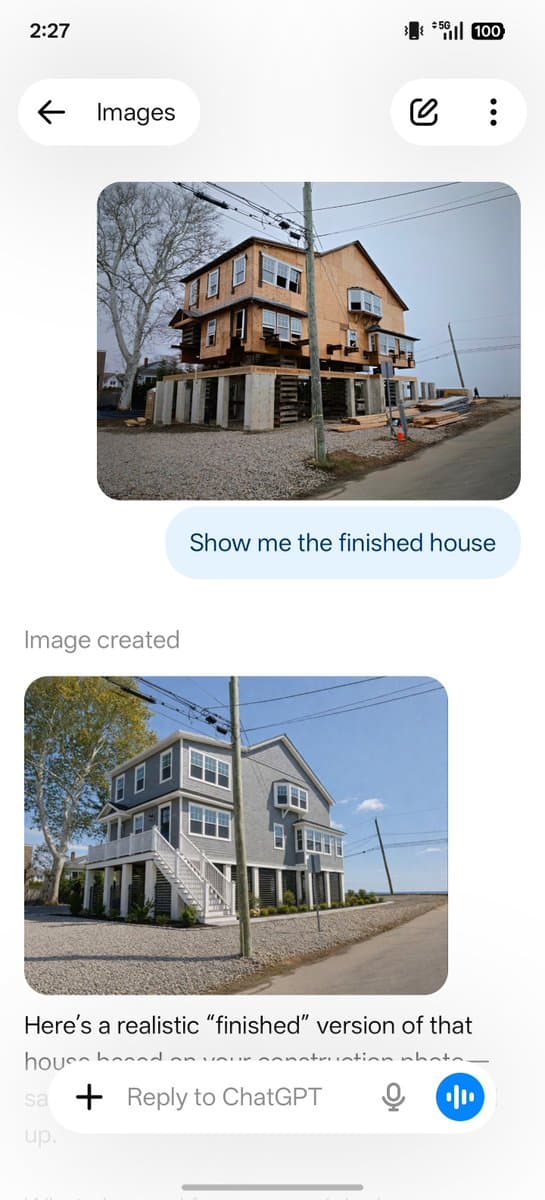
An X user, @mweinbach, posted a brief observation on April 10, 2026, stating: "So whatever the new image model OpenAI is testing in ChatGPT is very good." The post included a link to a now-deleted image, presumably generated by the model in question. The user provided no further technical details, benchmarks, or comparisons.
This report indicates that OpenAI is conducting internal or limited user testing of an unreleased image generation model integrated directly into the ChatGPT interface. The model's name, architecture, and release timeline remain undisclosed.
Context
OpenAI's primary image generation model has been DALL-E 3, which was integrated into ChatGPT in late 2023. The company has not publicly announced a successor, though industry expectations for a DALL-E 4 have been high given the rapid pace of advancement in multimodal AI.
Competitors like Midjourney (v7), Google's Imagen 3, and Stability AI have continued to push the boundaries of photorealism, prompt understanding, and stylistic control. Any new model from OpenAI would need to compete in this increasingly crowded and capable field.
gentic.news Analysis
This sparse report is a classic signal of OpenAI's development cadence: quiet, internal testing followed by a major launch. The fact that a user encountered it within the standard ChatGPT interface is significant. It suggests the integration is far along, moving beyond pure research into product prototyping. This aligns with OpenAI's established pattern of iterative deployment, as we saw with the gradual rollout of GPT-4 Turbo features and the Voice Mode advancements covered last quarter.
The key question is what "very good" means in 2026. Since the release of DALL-E 3, the benchmark for "good" has shifted dramatically. Competitors have made leaps in coherence, text rendering, and compositional understanding. For a new OpenAI model to earn praise in internal testing, it likely needs to demonstrate clear improvements in areas where DALL-E 3 lagged, such as precise spatial reasoning, handling complex multi-object scenes, or generating consistent character poses. It may also involve fundamental architectural shifts, perhaps incorporating more diffusion transformer (DiT) approaches or other next-generation techniques that have emerged from the research community.
This testing also reaffirms OpenAI's strategy of deep multimodal integration within ChatGPT, treating text, image, and eventually video as native modalities within a single conversational agent. This contrasts with the standalone application approach of some competitors. The business implication is clear: enhancing the core ChatGPT experience to maintain its subscription lead against aggressive rivals like Anthropic's Claude and Google's Gemini.
Frequently Asked Questions
What is the new OpenAI image model called?
The model has not been officially named or announced by OpenAI. The user report only refers to it as a "new image model" being tested within ChatGPT. It is likely a successor to DALL-E 3, possibly dubbed DALL-E 4, but this is speculation.
When will the new OpenAI image model be released?
There is no official release date. The fact that it is appearing in user-facing ChatGPT testing suggests it is in an advanced stage of development, but OpenAI's release schedules are notoriously difficult to predict. A limited beta or full launch could happen within months or be delayed based on internal review.
How does this model compare to Midjourney or Stable Diffusion?
Without official benchmarks or public access, a direct comparison is impossible. The user's subjective "very good" assessment suggests it meets or exceeds the high standard set by current leading models. True competitive positioning will only be clear upon release with side-by-side comparisons on prompt fidelity, aesthetic quality, and reasoning.
Is this model using Sora technology?
Unlikely in a direct sense. Sora is OpenAI's video generation model. While some underlying research in spatiotemporal understanding may inform a new image model, they are distinct product domains. The tested model is almost certainly focused on static image generation.