OpenClaw Agent Demonstrates In-Browser Video Creation Without App Switching
OpenClaw agent can now create videos directly within a browser interface without opening separate applications or switching tabs. The development suggests progress toward more integrated multimodal AI workflows.
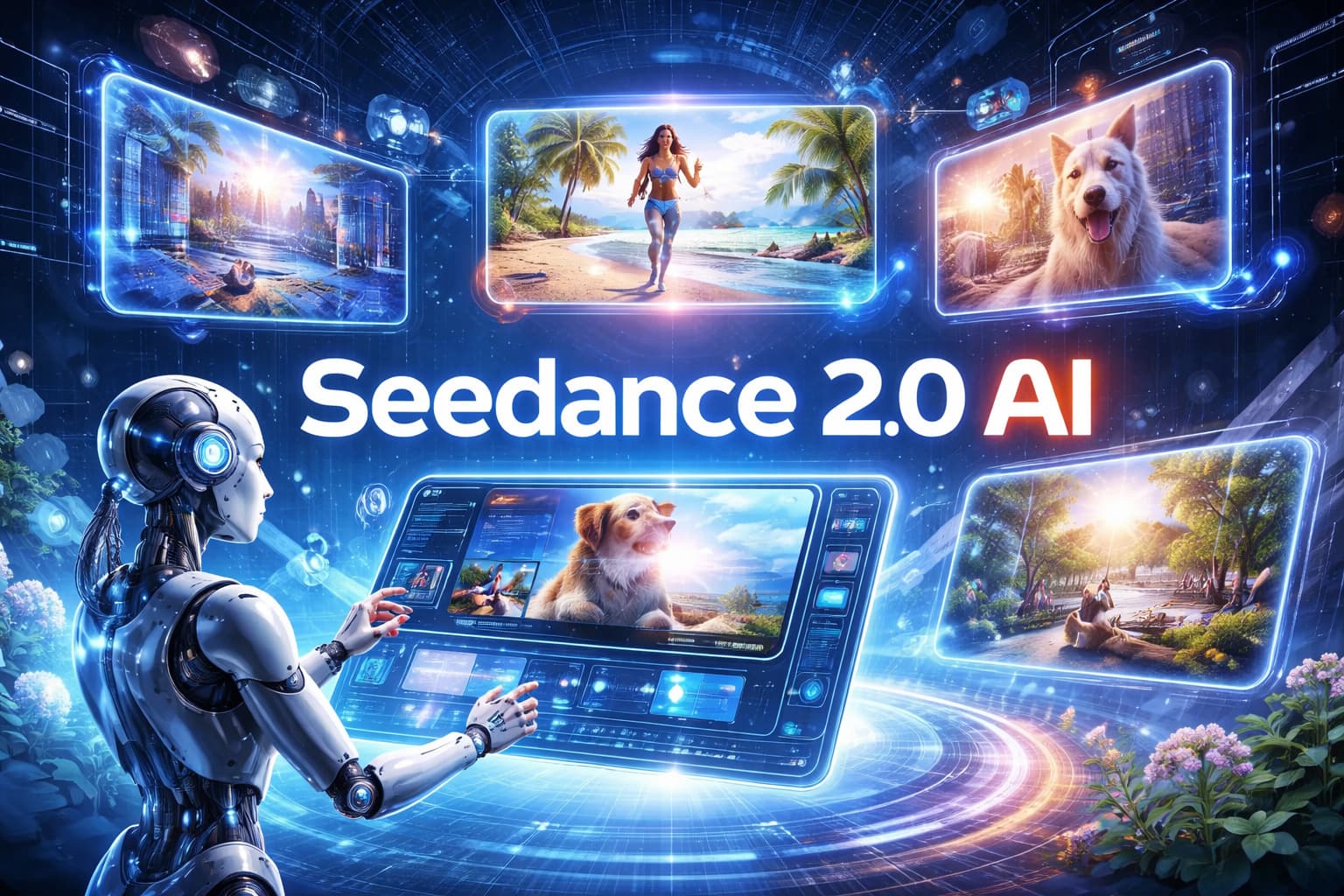
A demonstration shared by developer Hasan Töre shows the OpenClaw agent creating videos entirely within a browser environment. According to the brief description, the agent accomplishes this "Not open a new app. Not switch tabs. Not learn a new tool." The implication is that users can simply describe what they want, and the agent handles the video creation process natively within the current interface.
Context
OpenClaw is an open-source AI agent framework designed to perform complex, multi-step tasks by controlling a computer's interface, typically through browser automation. The ability to create videos represents a significant step in multimodal task execution, moving beyond text generation or simple web interactions to directly manipulate media creation tools that are presumably accessible via the web.
While the source provides no technical details, benchmarks, or code, the demonstration points to a workflow where an AI agent orchestrates existing web-based video creation services or libraries without requiring the user to manually navigate between different applications or learn specific software. The agent appears to interpret a natural language command and execute the necessary steps to produce a video output.
Given the thin source material, specific implementation details—such as which video generation models or APIs are being used, latency, output quality, or the complexity of videos it can create—remain unspecified.
AI-assisted reporting. Generated by gentic.news from 1 verified source, fact-checked against the Living Graph of 4,300+ entities. Edited by Ala SMITH.
Following this story?
Get a weekly digest with AI predictions, trends, and analysis — free.
AI Analysis
The demonstration, while light on specifics, highlights a tangible direction for AI agent development: reducing friction in multimodal creation workflows. The technical implication is an agent capable of understanding a high-level creative goal ("make a video about X"), decomposing it into subtasks (scripting, asset gathering, sequencing, rendering), and executing those tasks using available web tools—all within a single orchestrated session. This moves beyond simple API calls to a single model and toward complex, stateful workflow automation.
For practitioners, the key question is how much of this is novel orchestration versus new underlying capability. If OpenClaw is primarily scripting existing web-based video editors (like Canva or Clipchamp) or leveraging text-to-video APIs (like Runway or Pika), the advancement is in the agent's planning and execution reliability. A more significant development would be if the agent is locally orchestrating open-source models for script writing, image generation, voice synthesis, and video composition into a seamless pipeline. Without technical details, it's premature to assess the architecture.
The benchmark for such agents isn't just whether they can produce a video, but the coherence, quality, and user-time savings compared to a human manually performing the same steps. The real test is handling iterative refinement ("make the logo bigger, change the music") and recovering from errors in the workflow. This demonstration suggests progress on the path to fully integrated creative assistants, but the field still lacks standardized evaluations for such open-ended, practical agent tasks.