The Announcement: Defining the Age of Agentic Commerce
On March 20, 2026, AI solutions provider Rezolve Ai (NASDAQ: RZLV) announced that its Founder and CEO, Daniel M. Wagner, will participate in a fireside chat with Vic Miles, Americas General Manager for Retail and Consumer Goods at Microsoft. The event, titled "The Age of Agentic Commerce – Challenges and Opportunities with Microsoft and Rezolve," is scheduled for March 24, 2026, at the Ritz Carlton in Laguna Niguel, California.
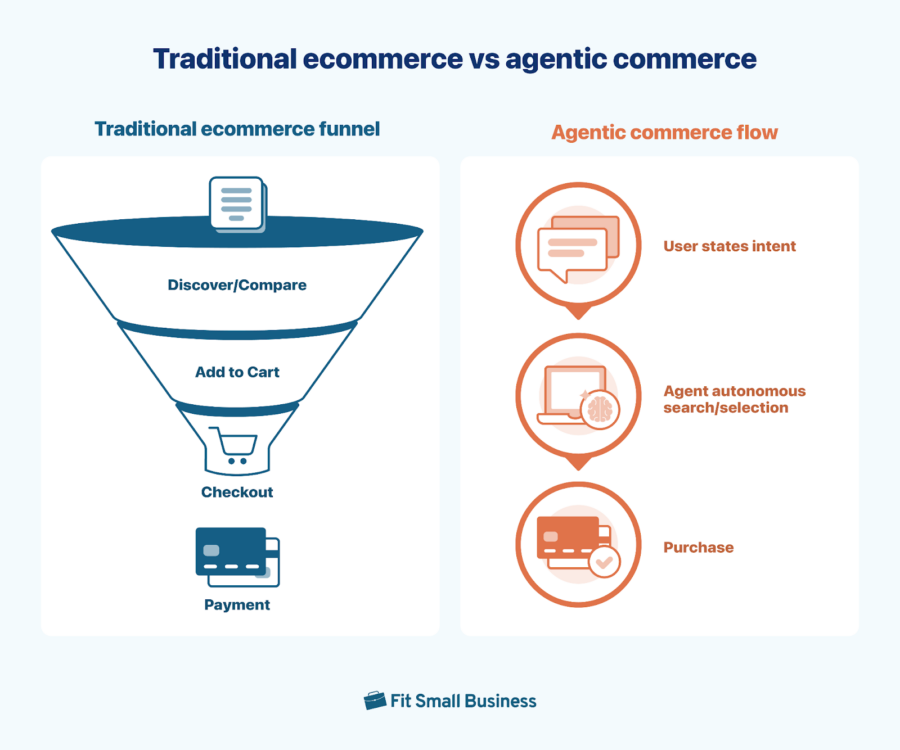
The core topic is the emergence of "Agentic Commerce," a paradigm where autonomous AI agents act on behalf of consumers to research, evaluate, and execute purchases. The discussion will focus on the growing strategic partnership between Rezolve Ai and Microsoft as retailers seek AI-powered solutions to drive smarter engagement, stronger conversion, and more efficient digital commerce.
This announcement is part of a broader narrative, as indicated by related coverage from the Wall Street Journal titled "When AI Becomes the Buyer: How Agentic Commerce is Reshaping Retail" and "Smarter Shopping: Forecasting the Future of AI Agents in Retail." While the full WSJ article content is not provided, the titles and this press release clearly frame Agentic Commerce as a significant, near-future shift in the retail landscape.
The Technical and Strategic Backdrop
The concept of Agentic Commerce relies on advanced AI agents capable of understanding complex user intent, navigating multiple retail environments (websites, apps, marketplaces), comparing products across specifications and prices, and ultimately executing transactions—all with minimal human intervention. This goes far beyond today's recommendation engines or chatbots; it implies a delegated, transactional authority.
Rezolve Ai positions itself as a pioneer in this space with its "Brain Suite," described as delivering "advanced tools that harness artificial intelligence to optimize processes, improve decision-making, and enable seamless digital experiences."
Microsoft's involvement is critical. As a cloud and enterprise software giant, Microsoft provides the Azure infrastructure, AI models (like OpenAI integrations), and the industry-specific CRM and ERP solutions (Dynamics 365) that would form the operational backbone for deploying such agentic systems at scale within retail organizations. This partnership suggests a move towards integrated platforms where the agentic logic (Rezolve) runs on robust enterprise cloud and AI stacks (Microsoft).
Furthermore, the Knowledge Graph context reveals that Google unveiled the "Universal Commerce Protocol (UCP)" open-source standard for securing agentic commerce on March 21, 2026—just one day after Rezolve's announcement. This is a pivotal piece of context. The development of an open protocol by a major player like Google indicates the industry is moving to establish technical standards and security frameworks to enable interoperability and trust between different AI agents and merchant systems. It signals that Agentic Commerce is being treated as a foundational new layer of digital commerce, requiring its own infrastructure.
Why This Matters for Retail & Luxury
For luxury and high-end retail, the implications of Agentic Commerce are profound and dual-edged.
The Opportunity: Hyper-Personalized, Frictionless Concierge Service
Imagine an AI agent that knows a client’s exact preferences: a preference for Italian tailoring, a specific wool gauge, aversion to certain dyes, and a budget range for seasonal refreshes. This agent could monitor new collections from a curated set of brands, request lookbooks or digital samples, arrange virtual fittings, and handle the purchase and logistics—presenting the client with a simple approval step. This elevates the personal shopper concept to an always-on, infinitely scalable digital service. It could dramatically increase customer lifetime value and loyalty for clients who value time and exclusive access above all.
The Challenge: Brand Dilution and Loss of Narrative Control
Luxury is built on story, heritage, and emotional experience. An AI agent making decisions based purely on objective specifications (fabric, price, delivery time) could commoditize items that are meant to be sold through an immersive brand narrative. If the purchase journey is fully delegated to an agent, how does a brand cultivate desire? The role of marketing shifts from driving direct conversion to influencing the agents themselves—ensuring a brand's attributes and new narratives are correctly encoded in the data these agents train on and access.
Operational and Strategic Shifts:
- API-First Commerce: Brands will need deeply structured, real-time product data feeds (inventory, pricing, materials, imagery) accessible via APIs for agents to query.
- Agent Relations Management (ARM): A new corporate function akin to PR, but focused on ensuring AI agents understand and accurately represent brand value, ethics, and sustainability claims.
- Dynamic Pricing & Inventory: AI agents will comparison-shop with unprecedented speed, forcing more dynamic and competitive pricing strategies and revealing true product differentiators.
- Fraud & Authentication: High-value transactions initiated by bots require new levels of security and identity verification to prevent fraud, while also ensuring genuine client purchases are seamless.
Business Impact & Implementation Approach
The initial business impact is strategic positioning. Early-adopter brands could partner with solutions like Rezolve's to offer a "White-Glove AI Agent" service to their top-tier clients, creating a powerful retention tool. The broader impact—a world where a significant portion of commerce is agent-mediated—will take years but will fundamentally alter customer acquisition costs and loyalty dynamics.
Implementation for a Luxury Brand:
- Technical Foundation: Requires a mature composable commerce architecture (MACH principles) with robust APIs for product information, inventory, and order management. Integration with a cloud AI platform (like Azure AI) is essential.
- Data Structuring: Product data must go beyond basic SKU information. It needs rich, structured attributes (designer inspiration, craftsmanship details, material provenance, sustainability certifications) that an AI agent can reason over.
- Pilot Program: Start with a controlled, invite-only pilot. Provide a branded agent to VIP clients for specific, high-consideration categories (e.g., menswear, fine jewelry). Use it to gather data on agent behavior and client satisfaction.
- Partnership Strategy: Engage with platform players like Microsoft and monitor open standards like Google's UCP. Decide whether to build a proprietary agent (for ultimate brand control), license a solution like Rezolve's, or prepare for an ecosystem of third-party agents.
Governance & Risk Assessment
Maturity Level: Emerging/Conceptual. While the underlying AI (LLMs, agents) is rapidly advancing, the integration into secure, reliable, and scalable commerce transactions is in its infancy. The 2026 timeframe of these announcements suggests active development and early market formation.
Key Risks:
- Privacy: An AI agent with spending authority requires deep access to personal preferences, financial instruments, and purchase history. Data security and clear consent frameworks are paramount.
- Bias & Alignment: Agents must be aligned with client values, not just brand or platform incentives. Ensuring they don't develop bias towards certain retailers, price points, or unsustainable products is a complex challenge.
- Brand Integrity: As mentioned, ceding the final purchase decision to an algorithm risks eroding the emotional brand connection. Governance must include rules on how agents explain their choices and present brand stories.
- Economic Disruption: Widespread adoption could massively empower price comparison, squeezing margins. True luxury may differentiate through agent-exclusive access, experiences, or products not available on the open agent network.
Conclusion: The Rezolve Ai and Microsoft announcement, coupled with Google's protocol development, marks a formal beginning for the Agentic Commerce conversation at the executive level. For luxury retail leaders, the time to engage is now—not to implement immediately, but to shape the standards, define the use cases that enhance rather than erode brand equity, and prepare their digital infrastructure for a future where their most important customer might be an AI.