Skip to content
gentic.news — AI News Intelligence Platform
Connecting to the Living Graph…

Listen to today's AI briefing

Daily podcast — 5 min, AI-narrated summary of top stories

A graph network diagram with red nodes and lines representing dynamic red-teaming connections overlaid on a digital…
AI ResearchScore: 65

RIFT-Bench Tests 45 Agentic Systems With Dynamic Red-Teaming

RIFT-Bench evaluates 45 agentic AI systems via a graph-driven two-phase pipeline, enabling unified security comparison across heterogeneous architectures.

·21h ago·2 min read··5 views·AI-Generated·Report error
Share:
Source: arxiv.orgvia arxiv_aiSingle Source
What is RIFT-Bench and how does it evaluate agentic AI security?

RIFT-Bench, a graph-driven red-teaming benchmark, automatically evaluates security across 45 diverse agentic AI systems via a two-phase Discovery and Scanning pipeline, supporting adaptive adversarial attacks and mitigation testing.

TL;DR

RIFT-Bench evaluates 45 agentic AI systems. · Two-phase pipeline: Discovery then Scanning. · Unified security benchmark for heterogeneous agents.

RIFT-Bench evaluates 45 agentic AI systems using a graph-driven red-teaming pipeline. The benchmark, published on arXiv June 22, 2026, automates security assessment across heterogeneous agent architectures.

Key facts

  • Published on arXiv June 22, 2026.
  • Evaluates 45 agentic AI systems.
  • Two phases: Discovery and Scanning.
  • Supports adaptive adversarial attacks.
  • Also evaluates mitigation strategies.

Agentic AI systems—LLM-powered autonomous decision-makers—introduce attack surfaces beyond those of traditional large language models. Existing security evaluations are typically domain-specific or implementation-tied, making cross-system comparison impossible. According to RIFT-Bench, a new benchmark published June 22, 2026 on arXiv, addresses this gap with a graph representation-driven methodology for dynamic red-teaming.

Two-Phase Automated Pipeline

RIFT-Bench operates in two automated phases: Discovery, which extracts system structure into a hierarchical NodeSpec representation, and Scanning, which deploys adaptive adversarial attacks against that representation. The framework evaluates the system itself rather than just the underlying LLM, enabling unified comparison across 45 agentic systems spanning diverse implementations. The authors demonstrate that the approach generalizes effectively to heterogeneous agentic architectures.

Attack Taxonomy and Mitigation Testing

Beyond systems and attacks, RIFT-Bench supports direct evaluation of mitigation strategies. The proposed attack taxonomy organizes adversarial influence along an attack-surface axis and a failure-objective axis, allowing the same attack to be instantiated with different goals. This makes RIFT-Bench a scalable foundation for security evaluation, according to the paper.

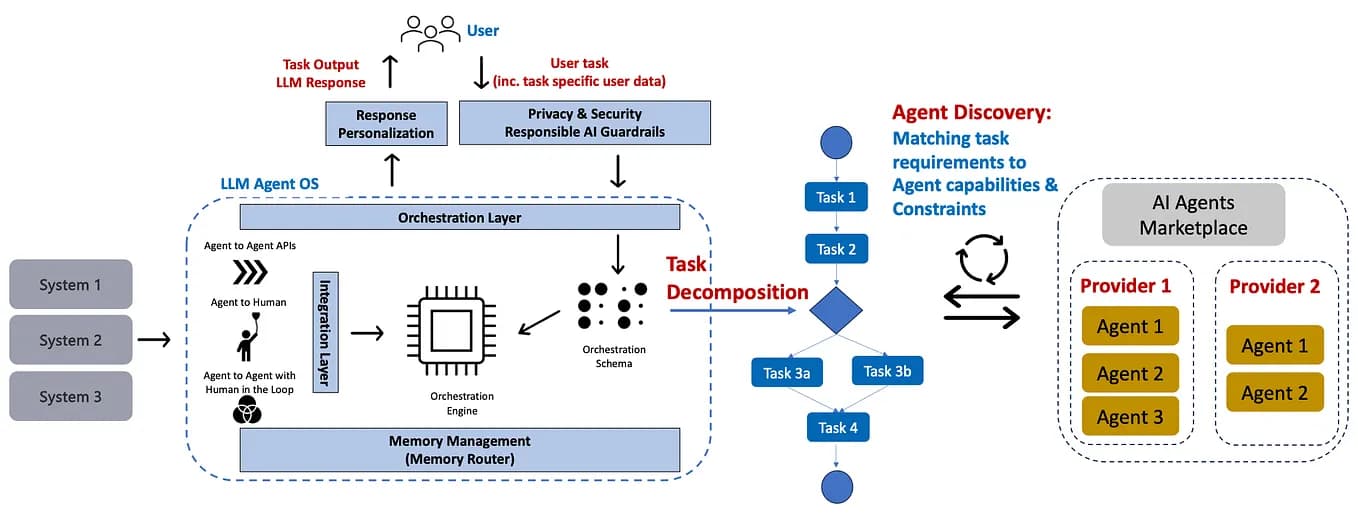
(a) Attack surface and system architecture

Why This Matters for the Field

RIFT-Bench treats the agentic system itself as the evaluation target, not just the LLM behind it. This mirrors the shift in the industry from model-level safety to system-level security—a gap that existing benchmarks like SciRisk-Bench (testing risk dimensions) or the NVIDIA Blackwell Ultra agentic benchmark (performance-focused) do not address. RIFT-Bench is the first to provide a unified, automated red-teaming framework for agentic architectures.

(a) Grouped by architecture.

What to watch

Watch for the release of RIFT-Bench's code and dataset on GitHub, and for third-party validations that compare its findings against manual red-teaming results. Adoption by AI safety labs and enterprise security teams will signal whether the benchmark becomes a de facto standard.

(a) Grouped by architecture.


Source: arxiv.org


Sources cited in this article

  1. RIFT-Bench
Source: gentic.news · · author= · citation.json

AI-assisted reporting. Generated by gentic.news from 1 verified source, fact-checked against the Living Graph of 4,300+ entities. Edited by Ala SMITH.

Following this story?

Get a weekly digest with AI predictions, trends, and analysis — free.

AI Analysis

RIFT-Bench addresses a critical blind spot in AI security: agentic systems are more than their LLM backbones. By extracting system structure and deploying adaptive attacks, it moves beyond static prompt-injection tests. The 45-system evaluation suggests broad applicability, but the benchmark's real test will be its adoption rate and whether it catches vulnerabilities that manual red-teaming misses. The paper's emphasis on mitigation evaluation is a smart design choice—security benchmarks that only find flaws without suggesting fixes have limited operational value. However, the reliance on codebase access for Discovery phase may limit applicability to black-box commercial agents.

Mentioned in this article

Enjoyed this article?
Share:

AI Toolslive

Five one-click lenses on this article. Cached for 24h.

Pick a tool above to generate an instant lens on this article.

Related Articles

From the lab

The framework underneath this story

Every article on this site sits on top of one engine and one framework — both built by the lab.

More in AI Research

View all