Academic and AI researcher Ethan Mollick highlighted the capabilities of the text-to-video model Seedance 2.0 by sharing its successful generation of a video based on the prompt: "a mech battle between Neanderthal and Homo Sapiens." Mollick noted the result was impressively coherent for such a complex, multi-concept request, quipping, "This is exactly what happened, historically."
Key Takeaways
- Academic Ethan Mollick highlighted Seedance 2.0's ability to generate a coherent video for the complex prompt 'a mech battle between Neanderthal and Homo Sapiens'.
- This demonstrates the model's progress in multi-concept scene composition and temporal consistency.
What Happened
On April 17, 2026, Ethan Mollick posted a short clip on X (formerly Twitter) generated by Seedance 2.0. The prompt combines several challenging elements for a video model: two distinct humanoid species (Neanderthal and Homo sapiens), the concept of "mechs" (large robotic suits), and a dynamic "battle" scene requiring coherent motion and interaction. The fact that Mollick, a professor at The Wharton School who frequently tests and critiques generative AI tools, singled this out suggests the output was notably competent compared to previous benchmarks or competing models.
Context: The Text-to-Video Race
Text-to-video generation is one of the most technically demanding frontiers in generative AI. It requires models to not only generate plausible static imagery but also to maintain object consistency, physics, and logical scene progression across multiple frames (temporal coherence). Major players like OpenAI (Sora), Runway (Gen-3), and Google (Veo) have released research and models, but public access is often limited.
Seedance, developed by the Chinese AI company 01.AI, entered this competitive space in late 2025. The release of Seedance 2.0 in early 2026 marked a significant update, claiming improvements in video length, resolution, and prompt adherence. The model is known for being more openly accessible for testing compared to some closed counterparts, leading to a stream of user-generated examples that showcase its strengths and weaknesses.
What This Demonstrates
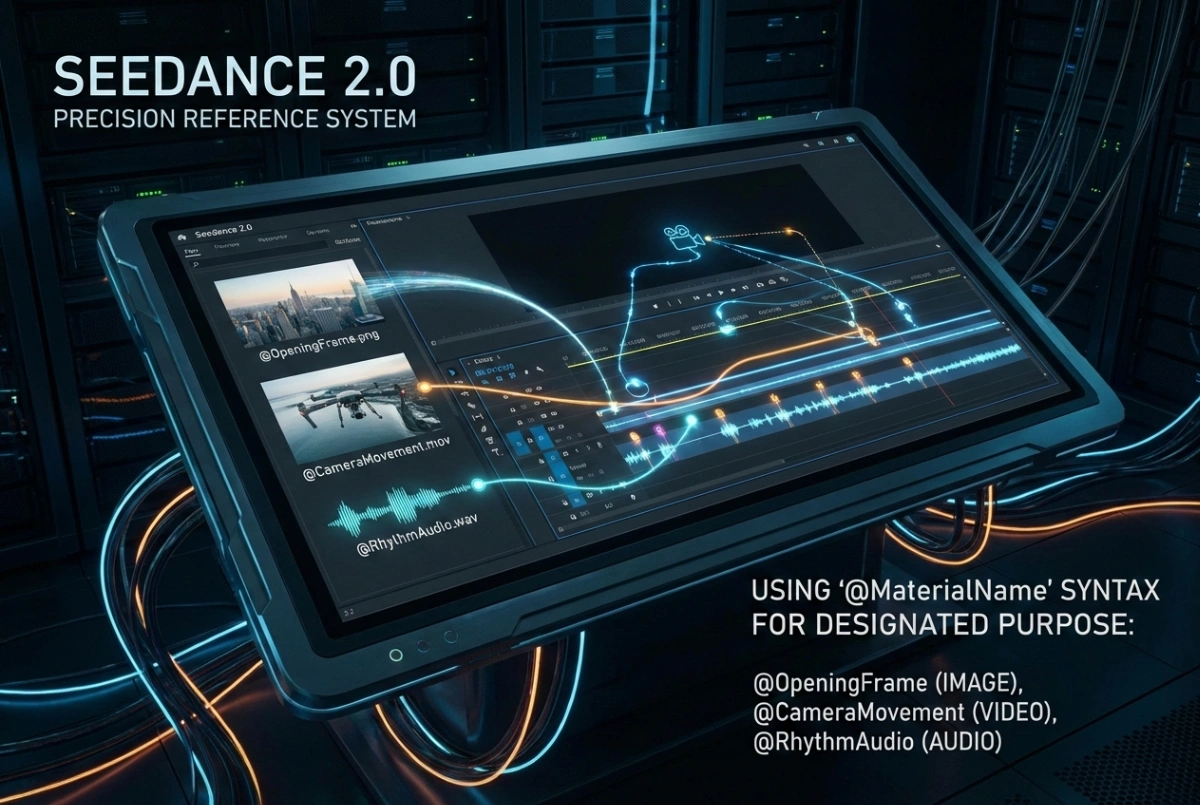
Mollick's example is a qualitative, real-world stress test. A successful generation implies several technical competencies:
- Complex Prompt Decomposition: The model must correctly interpret and combine the distinct concepts of "Neanderthal," "Homo sapiens," "mech suit," and "battle."
- Consistent Character Design: It needs to generate two different types of humanoids and keep them visually distinct and consistent throughout the video.
- Temporal Coherence: The mechs and characters must move in a physically plausible way during a battle, with interactions that make sense across frames.
While no quantitative metrics are provided in the tweet, the selection of this specific output by a knowledgeable observer acts as a benchmark of practical utility. It suggests Seedance 2.0 can handle narrative-driven, fantastical prompts that would have caused severe artifacts or logical breakdowns in earlier-generation models.
gentic.news Analysis
This single example from Ethan Mollick is a data point in the rapidly intensifying text-to-video war. 01.AI, founded by AI pioneer Kai-Fu Lee, has aggressively pursued multi-modal capabilities. Following the success of their large language model Yi, the push into video with Seedance aligns with their strategy to build a full-stack AI portfolio. This development directly pressures other open-weight model providers like Meta (which has been focusing on Llama for language and Chameleon for multi-modal) to accelerate their own video offerings.
The prompt itself is telling. Users are moving beyond simple actions ("a dog running") to demanding complex, cinematic, and often absurdist scenes. This pushes model development away from just scaling data and parameters and towards better reasoning about world physics, anatomy, and narrative. The mention of "Neanderthal vs. Homo sapiens" also touches on a current trend in AI image generation: improved historical and anthropological accuracy in depicting humans, moving away from generic, anachronistic features.
For practitioners, the key takeaway is the narrowing gap between proprietary and open-weight video models. While Sora may still lead in certain qualitative benchmarks, accessible models like Seedance 2.0 are reaching a level of quality sufficient for rapid prototyping, storyboarding, and specific content creation niches. The next 6-12 months will likely focus on improving video duration and integrating these models into editable workflows, moving from novelty to production tool.
Frequently Asked Questions
What is Seedance 2.0?
Seedance 2.0 is a text-to-video generative AI model developed by 01.AI. It is an upgraded version of the original Seedance model, offering improved capabilities in generating short video clips from textual descriptions, with a focus on handling complex prompts and maintaining temporal coherence.
How does Seedance 2.0 compare to Sora or Runway Gen-3?
Direct, rigorous benchmark comparisons are scarce as these models are not all evaluated on the same public datasets. Anecdotal evidence, like the example in this article, suggests Seedance 2.0 is competitive in handling imaginative, multi-concept prompts. Sora (OpenAI) is often cited for its exceptional physical realism and long-duration coherence, while Runway's models are tightly integrated into professional video editing workflows. Seedance 2.0's relative accessibility is a differentiator.
Can I use Seedance 2.0 myself?
As of April 2026, Seedance 2.0 is available for testing and use, typically through a web interface or API provided by 01.AI. Its accessibility has been more open than some other leading video models, allowing users to experiment with prompts directly.
What are the main limitations of current text-to-video models like Seedance 2.0?
Despite progress, key limitations remain: generated videos are still short (often just a few seconds), achieving full high-definition resolution with perfect consistency is challenging, models can struggle with precise human hand movements and facial expressions, and they may hallucinate physically impossible events or object interactions when pushed with highly complex prompts.