An engineer’s field guide to building voice agents that handle 10,000+ concurrent calls without melting.
Key Takeaways
- An engineer shares seven voice agent architectures that have survived production, detailing their components, latency improvements, and failure modes.
- This is a practical guide for building real-time, interruptible, and scalable voice AI.
What Happened

A detailed technical article, based on a year of hands-on development, outlines seven distinct architectural patterns for building production-ready voice AI agents. The author moves beyond tutorials to document the systems that have "survived contact with real users," focusing on the practical tradeoffs, failure modes, and latency optimizations that determine success in live environments. The guide is structured from the simplest to the most complex pattern, each addressing a specific set of real-world constraints.
Technical Details: The Seven Architectures
1. The Sequential Pipeline
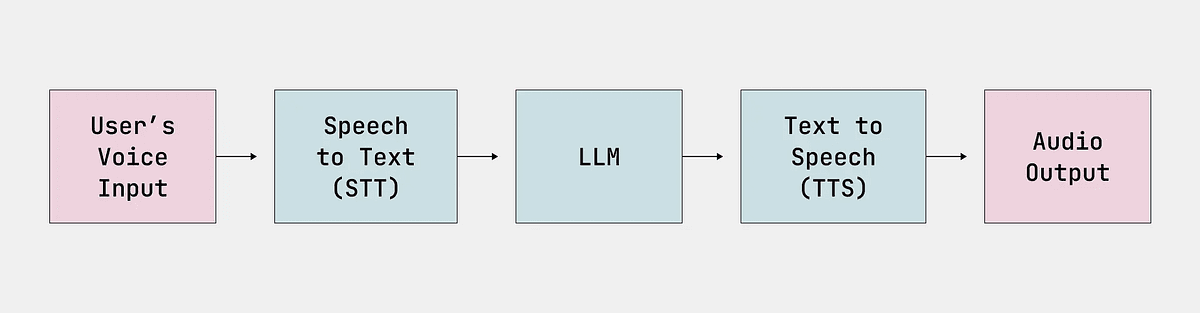
This is the foundational, linear flow: Audio → Automatic Speech Recognition (ASR) → Large Language Model (LLM) → Text-to-Speech (TTS) → Output. While simple to prototype, its fatal flaw is latency, as each step waits for the previous to complete, creating 1-2 seconds of dead air. It's only suitable for non-real-time, internal applications.
2. The Streaming Pipeline
This architecture introduces overlapping, streaming components. ASR sends partial transcripts, the LLM begins generating before the user stops speaking, and TTS starts synthesizing the first sentence of the response immediately. The key is not waiting for anything to finish. With careful endpoint detection, this can reduce perceived latency to 400–700ms, making it viable for customer-facing applications.
3. The Interruptible Agent
This pattern acknowledges that users will interrupt. It adds a barge-in detector that listens to the user's microphone even while the agent is speaking. Upon detection, the system must immediately stop TTS, flush the LLM's generation buffer, and feed the new input back into the LLM with full conversation context. The engineering challenge lies in accurately distinguishing interruptions from background noise.
4. The Function-Calling Voice Agent
Here, the LLM is empowered with tools to execute actions, transforming a conversational agent into an actionable assistant. The architecture requires robust confirmation loops for safety, graceful fallback handling for API failures, and support for parallel tool execution when a user requests multiple actions.
5. The Multi-Turn Memory Architecture
To prevent agents from forgetting context, this pattern maintains a structured conversation state. After each turn, a lightweight model extracts key data (like intent and collected information slots). This structured state, rather than the entire raw history, is then compiled into a concise prompt for the main LLM. This keeps token usage lean and context consistent over long conversations.
6. The Hybrid On-Device / Cloud Architecture
Designed for use cases where sub-200ms response is critical (e.g., in-car assistants), this pattern splits the workload. A small on-device model handles frequent, predictable intents (wake word, simple commands), while a router sends complex, open-ended queries to a more powerful cloud-based LLM. The goal is to keep the on-device path under 100ms.
7. The Orchestrator Pattern
This is the most complex architecture, deployed in enterprise call centers. Instead of one monolithic LLM, an orchestrator manages multiple specialized agents (e.g., greeting, booking, escalation). This allows for specialization, independent testing, and cost optimization—using cheaper models for simple tasks and reserving expensive models for complex reasoning.
Retail & Luxury Implications

The architectures described are not retail-specific, but they provide the essential technical blueprint for any brand considering high-quality voice interfaces. The implications are direct and significant:
- High-Touch Customer Service: Architectures 3 (Interruptible), 4 (Function-Calling), and 7 (Orchestrator) are the foundation for a premium, AI-powered concierge service. Imagine a voice agent for VIP clients that can seamlessly handle interruptions, check real-time inventory, modify orders, and book in-store appointments—all within a natural, fluid conversation.
- In-Store & Digital Assistants: The Hybrid architecture (6) is key for in-store devices or apps where instant response is expected. A query like "where are the handbags?" could be routed on-device for a map, while "what's the history of this quilted pattern?" goes to the cloud for a detailed brand story.
- Operational Efficiency: The Multi-Turn Memory architecture (5) is critical for handling complex customer service scenarios, like tracking a repair or managing a multi-item return, without forcing the user to repeat information.
The core lesson for luxury is that the bar for voice interaction is exceptionally high. A sequential pipeline that creates awkward silences or a non-interruptible agent that feels robotic would damage brand perception. Implementing these more sophisticated patterns is not an optimization; it's a prerequisite for a brand-aligned experience.
gentic.news Analysis
This practical guide arrives amid intense focus on the capabilities and risks of large language models, which have been featured in 192 prior articles and are trending with 9 mentions this week. The author's emphasis on structured state extraction to manage context windows aligns with ongoing industry research into making LLM interactions more efficient and reliable. Notably, this follows recent studies we've covered, such as research on LLMs [self-purifying against poisoned data in RAG systems](https://gentic.news/retail/slug: anthropic-warns-upcoming-llms) and new frameworks for [fusing LLM knowledge with collaborative signals](https://gentic.news/retail/slug: faerec-a-new-framework-for-fusing) for recommendations. The voice architectures described here are the application layer that operationalizes these underlying LLM advances.
Furthermore, the article's focus on AI Agents—a technology that our Knowledge Graph shows intrinsically uses large language models—highlights a maturation phase. The discussion moves from what LLMs can do to how to reliably orchestrate them within a latency-sensitive, multi-component system. This dovetails with the emergence of platforms like Sim, an open-source tool for building agent workflows, indicating a growing ecosystem focused on production deployment, not just model capability.
For retail AI leaders, the takeaway is that the frontier is shifting from model selection to system design. The competitive advantage in voice AI will come from expertly implementing these architectural patterns—managing latency, memory, and graceful failure—to create seamless experiences that reflect the quality of the brand itself.