Key Takeaways
- Simbe's interview details how its in-store robots and computer vision reduce out-of-stocks and improve inventory accuracy.
- IGD highlights the practical benefits for grocery retailers.
- This matters as retailers seek automation to cut costs and enhance shelf availability.
What Happened

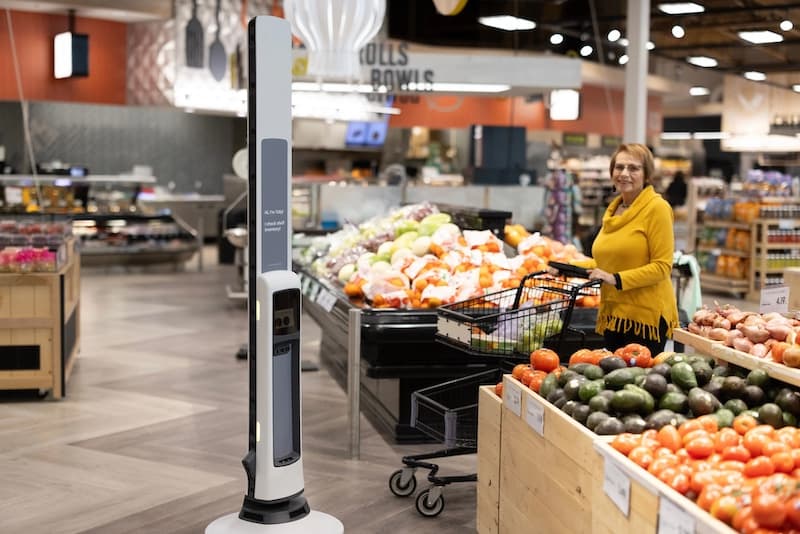
In an exclusive interview with the Institute of Grocery Distribution (IGD), Simbe Robotics detailed how its autonomous in-store robots and computer vision technology are transforming inventory management in retail. Simbe's robots patrol store aisles, capturing high-resolution images of shelves that are then analyzed by computer vision algorithms to identify out-of-stocks, misplaced items, and pricing errors.
The interview highlighted that the system provides real-time data, allowing retailers to act quickly rather than relying on manual, periodic audits. This shift from reactive to proactive inventory management is a key value proposition for grocery chains and other physical retailers.
Technical Details
Simbe's solution, known as Tally, is an autonomous mobile robot that navigates store aisles without needing physical infrastructure changes. Equipped with cameras and sensors, Tally captures shelf images that are processed by proprietary computer vision models. These models are trained to recognize products, detect stock levels, and flag anomalies like planogram violations or incorrect price tags.
The data is then uploaded to a cloud dashboard, where it is integrated with the retailer's existing inventory and point-of-sale (POS) systems. This integration enables automated replenishment workflows and gives store managers a clear, up-to-date view of shelf conditions. The system is designed to run continuously, capturing data multiple times per day, which dramatically increases the frequency of inventory checks compared to manual methods.
Retail & Luxury Implications
While Simbe's primary market is grocery and mass retail, the underlying technology has clear applications for luxury and specialty retail, where inventory accuracy and presentation are paramount. For luxury brands, a misplaced item or an out-of-stock bestseller can result in lost sales and a diminished customer experience. Computer vision can ensure that every display is perfect, which is critical for high-end stores where visual merchandising is a key part of the brand.
However, the gap between grocery and luxury is significant. Luxury stores are smaller, have fewer SKUs, and often have staff dedicated to customer service and visual merchandising. The ROI for a robot like Tally may be less obvious in a boutique than in a large-format store with thousands of SKUs. The more immediate opportunity for luxury is in warehouse and back-of-house operations, where inventory accuracy is a persistent challenge.
Business Impact
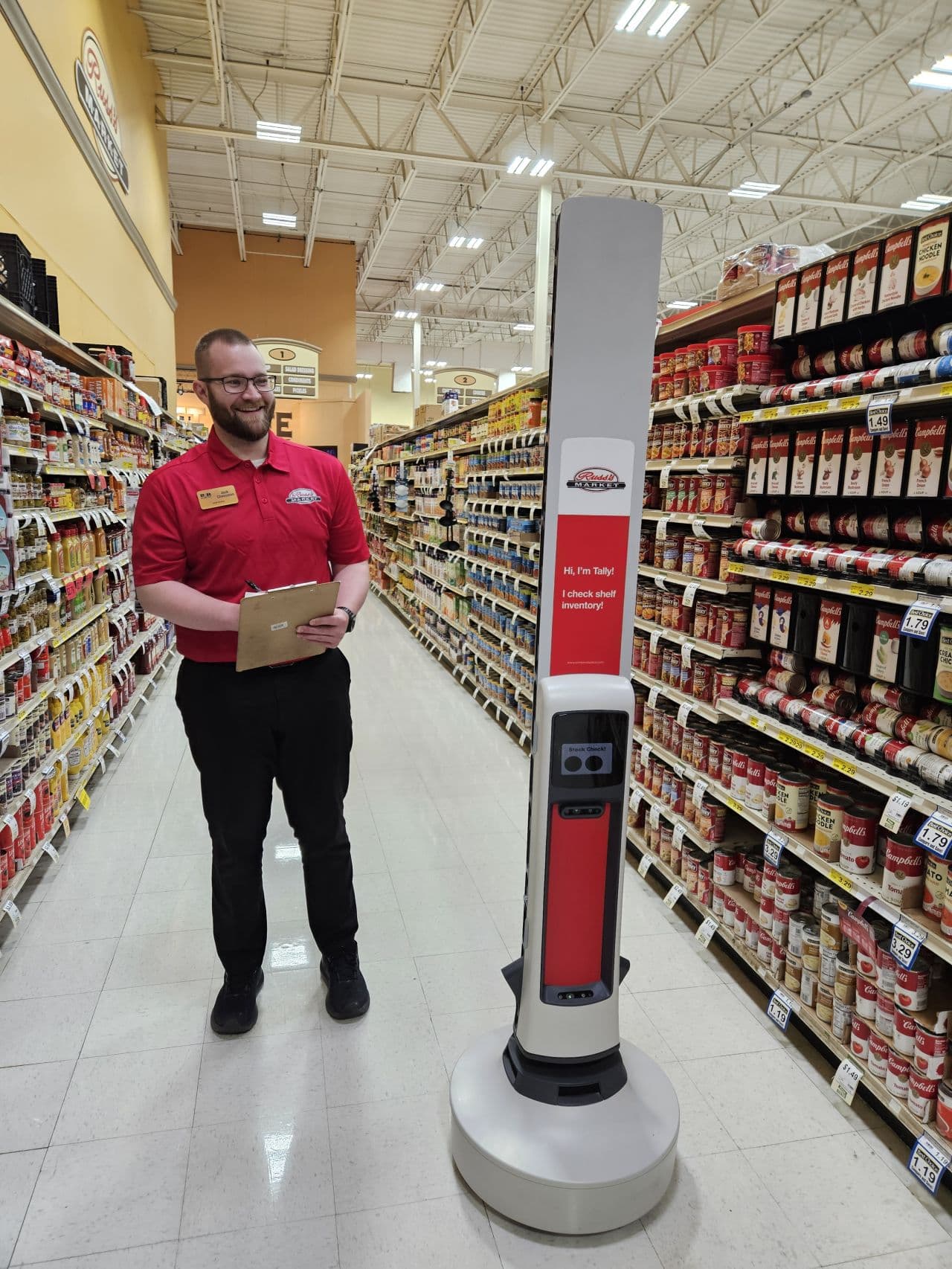
Simbe's technology has been deployed with major retailers, including Target, Carrefour, and Schnucks. While specific numbers from the interview were not all disclosed, industry reports and Simbe's own case studies indicate that out-of-stocks can be reduced by up to 30% and inventory accuracy can exceed 95%. These improvements directly impact revenue, as out-of-stocks represent lost sales, and they reduce labor costs associated with manual audits.
For a typical grocery store, the value of a 1% reduction in out-of-stocks can translate into significant annual revenue gains. The data also helps retailers optimize their supply chain, as they can identify patterns in stockouts and adjust ordering accordingly.
Implementation Approach
Deploying Simbe's solution is relatively straightforward. The robots are deployed in-store and require minimal setup. The main effort is in integrating the data feed with existing systems, which Simbe's team assists with. Training the computer vision models on the specific product assortment is a key step, but Simbe has pre-trained models that can be fine-tuned for new SKUs.
The complexity is low from a technical perspective, but it requires operational buy-in from store staff who need to act on the alerts generated by the system. Change management is often the biggest hurdle.
Governance & Risk Assessment
Privacy is a consideration, as the robots capture images of the store environment. However, Simbe's cameras are positioned to capture shelves, not faces, and the system is designed to comply with data privacy regulations. The main risk is over-reliance on the technology; if the computer vision model fails to detect an issue, it may go unnoticed until the next scan. Therefore, it is a complement to, not a replacement for, human oversight.
The technology is mature in grocery, with several years of production deployments. For luxury, it is still an emerging application, and brands should pilot it in select locations before scaling.
gentic.news Analysis
Simbe's model is a strong example of how computer vision can deliver tangible ROI in physical retail. The key metric is not just the accuracy of the vision system, but the speed at which retailers can act on the data. In a sector where margins are thin, the ability to reduce out-of-stocks and labor costs is a clear win.
However, the hype around in-store robotics often exceeds the reality. The technology works best in large-format stores with high SKU counts and predictable layouts. For luxury retailers, the value proposition is different and may not justify the investment in the same way. The more compelling use case for luxury is in the supply chain and back-of-house, where inventory accuracy issues are more acute.
Looking ahead, the integration of AI agents with such systems could further automate the replenishment process, closing the loop between detection and action. For now, Simbe represents a solid, proven application of computer vision in retail, but it is not a silver bullet for every format.
Source: news.google.com