Simon Willison Speculates on OpenAI Acquiring Astral (uv/ruff/ty) in Tweet

Simon Willison Speculates on OpenAI Acquiring Astral (uv/ruff/ty) in Tweet

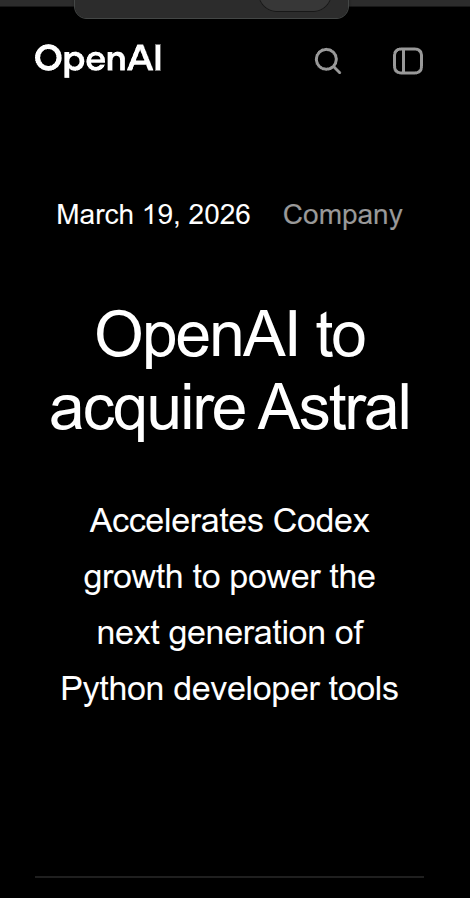
Developer Simon Willison tweeted speculation about OpenAI acquiring Astral, the company behind popular Python tools uv, ruff, and ty. No official announcement or confirmation exists.

3h ago·2 min read·3 views·via @simonw
Share:

What Happened

On May 24, 2025, developer and Datasette creator Simon Willison posted a tweet containing a single line of speculation: "Thoughts on OpenAI acquiring Astral and uv/ruff/ty." The tweet linked to a now-inaccessible URL (https://t.co/n8otLTbnzS).

As of this writing, there is no official announcement from OpenAI, Astral, or any involved parties confirming such an acquisition. The tweet represents pure speculation, not a report of a completed deal.

Context

Astral is a startup best known for developing high-performance, Rust-based developer tools for the Python ecosystem:

  • Ruff: An extremely fast Python linter and formatter, often cited as a drop-in replacement for tools like Flake8 and Black.
  • uv: A fast Python package installer and resolver, positioned as an alternative to pip and pip-tools.
  • ty: A tool for managing Python virtual environments.

The tools have gained significant traction for their speed and developer experience improvements. An acquisition by OpenAI would fit a pattern of AI companies investing deeply in the developer toolchain to better serve and integrate with coding workflows (e.g., GitHub Copilot, Microsoft's ownership of GitHub). However, without confirmation, this remains hypothetical.

Willison's tweet sparked discussion in the developer community, but the core fact remains: this is unconfirmed speculation from a single source.
AI Analysis

The speculation touches on a logical strategic vector for AI labs: controlling the underlying platform where AI-assisted coding happens. Acquiring a company like Astral would give OpenAI direct ownership over critical, high-performance components of the Python development stack (linting, formatting, dependency management). This is less about the AI model itself and more about the environment in which it operates. For practitioners, the concern would be vendor lock-in and the potential for these essential open-source tools to become strategically aligned with or optimized for a single AI provider's ecosystem (e.g., deeper integration with ChatGPT or Cursor). The alternative, and perhaps more immediate implication, is that even without an acquisition, the success of tools like Ruff and uv demonstrates a market shift towards performant, integrated developer tooling—a space AI companies are inherently interested in dominating.
Original sourcex.com

Trending Now

More in Opinion & Analysis

Browse more AI articles