What Happened: The Persistent Cold Start Challenge
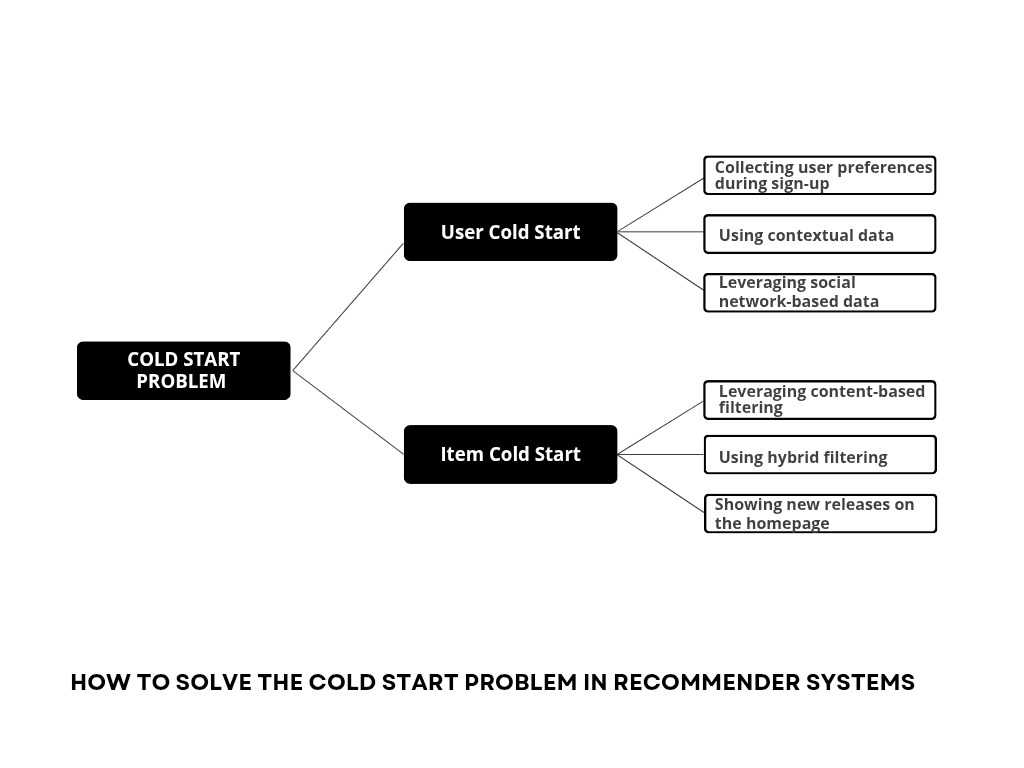
The source article, published on Medium, addresses a fundamental and frustrating problem in applied AI: the cold start problem for new users. The author describes a common scenario: after months of building a sophisticated recommendation engine trained on millions of user signals, the system fails at the most critical moment—when a brand-new user arrives. Without any historical data—no past purchases, no clicks, no dwell time—the powerful model has nothing to personalize against, often leading to generic, irrelevant, or poor initial recommendations.
This problem is not unique to OTT (Over-The-Top media) platforms, which serve as the article's primary example. It is a universal hurdle for any digital service relying on personalization, from streaming video and music to e-commerce and luxury retail. The author's core argument is that the solution lies not in trying to retrofit the existing model for zero-data scenarios, but in re-engineering the first user session itself. The goal is to design an onboarding flow that efficiently captures high-quality intent signals from the moment a user lands on the platform.
Technical Details: Optimizing the First Session
While the full technical architecture isn't detailed in the provided snippet, the proposed approach involves a strategic shift. Instead of relying solely on collaborative filtering ("users like you also liked") or content-based filtering for cold starts, the system must be designed to learn and adapt in real-time during the initial interaction.
Key technical components likely include:
- Session-Based Recommendation Models: Utilizing models that treat the user's first visit as a sequential session, predicting the next best action (e.g., click, view) based on in-session behavior only.
- Intent Inference from Micro-Interactions: Capturing and weighting early signals like initial search queries, category browsed, time spent on a product image, or interaction with a size guide. In luxury, this could be zoom behavior on product craftsmanship details.
- Hybrid Initial State: Combining lightweight demographic or referral source data (if available and privacy-compliant) with rapidly accumulated session data to bootstrap a temporary user profile.
- Exploration-Exploitation Trade-off: Deliberately designing the first session to include some element of exploration—showing a carefully curated, diverse set of items—to probe user preferences and accelerate learning.
The "first session" becomes a dedicated optimization loop, with the primary KPI being the conversion of a anonymous visitor into a user with a discernible preference profile, ready for the main recommendation engine.
Retail & Luxury Implications: From Anonymous Visitor to Known Client
The cold start problem is acutely felt in high-value retail environments where the cost of a poor first impression is exceptionally high. A luxury shopper arriving at a digital flagship store expects curation and relevance immediately; showing generic best-sellers or mismatched products can break trust and abort a high-potential customer journey.
How This Applies:
- Onboarding for Personalization: A luxury brand's app or website can implement a "first session" strategy that goes beyond a simple email sign-up prompt. It could involve a taste quiz ("Which of these aesthetics resonates?"), an interactive lookbook where clicks are captured, or a guided exploration of new collections.
- High-Value Signal Capture: For retail, the first session's micro-interactions are gold. Did the user immediately filter for "sustainable materials" or "made in Italy"? Did they view products above a certain price threshold? Did they linger on video content showcasing craftsmanship? These are strong, immediate intent signals far more valuable than "user from Paris."
- Bridging Online and Offline: A client's first session might occur in-store via a clienteling app used by a sales associate. The initial signals captured there—products tried on, notes added by the associate—become the foundational data point for all future digital interactions, effectively solving the cold start at the point of physical contact.
However, the gap between this conceptual approach and production implementation is non-trivial. It requires close collaboration between data science, product design, and UX teams to build an onboarding flow that feels engaging and valuable, not like an interrogation. The privacy calculus is also more delicate in luxury; capturing data must be transparent and aligned with the high-touch, discreet service ethos.