What Happened
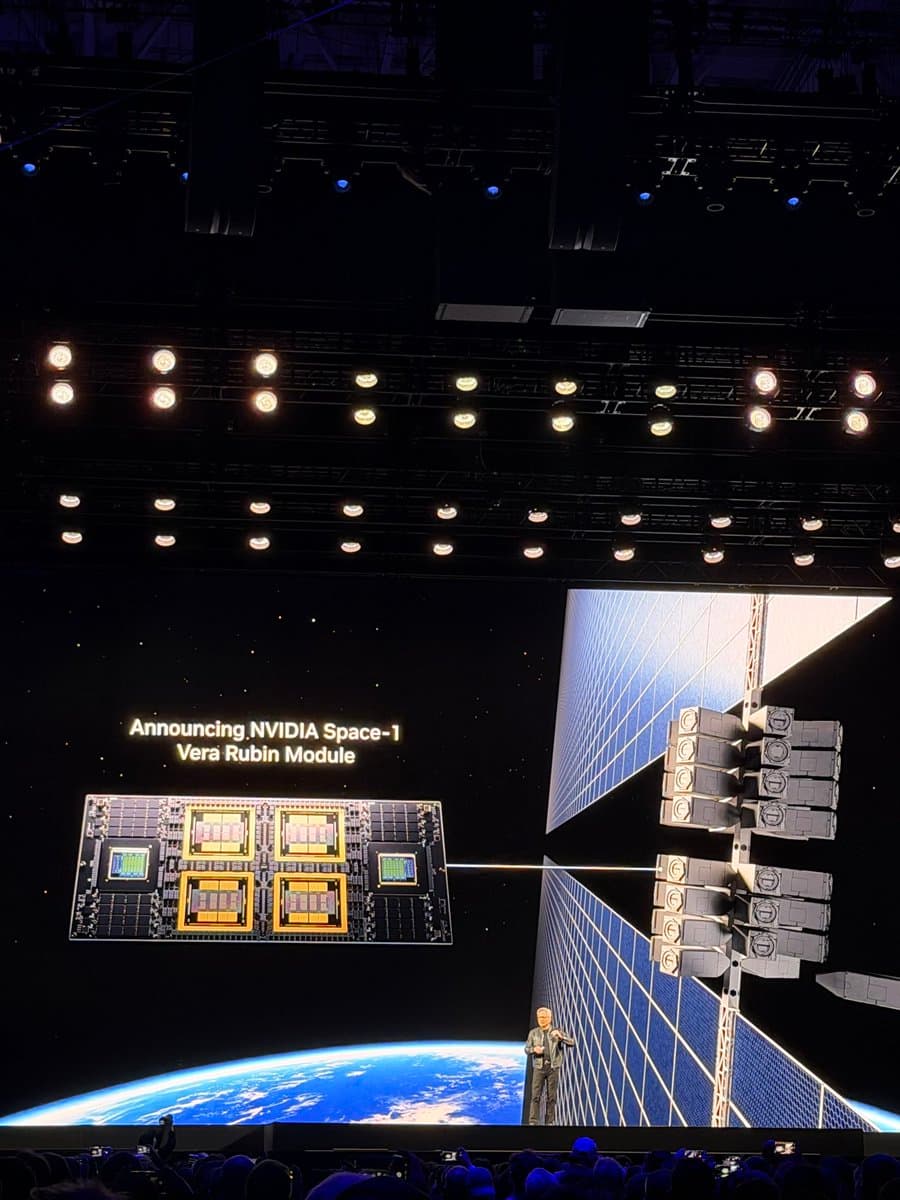
On May 12, 2025, SpaceX launched a batch of Starlink satellites from Vandenberg Space Force Base in California. According to a post by SpaceX observer and photographer John Kraus (known as @kimmonismus on X), this mission included a significant, unannounced payload: a prototype "orbital data center" module.
The module, described as a technology demonstrator, was attached to a rideshare adapter and deployed into low Earth orbit alongside the standard Starlink v2 Mini satellites. Its primary purpose is to test the fundamental engineering challenges of operating computing hardware in the space environment.
Context
The concept of orbital data centers has circulated within aerospace and tech circles for several years, driven by several potential advantages:
- Reduced Latency for Distributed Computing: For certain orbital or interplanetary applications, processing data in space could avoid the latency penalty of a round-trip to Earth.
- Energy Availability: In sun-synchronous orbits, satellites experience near-constant sunlight, potentially providing abundant solar power for energy-intensive computing.
- Thermal Management: The cold vacuum of space offers a massive heat sink, though rejecting waste heat via radiation alone presents significant engineering hurdles compared to terrestrial convection and conduction.
- Strategic and Secure Deployment: For government and specialized commercial applications, an orbital data center could offer a physically secure, sovereign infrastructure layer.
This SpaceX test appears focused on the most basic viability questions: can standard or slightly modified computing components (CPUs, GPUs, memory, storage) survive launch vibrations, operate reliably in microgravity, and manage thermal loads in a vacuum over a useful lifespan?
No technical specifications for the compute hardware (e.g., chip types, AI accelerator presence) were disclosed. The mission is likely measuring baseline performance, power draw, error rates, and thermal signatures. Success would validate the foundational premise before more complex demonstrations involving high-bandwidth inter-satellite links or specialized AI workloads.
The Road Ahead
This launch represents a proof-of-concept, not an operational service. Significant challenges remain before orbital data centers could compete with terrestrial cloud providers on cost or capability:
- Cost to Orbit: Despite falling launch costs, placing and maintaining heavy, power-dense computing hardware in space remains orders of magnitude more expensive than building on Earth.
- Reliability and Maintenance: Terrestrial data centers rely on easy component replacement. Orbital modules would need extreme reliability or novel in-space servicing architectures.
- Connectivity: To be useful, orbital compute nodes would require extremely high-bandwidth, low-latency links to both ground stations and other satellites, a capability still under development.
For the AI industry specifically, the immediate relevance is minimal. Training large models requires massive, interconnected clusters of accelerators that are impractical to launch and power in space today. However, for inference applications tied to space-based sensors (e.g., real-time Earth observation analysis, onboard satellite autonomy, space station diagnostics), a successful orbital compute platform could eventually open new niches.
SpaceX has not released an official statement or technical paper on this demonstrator. Further developments will depend on the results of this initial quiet test.