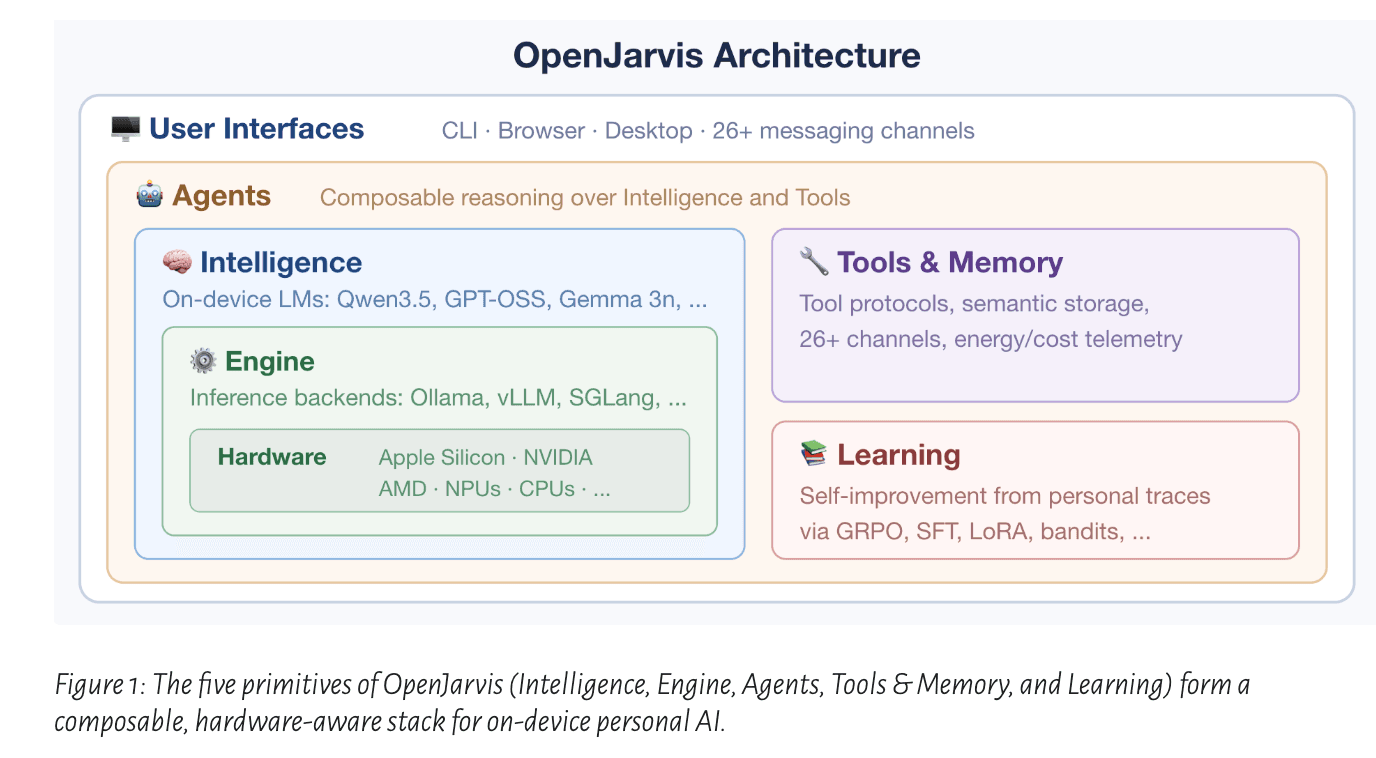
Stanford University's Scaling Intelligence Lab has unveiled OpenJarvis, a groundbreaking open-source framework designed specifically for building personal AI agents that run entirely on-device. Announced on March 12, 2026, this project represents a significant shift in AI development philosophy, moving away from cloud-dependent systems toward local-first architectures that prioritize user privacy, data sovereignty, and operational autonomy.
According to the research team, OpenJarvis is presented as both a research platform and deployment-ready infrastructure for creating sophisticated AI systems that don't require constant internet connectivity or external servers. The framework's focus extends beyond mere model execution to encompass the broader software stack needed for practical, everyday AI assistance.
What Makes OpenJarvis Different?
Unlike cloud-based AI assistants that process user data on remote servers, OpenJarvis enables developers to create AI agents that operate entirely on personal devices—whether smartphones, laptops, or dedicated hardware. This approach addresses growing concerns about data privacy, latency issues, and dependency on corporate-controlled infrastructure that have plagued mainstream AI services.
The framework provides three core capabilities that distinguish it from simpler on-device AI implementations:
Tool Integration: OpenJarvis agents can interact with local applications and system functions, allowing them to perform practical tasks like scheduling, file management, and communication without exposing sensitive data to third parties.
Persistent Memory: The framework includes sophisticated memory systems that enable agents to learn from user interactions over time, developing personalized understanding and preferences while keeping all memory storage local.
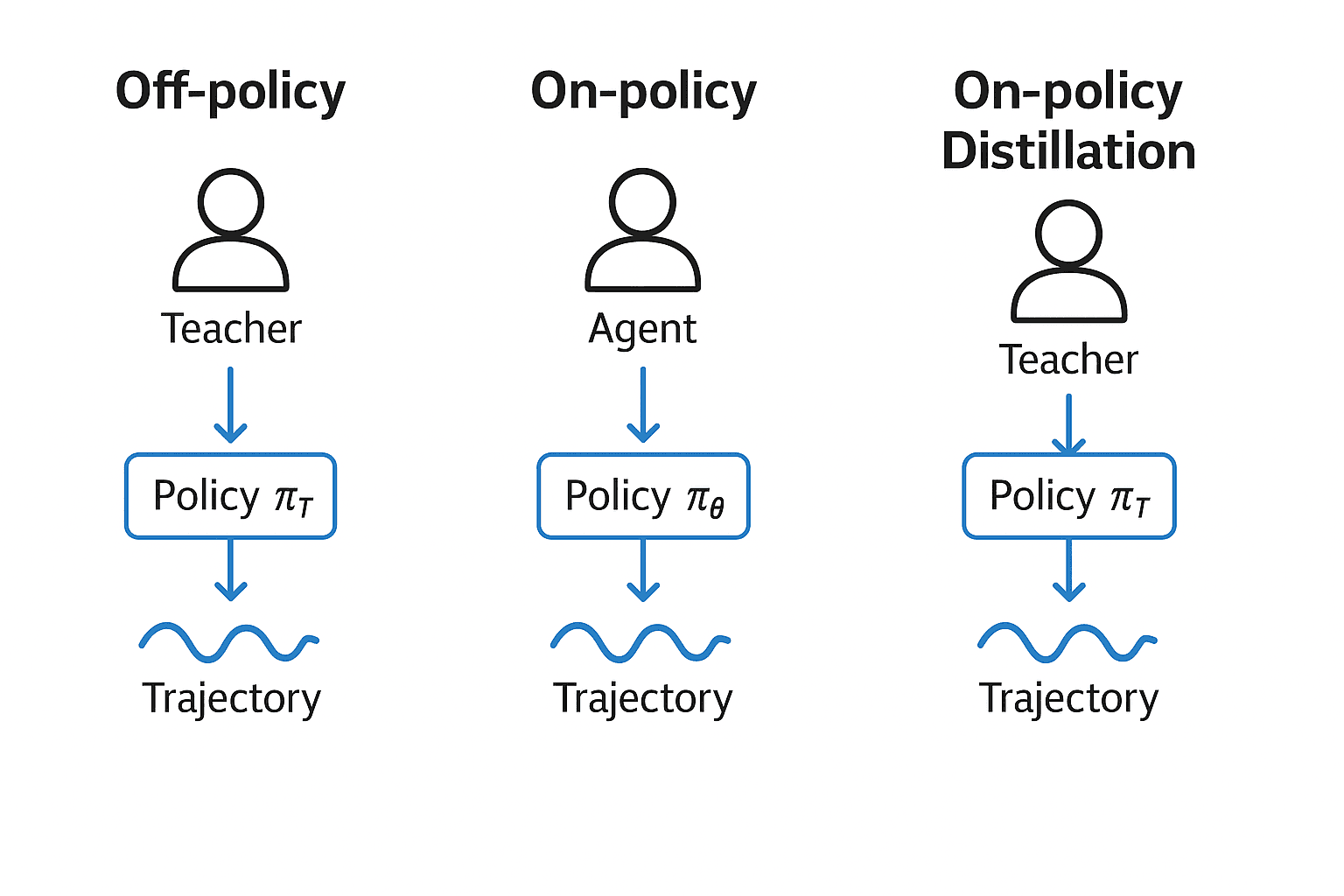
Continuous Learning: Perhaps most innovatively, OpenJarvis supports on-device learning mechanisms that allow agents to adapt to individual users without requiring model retraining on external servers.
The Broader Context: Why Local-First AI Matters Now
OpenJarvis arrives at a pivotal moment in AI development. Recent analysis from Goldman Sachs (March 11, 2026) forecasts that AI agents will fundamentally reshape software economics and dominate future profits in the technology sector. Simultaneously, research indicates that AI agents have crossed a critical reliability threshold (December 2026) that fundamentally transforms their programming capabilities and practical utility.

Stanford's position in this landscape is particularly noteworthy. The university has been actively involved in regulating major AI companies including OpenAI, Google, Meta, Anthropic, and Microsoft, while simultaneously advancing open-source alternatives. Just one day before OpenJarvis's release, Stanford researchers collaborated with the University of Munich to develop a tool verification method to prevent AI self-training pitfalls—research that likely informs OpenJarvis's learning safety mechanisms.
Technical Architecture and Capabilities
While the source material doesn't provide exhaustive technical details, it emphasizes that OpenJarvis represents a complete software stack rather than just another AI model. This distinction is crucial: the framework handles the complex orchestration required for agents to use tools, maintain memory, and learn continuously—all while operating within the constraints of consumer hardware.
The "local-first" designation means the system is designed to function primarily offline, with optional cloud synchronization for specific features rather than core dependency. This architecture has significant implications for:
- Privacy Compliance: Data never leaves the user's device unless explicitly permitted
- Reliability: Functionality continues regardless of internet connectivity
- Cost Structure: Eliminates recurring cloud inference costs for developers
- Customization: Enables truly personalized AI that evolves with individual users
Implications for Developers and Users
For developers, OpenJarvis provides a standardized foundation for building personal AI applications without reinventing the complex infrastructure required for tool-using, memory-equipped agents. This could accelerate innovation in personal AI while ensuring privacy-by-design principles are baked into the architecture.

For end users, the framework promises AI assistants that are truly personal—not just in their responses, but in their very operation. These agents would learn exclusively from individual interactions, develop unique capabilities based on user needs, and operate as genuine extensions of personal computing environments rather than as services accessed through browsers or apps.
Challenges and Future Directions
The local-first approach presents technical challenges, particularly around computational efficiency and model optimization for diverse hardware. Running sophisticated AI agents on consumer devices requires careful balancing of capability, performance, and power consumption—problems that Stanford's researchers have presumably addressed in OpenJarvis's design.
Additionally, the framework's success will depend on developer adoption and the creation of a robust ecosystem of tools and extensions. As an open-source project, its impact will be measured by the community that forms around it and the applications built using its infrastructure.
Conclusion: A Step Toward Autonomous Personal Computing
Stanford's OpenJarvis represents more than just another AI framework—it embodies a vision for decentralized, user-controlled artificial intelligence. By providing the infrastructure for powerful on-device agents, the project challenges the prevailing cloud-centric model of AI services and offers an alternative path forward.
As AI agents become increasingly capable and integrated into daily life, frameworks like OpenJarvis ensure that users retain control over their digital experiences. The release comes at a moment when both the technical capabilities and economic incentives are aligning to make personal AI agents not just possible, but potentially transformative.
Source: MarkTechPost, March 12, 2026