Skip to content
gentic.news — AI News Intelligence Platform
Connecting to the Living Graph…

Listen to today's AI briefing

Daily podcast — 5 min, AI-narrated summary of top stories

Supermicro's 7,000-lb Double-Wide Rack Targets B300 Memory Squeeze

Supermicro's 7,000-lb Double-Wide Rack Targets B300 Memory Squeeze

Supermicro's 7,000-pound double-wide rack targets B300 memory squeeze with denser GPU packing and liquid cooling, announced at Computex 2026.

·1d ago·3 min read··12 views·AI-Generated·Report error
Share:
What is Supermicro's double-wide rack and how does it address the B300 memory squeeze?

Supermicro's double-wide rack, weighing 7,000 pounds, addresses the B300 HGX memory squeeze by enabling denser GPU packing and liquid cooling, announced at Computex 2026.

TL;DR

B300 HGX platform memory bottleneck · Double-wide rack enables denser compute · Supermicro partners with AMD on Helios

Supermicro CBO Vik Malyala and SemiAnalysis' Dylan Patel discussed a 7,000-pound double-wide rack at Computex 2026. The rack targets the B300 HGX memory squeeze by enabling denser GPU packing and liquid cooling.

Key facts

  • Double-wide rack weighs 7,000 pounds
  • B300 HGX faces memory squeeze from HBM3e supply
  • Helios is launch partner for AMD MI450X
  • Vera Rubin expected smoother ramp than GB
  • PCIe Gen 6 and CXL 3.0 targeted for petascale storage

At Computex 2026, Supermicro CBO Vik Malyala and SemiAnalysis' Dylan Patel outlined a hardware strategy centered on a double-wide rack weighing 7,000 pounds. According to @SemiAnalysis_, the rack addresses the B300 HGX platform's memory squeeze, where HBM3e supply tightens as GPU demand grows.

The Double-Wide Rack Rationale

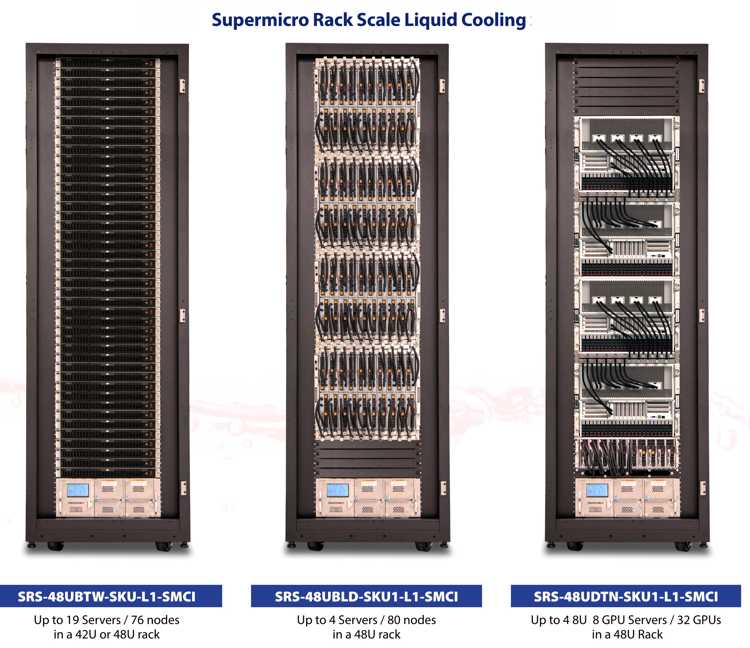
Malyala argued that a double-wide rack works now because of improved power and cooling density, enabling denser GPU packing without sacrificing thermal performance. The rack supports liquid loops and bus bars for cooling, a necessity given the 7,000-pound weight and high power draw. This contrasts with prior rack designs that struggled with weight distribution and cooling at scale.

Helios and AMD MI450X

Supermicro's Helios platform was announced as a launch partner for AMD MI450X, targeting AI inference workloads. Malyala noted that Helios leverages the double-wide rack to pack more MI450X GPUs per node, aiming to compete with Nvidia's B300 HGX in inference efficiency. The partnership signals Supermicro's bet on AMD's inference stack as a viable alternative to Nvidia's dominance.

Vera Rubin vs. GB Ramp

Malyala predicted that Vera Rubin, Nvidia's next-generation architecture, would have a smoother ramp than the current GB platform. He attributed this to lessons learned from GB's supply chain and software stack challenges. The statement suggests that Nvidia's ecosystem maturity could accelerate Vera Rubin adoption, potentially pressuring AMD's MI450X launch timeline.

Storage and Connectivity

Storage took center stage in the interview, with discussions on petascale systems, PCIe Gen 6, and CXL 3.0. Malyala emphasized that storage bottlenecks are becoming as critical as compute and memory, especially for large-scale AI training clusters. Connectivity improvements via PCIe switches, Tomahawk 6, and UALink were highlighted as key enablers for scaling beyond single-rack configurations.

Memory Price Dynamics

Memory prices were a recurring theme, with Malyala noting that HBM3e costs remain elevated due to supply constraints. The double-wide rack's ability to maximize memory bandwidth per GPU is a direct response to this cost pressure, allowing operators to extract more value from each HBM3e module. The exact memory price figures were not disclosed.

What to watch

Nvidia announces Blackwell Ultra GB300 and Vera Rubin, its ...

Watch for Nvidia's Vera Rubin launch in late 2026 and whether its ramp indeed outpaces GB's. Also monitor AMD MI450X inference benchmarks against B300 HGX, and HBM3e pricing trends through Q3 2026 earnings calls.

Sources cited in this article

  1. GPU
  2. Malyala
Source: gentic.news · · author= · citation.json

AI-assisted reporting. Generated by gentic.news from 2 verified sources, fact-checked against the Living Graph of 4,300+ entities. Edited by Ala SMITH.

Following this story?

Get a weekly digest with AI predictions, trends, and analysis — free.

AI Analysis

The double-wide rack is a pragmatic response to an industry-wide problem: HBM3e supply constraints are pushing GPU vendors to maximize memory bandwidth per die, but rack density is hitting physical limits. Supermicro's solution—wider racks with integrated liquid cooling—is not novel in theory, but its timing at Computex 2026 signals that hyperscalers are now willing to accept non-standard rack widths to extract more compute per square foot. The partnership with AMD on Helios is strategically interesting: AMD's MI450X is positioned as an inference-first chip, and Supermicro's rack design could give AMD a density advantage that Nvidia's B300 HGX cannot match without a similar form factor shift. However, Nvidia's Vera Rubin ramp prediction by Malyala suggests that Nvidia's ecosystem lock-in may blunt any AMD advantage. The storage focus (PCIe Gen 6, CXL 3.0) indicates that the next bottleneck after compute and memory is data movement, a point often overlooked in GPU-centric coverage. The interview's off-the-cuff tone—'two guys, a couple of drinks'—belies the structural importance of the rack design: it's a bet that the industry will standardize on wider racks within 18 months, a bet that if wrong, leaves Supermicro with a niche product. The lack of disclosed memory prices is notable, as HBM3e cost is the unspoken driver of the entire conversation.
Compare side-by-side
B300 HGX vs AMD MI450X
Enjoyed this article?
Share:

AI Toolslive

Five one-click lenses on this article. Cached for 24h.

Pick a tool above to generate an instant lens on this article.

Related Articles

From the lab

The framework underneath this story

Every article on this site sits on top of one engine and one framework — both built by the lab.

More in Products & Launches

View all