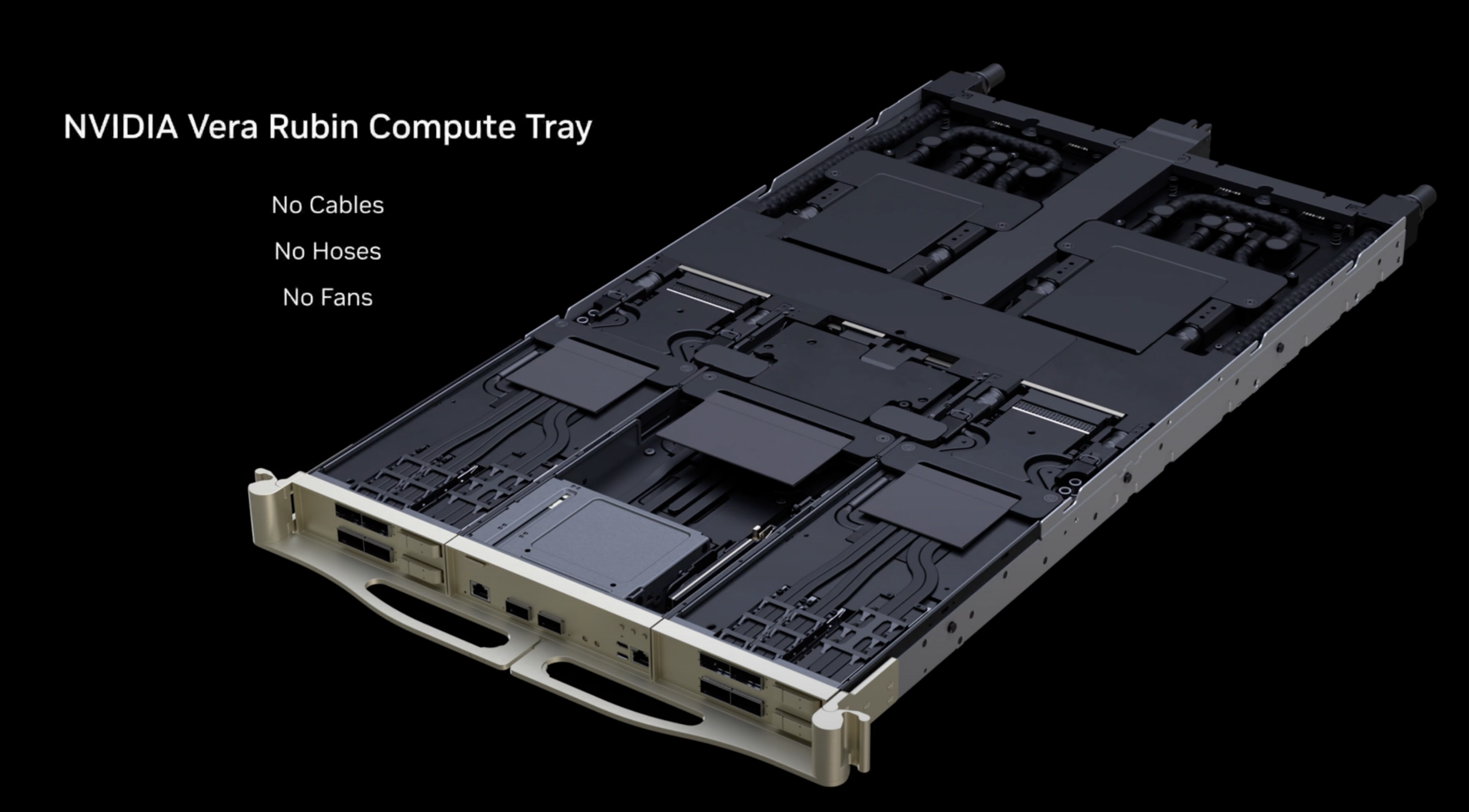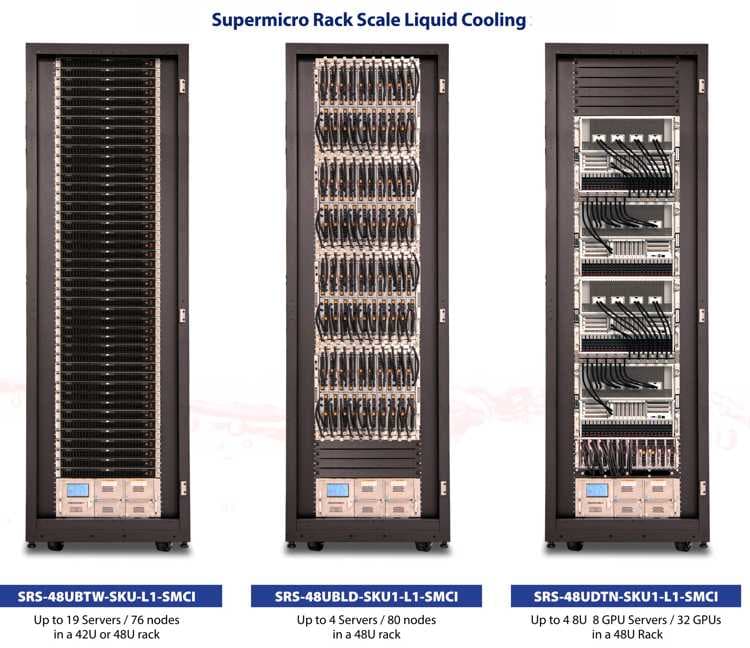
Supermicro CBO Vik Malyala told @SemiAnalysis_ that double-wide racks and liquid cooling are now standard for next-gen AI hardware. The conversation highlighted that storage has become the main performance bottleneck in AI data centers.
Key facts
- Double-wide racks and liquid cooling are now standard for AI hardware.
- Storage is the main bottleneck in AI training clusters, per Supermicro CBO.
- AMD Helios and NVIDIA Vera Rubin require new rack form factors.
- Supermicro is integrating faster NVMe fabrics and tiered caching.
- GPU utilization is eroded by storage latency, not compute limits.
In a wide-ranging interview with @SemiAnalysis_, Supermicro Chief Business Officer Vik Malyala laid out the company's hardware roadmap and identified an emerging infrastructure crisis: storage, not compute, is now the primary bottleneck in large-scale AI training clusters.
Double-Wide Racks and Liquid Cooling Become Baseline
Malyala confirmed that Supermicro is preparing double-wide rack form factors to accommodate the thermal and power requirements of next-generation accelerators, including AMD's Helios and NVIDIA's Vera Rubin platforms. According to @SemiAnalysis_, these designs require liquid cooling as a standard feature, not an optional upgrade. The shift reflects the escalating power density of high-end AI chips, which now exceed the capacity of traditional air-cooled racks.
The Storage Bottleneck
The most striking claim from the interview is that storage has overtaken compute as the main limiter of training throughput. Malyala argued that while GPU flops continue to scale, the I/O subsystem — both bandwidth and latency — has not kept pace. In large clusters, training jobs spend increasing time waiting on data reads and checkpoint writes, eroding the effective utilization of expensive accelerators. Supermicro is responding with new storage architectures that integrate faster NVMe fabrics and tiered caching closer to the compute nodes.
Implications for the AI Hardware Supply Chain
This diagnosis aligns with a broader industry trend. As reported in recent quarters, hyperscalers are investing heavily in high-speed interconnects and disaggregated storage to unstick the pipeline. Supermicro's emphasis on the storage bottleneck suggests that the next wave of AI infrastructure upgrades will focus as much on data movement as on raw compute. The company's double-wide rack designs are explicitly engineered to incorporate larger storage arrays alongside liquid-cooled GPU trays.
The interview did not disclose specific performance metrics or pricing for the new rack systems. Supermicro has not announced formal release dates for the Helios or Vera Rubin-compatible racks, though Malyala indicated they are in advanced engineering validation.
What to watch
Watch for Supermicro's next earnings call (expected late Q2 2026) for specific revenue guidance on liquid-cooled double-wide rack systems and any announced design wins with hyperscalers deploying AMD Helios or NVIDIA Vera Rubin.