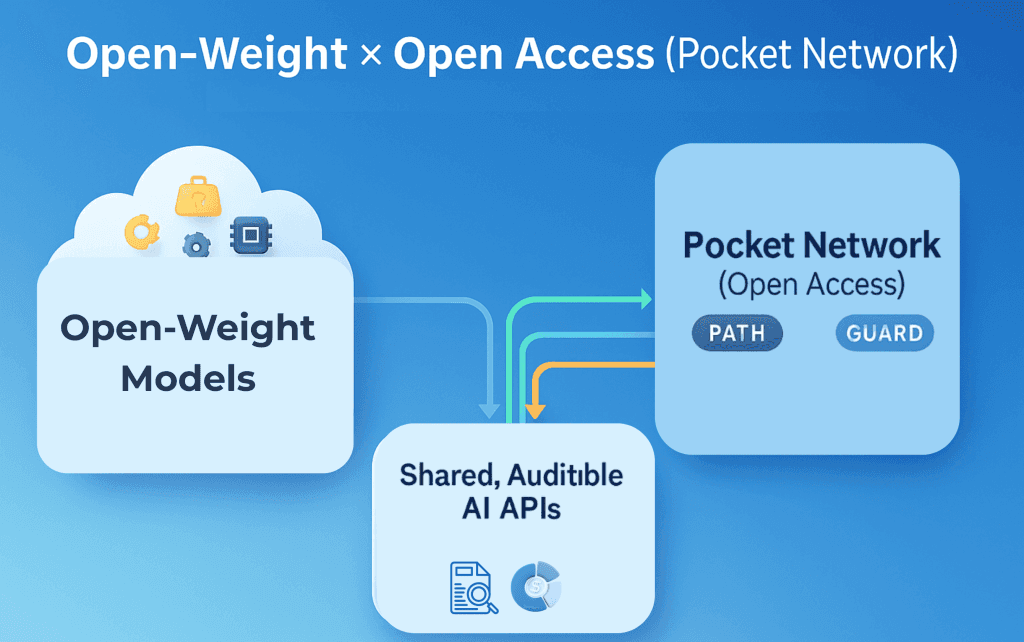
Open-weight models now process 29% of gateway tokens, up from 11% in April, according to data shared by Vercel CEO Guillermo Rauch. The 18-point jump over eight months signals accelerating enterprise deployment of open-weight architectures like Llama 3 and Mistral.
Key facts
- 29% of gateway tokens from open-weight models.
- Up from 11% in April 2025 — an 18-point gain.
- Data from Vercel CEO @rauchg.
- Closed provider holds remaining 71% share.
- Open-weight models could cross 50% by mid-2026.
Open-weight models ran 29% of gateway tokens, up from 11% in April, according to @rauchg. The data, shared by Vercel CEO Guillermo Rauch, tracks real inference traffic passing through network gateways — a proxy for production AI workloads rather than experimental usage.
Gateway tokens represent actual inference requests passing through network ingress points. The metric captures the share of inference traffic handled by open-weight models — those with publicly available parameters — versus closed models from providers like OpenAI and Anthropic. The 18-point gain in roughly eight months indicates that organizations are moving beyond trials and running real workloads on open-weight models.
The data does not disclose total token volume or which specific open-weight models dominated. However, the trend aligns with the release of Llama 3.1 405B in July 2024 and Mistral Large 2 in August 2024, both of which offered frontier-level performance with permissive licenses. Enterprise buyers increasingly cite cost control, data sovereignty, and model portability as reasons to favor open-weight models.
A single model provider with a closed ecosystem captured the remaining 71% of gateway tokens. The identity of that provider was not disclosed, but the concentration suggests that despite open-weight gains, the market remains dominated by a closed leader — likely OpenAI given its API market share.
What the shift means
The 29% figure represents a structural shift, not a one-time spike. If current growth continues linearly, open-weight models could cross 50% of gateway tokens by mid-2026. That would mark a fundamental rebalancing of the AI inference market, with implications for pricing, model distribution, and the value of proprietary data moats.
The trend also pressures closed-model providers to justify premium pricing. If open-weight models deliver comparable benchmark scores at lower per-token cost, enterprise procurement teams will have a strong incentive to switch. The data suggests that is already happening, though the closed-model leader still commands the majority of traffic.
Key Takeaways
- Open-weight models now handle 29% of gateway tokens, up from 11% in April.
- The 18-point jump signals accelerating enterprise adoption of open architectures like Llama 3 and Mistral.
What to watch
Watch for the next Rauch data drop in Q1 2026. If open-weight share reaches 35-40%, expect closed-model API price cuts from OpenAI and Anthropic. Also track Llama 4 and Mistral 3 release dates — new frontier open-weight models would accelerate the trend.