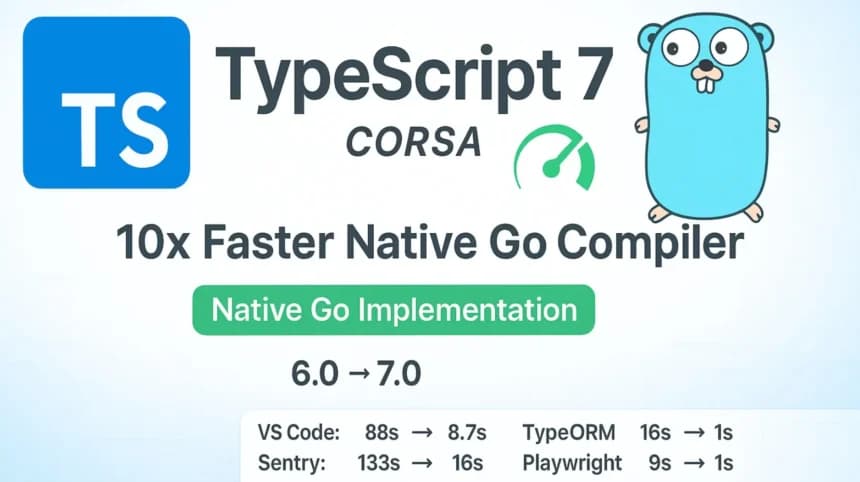
What Changed
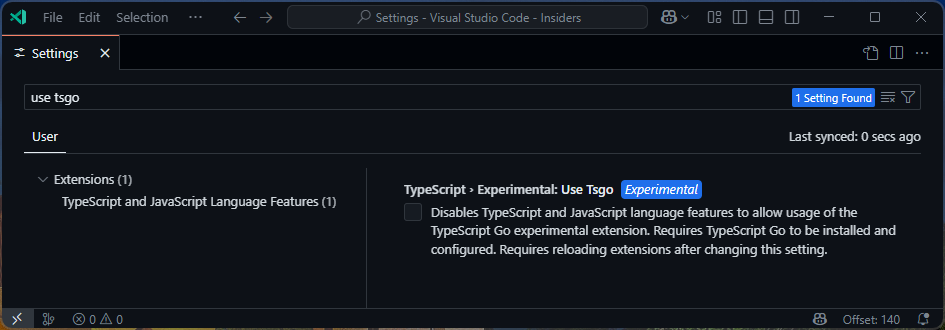
A community plugin called ts7-lsp-plugin replaces the official typescript-lsp plugin in Claude Code. Instead of the Node-based typescript-language-server wrapper around the classic tsserver, it uses TypeScript 7's native Go LSP server — launched as tsc --lsp --stdio.
This isn't a Microsoft or TypeScript team project. It's a community wiring job that points Claude Code's LSP at the typescript@rc server. The repo is 0BSD licensed, so you can fork, modify, or redistribute freely.
What It Means For You
If you work in large TypeScript codebases — monorepos, heavy generics, or projects with hundreds of files — the classic tsserver can feel sluggish. Autocomplete lags, diagnostics take an extra beat, and every keystroke in Claude Code triggers a LSP round-trip.
The TypeScript 7 team rewrote the language server in Go. It's not a wrapper or a shim — it's a native binary that skips the Node.js runtime entirely. The result is faster startup, lower memory, and snappier responses for completions, go-to-definition, hover info, and diagnostics.
Claude Code uses LSP plugins for context-aware code intelligence. When you ask it to refactor a function, it may query the LSP for type information, references, or symbol locations. A faster LSP means Claude Code spends less time waiting and more time acting.
Try It Now
Step 1: Install TypeScript 7 RC
You need typescript@rc on your PATH. Install it globally with your package manager of choice:
npm install -g typescript@rc
Verify it works:
tsc --version
# Should show something like 7.0.0-dev.2026xxxx
Step 2: Add the marketplace
In your Claude Code session, run:
/plugin marketplace add mjn298/ts7-lsp-plugin
This adds the community marketplace from the GitHub repo mjn298/ts7-lsp-plugin.
Step 3: Install the plugin
/plugin install ts7-lsp@ts7-lsp-marketplace
Step 4: Disable the official plugin (if installed)
If you already have the official typescript-lsp plugin enabled, disable it:
/plugin disable typescript-lsp@claude-plugins-official
Step 5: Reload
/reload-plugins
That's it. Your TypeScript LSP is now backed by the native Go TS7 server.
Switching back
The plugin's README includes instructions to revert. In short: re-enable the official plugin and remove this one:
/plugin enable typescript-lsp@claude-plugins-official
/plugin uninstall ts7-lsp@ts7-lsp-marketplace
/reload-plugins
When To Use It

This plugin shines when:
- You work in large TypeScript codebases — the Go server handles big projects faster than Node-based alternatives.
- You want to reduce Claude Code's latency — faster LSP responses mean faster code generation and refactoring.
- You're already on TypeScript 7 RC — you might as well use the native server.
- You prefer zero-attribution open-source tools — the 0BSD license means no legal overhead.
Caveats
- Unofficial. This is a community project. If something breaks, check the GitHub repo for issues or submit one.
- Requires TypeScript 7 RC. You need the
typescript@rcpackage installed globally. This may not match your project's TypeScript version. - No comments on Hacker News yet. The Show HN post has 3 points and 0 comments, so community feedback is limited. Test it yourself before relying on it in production.
Bottom Line
If you want a faster TypeScript LSP in Claude Code and you're comfortable running release-candidate software, this plugin is worth the 2-minute setup. The Go TS7 server is genuinely faster, and the swap is fully reversible.
Source: github.com