What Happened
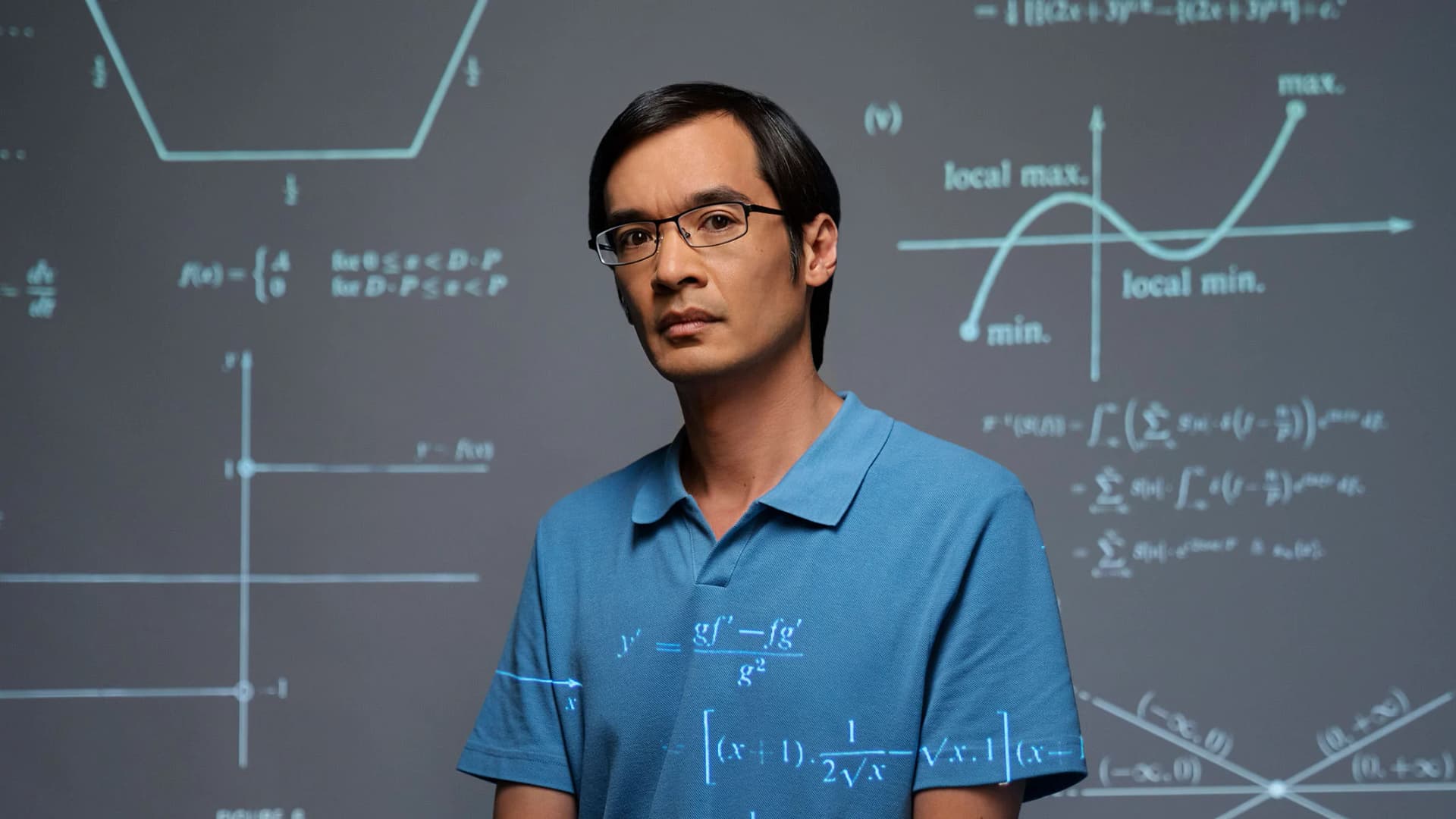
Fields Medalist and mathematician Terence Tao has weighed in on the question of whether artificial intelligence will solve complex mathematical problems like the Riemann Hypothesis. In response to a question about whether AI will solve such problems or if human insight remains essential, Tao suggested the answer might lie in "a collaboration we can't yet imagine, blending AI's power with human ingenuity."
Context
The Riemann Hypothesis, one of the seven Millennium Prize Problems, has remained unsolved since Bernhard Riemann proposed it in 1859. The problem concerns the distribution of prime numbers and the zeros of the Riemann zeta function. A proof would have profound implications for number theory and mathematics.
Recent AI developments in mathematics include:
- DeepMind's AlphaProof system solving International Mathematical Olympiad problems
- AI-assisted discoveries in knot theory and combinatorial optimization
- Large language models generating mathematical conjectures and proofs
Tao's perspective comes as AI systems demonstrate increasing capability in formal mathematics, yet fundamental questions remain about whether they can achieve the conceptual breakthroughs required for problems like the Riemann Hypothesis.
The Current State of AI in Mathematics
Current AI systems excel at pattern recognition, symbolic manipulation, and exploring large search spaces—capabilities that could assist mathematicians in several ways:
- Exploring computational counterexamples to conjectures
- Generating potential proof strategies for human refinement
- Verifying complex proofs that exceed human checking capacity
- Discovering unexpected connections between mathematical domains
However, these systems still struggle with the high-level conceptual reasoning, abstraction, and creative insight that characterize major mathematical breakthroughs.
What This Means for Mathematical Research
Tao's vision of an unimaginable collaboration suggests a future where:
- Mathematicians use AI as an exploratory tool to test hypotheses at unprecedented scale
- AI systems help identify promising research directions from vast mathematical literature
- Human mathematicians focus on high-level strategy while AI handles computational heavy lifting
- New proof techniques emerge from human-AI interaction patterns
This aligns with Tao's previous work on AI-assisted mathematics, where he has explored how machine learning can help identify patterns and suggest conjectures in number theory.
Looking Ahead
The question of whether AI will solve the Riemann Hypothesis remains open, but Tao's perspective suggests the most productive path forward may not be AI replacing mathematicians, but rather creating new forms of collaboration that leverage the complementary strengths of both.
As AI systems become more sophisticated at mathematical reasoning, the nature of mathematical discovery itself may evolve, potentially leading to proof techniques and problem-solving approaches that neither humans nor AI could develop independently.