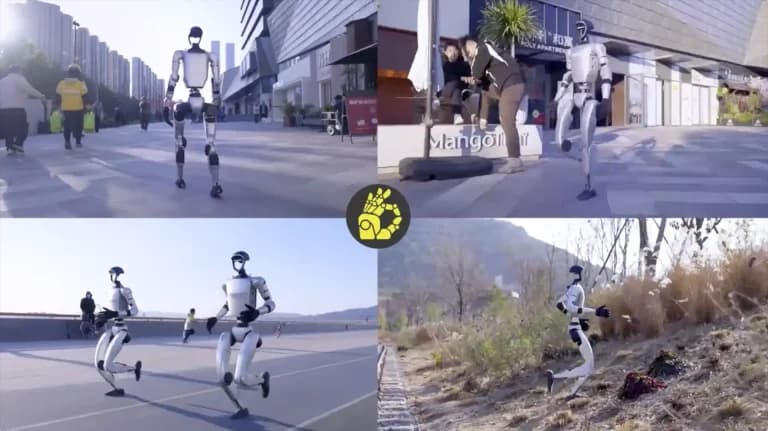
According to recent commentary from technology observers, humanoid robotics stands "on the verge of a major breakthrough" that will fundamentally reshape domestic life. Within just a few years, having a humanoid robot in the home may become "completely normal"—not as a novelty or luxury, but as an integrated presence capable of performing diverse roles that currently require multiple human specialists.
Beyond Simple Automation: The Multifunctional Home Companion
The vision presented extends far beyond today's robotic vacuum cleaners or voice-activated assistants. These future humanoids are described as entities that "not only handle simple household tasks" but also serve as "an outstanding doctor, as intelligent as Einstein, as eloquent as the greatest writers, and the best possible teacher for your children." This represents a significant evolution from single-purpose automation to embodied artificial intelligence capable of performing complex cognitive and interpersonal functions.
What makes this possible is the integration of "large language models" with physical robotic platforms. While current AI systems like ChatGPT demonstrate remarkable conversational abilities, they lack physical presence and embodiment. The coming generation of humanoids would combine the reasoning, knowledge, and communication capabilities of advanced AI with the physical dexterity and mobility required to interact with human environments.
The Convergence of Technologies
This breakthrough depends on several technological trajectories converging simultaneously. Robotics hardware has been advancing steadily, with companies developing increasingly sophisticated bipedal platforms capable of navigating human spaces. Meanwhile, artificial intelligence—particularly in language understanding, reasoning, and multimodal perception—has progressed at an astonishing pace in recent years.
The integration of these domains creates something fundamentally new: an embodied intelligence that can understand verbal instructions, reason about physical tasks, and execute them in real-world environments. This represents a departure from both traditional robotics (which often requires precise programming for specific tasks) and current AI systems (which lack physical interaction capabilities).
Implications for Daily Life and Society
The implications of such technology becoming commonplace are profound. The suggestion that a single robotic presence could serve as doctor, teacher, and intellectual companion suggests a radical reconfiguration of how households access expertise and services. Rather than scheduling appointments with specialists or enrolling in educational programs, families might interact with their domestic humanoid for health advice, personalized tutoring, or intellectual stimulation.
This vision also raises important questions about human relationships, privacy, and dependency. Having an "embodied" AI presence in the home represents a different psychological dynamic than interacting with disembodied voices or screens. The physical presence of a humanoid—especially one described as possessing exceptional intelligence and eloquence—could create attachment dynamics unlike anything we've experienced with previous technologies.
Challenges on the Path to Adoption
While the timeline of "just a few years" for normalization seems ambitious, it reflects the accelerating pace of AI development. Significant challenges remain in creating robots with sufficient dexterity for household tasks, ensuring safety in human environments, and developing AI systems reliable enough for medical or educational applications. Ethical considerations around privacy, autonomy, and the appropriate boundaries for AI in domestic settings will require careful navigation.
Economic factors will also influence adoption. The cost of producing sophisticated humanoids must decrease substantially for them to become commonplace household items rather than luxury products. This suggests that early adoption may follow patterns similar to other transformative technologies—beginning in commercial or institutional settings before reaching mass consumer markets.
A Broader Technological Revolution
The source material notes that domestic humanoids represent "only one small part of the great revolution that is coming." This suggests that the integration of advanced AI with physical platforms will extend far beyond the home, potentially transforming workplaces, healthcare facilities, educational institutions, and public spaces. The humanoid form factor is particularly significant because it allows these systems to operate in environments designed for humans, using tools and interfaces created for human use.
As this technology develops, we may see specialized variants optimized for different functions—some emphasizing physical capabilities for labor-intensive tasks, others prioritizing social interaction and communication abilities. The convergence described represents not just incremental improvement in robotics or AI, but the emergence of a new category of technology with potentially transformative social implications.
Looking Forward
The vision of humanoid robots as common household members powered by advanced AI represents one of the most ambitious forecasts for near-term technological change. While the timeline may be debated, the direction of development appears increasingly plausible given recent advances in both artificial intelligence and robotics.
As these technologies mature, society will need to grapple with questions about the role of artificial beings in our most intimate spaces, the nature of human-machine relationships, and the economic implications of automating roles currently filled by human professionals. The coming years will likely see gradual steps toward this vision—perhaps beginning with more limited robotic assistants that gradually acquire capabilities through software updates and improved hardware.
What seems clear is that the boundary between digital intelligence and physical presence is becoming increasingly porous, with potentially profound consequences for how we live, work, and interact with technology in our daily lives.