In a move that could fundamentally reshape the AI landscape, AntLingAGI has open-sourced Ring-2.5-1T—a trillion-parameter artificial intelligence model that reportedly runs on consumer-grade GPUs at approximately half the cost of comparable systems. This development, announced via social media, represents one of the most significant democratization efforts in AI history, potentially making cutting-edge capabilities accessible beyond well-funded research labs and corporations.
Breaking Down the Technical Achievement
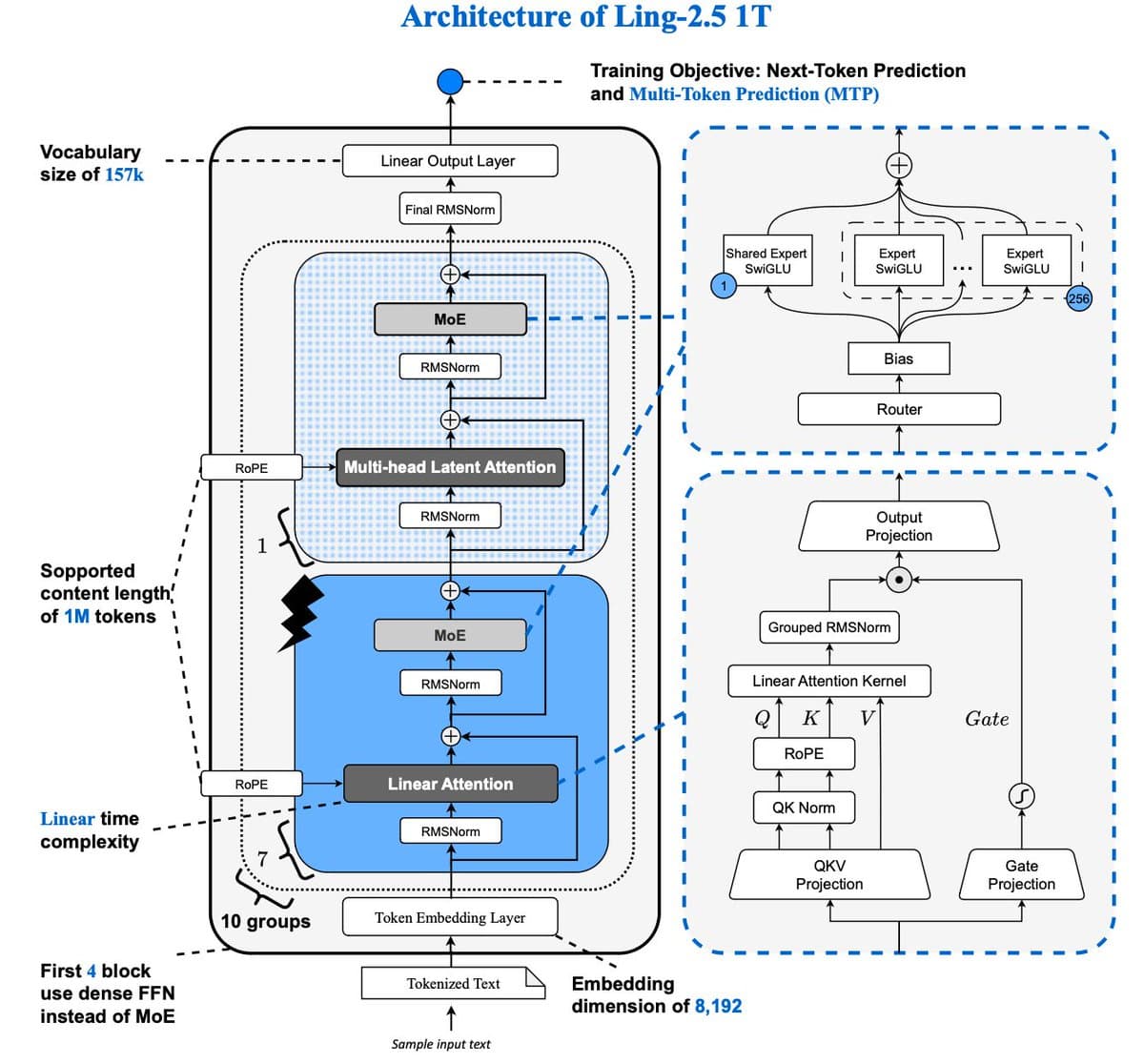
While specific architectural details remain limited in the initial announcement, the core breakthrough appears to be efficiency optimization that allows a trillion-parameter model to operate on consumer-grade hardware. Traditional models of this scale typically require specialized infrastructure, including clusters of high-end GPUs costing millions of dollars and consuming substantial energy.
The "Ring-2.5-1T" nomenclature suggests specific design choices—likely referring to a ring-based architecture (potentially for distributed training or inference) and the 2.5 possibly indicating a hybrid precision approach or specific model variant. What's clear is that AntLingAGI has achieved what many considered impractical: making massive-scale AI accessible without corresponding massive-scale infrastructure.
The Democratization Implications
This open-source release directly addresses three major barriers that have concentrated AI advancement in few hands:
- Hardware Accessibility: By running on consumer-grade GPUs, the model eliminates the need for specialized data center infrastructure
- Financial Barriers: At "half the cost of comparable models," the economic threshold drops dramatically
- Institutional Gatekeeping: "No lab access. No waitlist" means individual researchers, startups, and educational institutions can immediately experiment
This approach contrasts sharply with the prevailing trend where leading AI labs typically release smaller models publicly while keeping their most capable systems proprietary or behind restrictive APIs.
Potential Applications and Use Cases
The availability of a trillion-parameter model at this accessibility level could accelerate innovation across numerous domains:
- Academic Research: Universities and individual researchers can now experiment with state-of-the-art scale models without grant funding for compute
- Startup Innovation: Small teams can build applications leveraging capabilities previously exclusive to tech giants
- Specialized Domain Adaptation: Organizations can fine-tune the massive model for specific scientific, medical, or industrial applications
- AI Safety Research: Wider access enables more diverse testing and evaluation of large model behaviors and risks
The Competitive Landscape Shift
AntLingAGI's move pressures other AI developers toward greater openness. If a trillion-parameter model can be both open-source and runnable on consumer hardware, the justification for keeping smaller models proprietary weakens significantly. This could accelerate a broader open-source movement in AI, similar to what happened in earlier software revolutions.
However, questions remain about performance benchmarks, training methodologies, and potential limitations. The AI community will need to rigorously evaluate Ring-2.5-1T against established benchmarks to understand its true capabilities and trade-offs.
Challenges and Considerations
While democratization brings clear benefits, it also introduces challenges:
- Safety and Alignment: Widespread access to powerful models requires robust safety frameworks
- Environmental Impact: More accessible models could lead to increased compute usage overall
- Technical Support: Open-source projects of this scale require sustainable maintenance and community support
- Commercial Viability: The business model behind such a generous open-source release remains unclear
The Future of AI Accessibility
If Ring-2.5-1T delivers on its promises, it could mark a turning point in AI development. The era where model capability directly correlated with institutional resources may be ending. Future innovation might increasingly come from distributed communities rather than centralized labs.
This development also raises important questions about AI governance, as powerful capabilities become more widely distributed. The same technology that enables beneficial applications could also be misused, necessitating thoughtful consideration of ethical frameworks and responsible use guidelines.
Source: Initial announcement via @hasantoxr on X/Twitter sharing AntLingAGI's release of Ring-2.5-1T