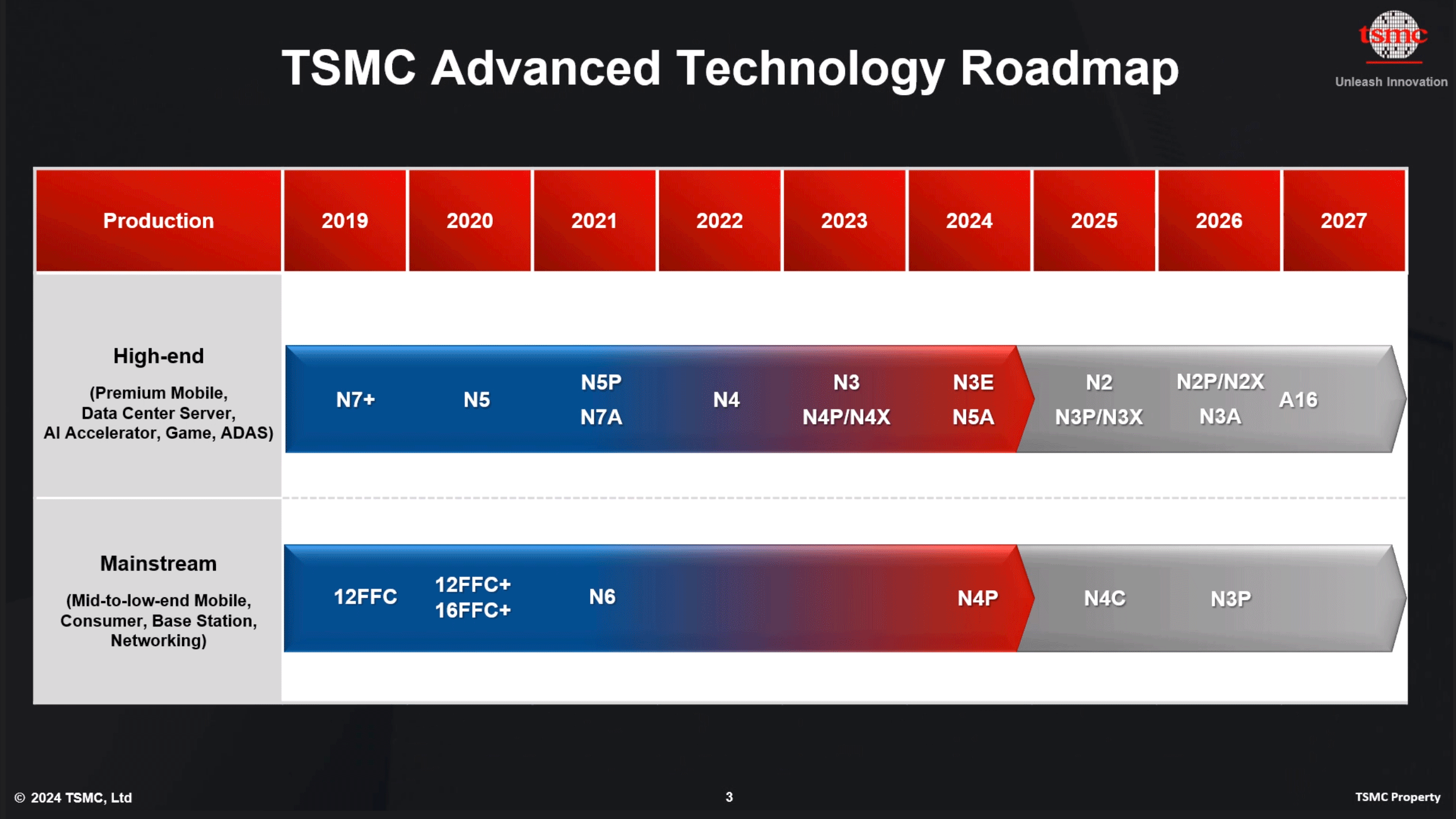
TSMC has cut 28nm wafer output by more than 25% since early 2026, per TrendForce. The reallocation frees capacity for advanced nodes N3, N2 and A16 as AI accelerator demand surges.
Key facts
- TSMC cut 28nm output by over 25% since early 2026.
- Advanced nodes N3, N2, A16 now absorb freed capacity.
- TSMC's 28nm revenue share fell from ~10% (2024) to ~6% (Q1 2026).
- Samsung HBM4 sales reportedly topped $1B; SK hynix slows ramp.
TSMC has reduced 28nm production by over 25% since the beginning of 2026, according to TrendForce. The move frees fab space for N3, N2 and A16 as AI accelerator demand pushes TSMC's advanced node utilization above 95%.
TSMC did not disclose the exact wafer volume reduction or the timeline for further cuts. The 28nm node, once a workhorse for automotive, IoT and networking chips, is losing share to more advanced processes. TSMC's 28nm revenue as a share of total declined from roughly 10% in 2024 to an estimated 6% in Q1 2026, per the firm's investor materials.
Why the cut matters beyond mature nodes
The 25%+ reduction is not just about capacity — it signals TSMC's strategic pivot. By shrinking 28nm output, TSMC is effectively telling automotive and industrial clients to migrate to N5 or N3E, where per-wafer margins are higher and integration with AI-adjacent logic is easier. This mirrors the company's earlier phase-out of 16nm capacity in 2023-2024.
For AI operators, the implication is indirect but real: if mature node supply tightens, the cost of non-AI chips could rise, potentially inflating the bill of materials for data center infrastructure that still relies on 28nm for power management ICs and SerDes controllers. TSMC's own 28nm capacity now sits at roughly 80% of its early-2026 level, per TrendForce estimates.
Competitive context
Samsung and SK Hynix face a different dynamic. Samsung is reportedly pushing HBM4 sales past $1B, while SK Hynix slows its ramp [per TrendForce]. TSMC's advanced node pivot further concentrates leading-edge manufacturing in Taiwan, a geopolitical risk that hyperscalers like Google — which committed $11B/year to SpaceX compute [per our prior reporting] — are already hedging against.
Key Takeaways
- TSMC cut 28nm output over 25% since early 2026, reallocating to advanced nodes as AI demand surges.
- Mature node revenue share likely to shrink further.
What to watch
Watch for TSMC's Q2 2026 earnings call in mid-July for official 28nm utilization data and any guidance on further cuts. Also track whether automotive chip buyers accelerate migration to N5 or N3E, which would tighten mature-node supply further.
Source: news.google.com